


The importance of the bacterial cell wall in uranium(vi) biosorption
Literature Information
Publication Date
2020-12-17
DOI
10.1039/D0CP04067C
Impact Factor
3.676
Authors
Joseph Hufton, John Harding, Thomas Smith
View Original
Abstract
The bacterial cell envelope, in particular the cell wall, is considered the main controlling factor in the biosorption of aqueous uranium(VI) by microorganisms. However, the specific roles of the cell wall, associated biomolecules, and other components of the cell envelope are not well defined. Here we report findings on the biosorption of uranium by isolated cell envelope components and associated biomolecules, with P. putida 33015 and B. subtilis 168 investigated as representative strains for the differences in Gram-negative and Gram-positive cell envelope architecture, respectively. The cell wall and cell surface membrane were isolated from intact cells and characterised by X-ray Photoelectron Spectroscopy (XPS) and Attenuated Total Reflectance-Fourier Transform Infrared (ATR-FT-IR) spectroscopy; revealing variations in the abundance of functional moieties and biomolecules associated with components of the cell envelope. Uranium biosorption was investigated as a function of cell envelope component and pH, comparing with intact cells. The isolated cell wall from both strains exhibited the greatest uranium biosorption capacity. Deprotonation of favourable functional groups on the biomass as the pH increased from 3 to 5.5 increased their uranium biosorption capacity by approximately 3 fold. The results from ATR-FT-IR indicated that uranium(VI) biosorption was mediated by phosphate and carboxyl groups associated with proteins and phosphorylated biopolymers of the cell envelope. This includes outer membrane phospholipids and LPS of Gram-negative bacteria and teichoic acids, surface proteins and peptidoglycan from Gram-positive bacteria. As a result, the biosorption process of uranium(VI) to microorganisms is controlled by surface interactions, resulting in higher accumulation of uranium in the cell envelope. This demonstrates the importance of bacterial cell wall as the key mediator of uranium biosorption with microorganisms.
Recommended Journals

Nature Medicine

New Journal of Chemistry

Chemistry Education Research and Practice

Crystallography Reports

Current Opinion in Colloid & Interface Science

Russian Journal of Organic Chemistry

Journal of Natural Medicines

Russian Journal of General Chemistry

Russian Journal of Applied Chemistry

Journal of Saudi Chemical Society
Related Literature
Highly selective 30% hydrogen peroxideoxidation of sulfides to sulfoxides using micromixing
Yoshiro Hirai, Masayuki Kirihara
2008-04-22
Communication
DOI: 10.1039/B802502A
Elaboration of nanohybrid materials by photopolymerisation of 3,4-ethylenedioxythiophene on TiO2
Fabrice Goubard, Pierre-Henri Aubert, Kada Boukerma, Emmanuel Pauthe, Claude Chevrot
2008-05-09
Communication
DOI: 10.1039/B800754C
Transition metal-catalyzed three-component coupling of allenes and the related allylation reactions
Masilamani Jeganmohan, Chien-Hong Cheng
2008-05-15
Feature Article
DOI: 10.1039/B800440D
Synthesis and self-assembly of propeller-shaped amphiphilic molecules
Kyung-Soo Moon, Eunji Lee, Myongsoo Lee
2008-04-23
Communication
DOI: 10.1039/B801108G
Photoluminescence and electroluminescence of hexaphenylsilole are enhanced by pressurization in the solid state
Xing Fan, Jianliang Sun, Fuzhi Wang, Zengze Chu, Ping Wang, Yongqiang Dong, Rongrong Hu, Ben Zhong Tang, Dechun Zou
2008-05-08
Communication
DOI: 10.1039/B803539C
Tetraplatinum precursors for supramolecular assemblies: syntheses, crystal structures, and stereoselective self-assemblies of [Pt4(μ-OCOCH3)6(κ4-N4-DArBp)] (DArBp = 1,3-bis(arylbenzamidinate)propane)
Masato Ohashi, Akihiro Yagyu, Tsuneaki Yamagata, Kazushi Mashima
2007-05-22
Communication
DOI: 10.1039/B703730A
Self-assembled perpendicular growth of organic nanoneedles via simple vapor-phase deposition: one-step fabrication of a superhydrophobic surface
Jong Won Chung, Byeong-Kwan An, Ji Whan Kim, Jang-Joo Kim, Soo Young Park
2008-05-13
Communication
DOI: 10.1039/B802749H
One-step synthesis of ordered mesoporous carbonaceous spheres by an aerosol-assisted self-assembly
Yan Yan, Fuqiang Zhang, Yan Meng, Bo Tu, Dongyuan Zhao
2007-04-25
Communication
DOI: 10.1039/B702232H
A three-dimensional lanthanide-organic radical open-framework
Nans Roques, Daniel Maspoch, Inhar Imaz, Angela Datcu, Jean-Pascal Sutter, Concepció Rovira, Jaume Veciana
2008-05-08
Communication
DOI: 10.1039/B802196A
You might also like
Compound Q&A
Are there alternatives to 1-(4-Chlorophenyl)-N-hydroxymethanimine (CAS: 3848-36-0) in synthesis?
When considering alternatives to 1-(4-Chlorophenyl)-N-hydroxymethanimine (CAS: 3...
3848-36-01-(4-Chlorophenyl)-N...
Compound Q&A
How should (1R,9S,10S,12S,14E,16S,19R,20R,21S,22R)-3,9,21-Trihydroxy-5,10,12,14,16,20,22-heptamethyl-23,24-dioxatetracyclo[17.3.1.1~6,9~.0~2,7~]tetracosa-2,5,7,14-tetraen-4-one (CAS: 183202-73-5) be stored?
This compound should be stored in a cool, dry place away from direct sunlight. I...
183202-73-5(1R,9S,10S,12S,14E,1...
Compound Q&A
How is 3-(4-Bromophenyl)-5-(2-fluorophenyl)-1,2,4-oxadiazole (CAS: 419553-16-5) typically synthesized?
3-(4-Bromophenyl)-5-(2-fluorophenyl)-1,2,4-oxadiazole is synthesized through a m...
419553-16-53-(4-Bromophenyl)-5-...
Compound Q&A
How is 5-Chloro-2-(4-chlorophenyl)-4-methyl-6-[3-(1-piperidinyl)propoxy]pyrimidine (CAS: 1639220-19-1) typically synthesized?
5-Chloro-2-(4-chlorophenyl)-4-methyl-6-[3-(1-piperidinyl)propoxy]pyrimidine (CAS...
1639220-19-15-Chloro-2-(4-chloro...
Compound Q&A
What industries use 2-Chloro-4-(difluoromethoxy)pyridine (CAS: 1206978-15-5)?
2-Chloro-4-(difluoromethoxy)pyridine is used in the pharmaceutical industry for ...
1206978-15-52-Chloro-4-(difluoro...
Compound Q&A
What regulatory guidelines apply to 3-Chloro-6-methylpyridazine (CAS: 1121-79-5)?
3-Chloro-6-methylpyridazine (CAS: 1121-79-5) is classified under the Globally Ha...
1121-79-53-Chloro-6-methylpyr...
Compound Q&A
Are there alternatives to Methyl 4,5-dimethyl-2-nitrobenzoate in synthesis?
Several alternatives can be used in the synthesis of Methyl 4,5-dimethyl-2-nitro...
90922-74-0Methyl 4,5-dimethyl-...
Compound Q&A
Are there alternatives to (2E,2'E)-3,3'-(1,4-Phenylene)bisacrylaldehyde in synthesis?
Alternatives to (2E,2'E)-3,3'-(1,4-Phenylene)bisacrylaldehyde include other acry...
63405-68-5(2E,2'E)-3,3'-(1,4-P...
Compound Q&A
What is 3-Amino-5-chloropyridin-2-ol hydrochloride (CAS: 1261906-29-9)?
3-Amino-5-chloropyridin-2-ol hydrochloride is an organic compound with the CAS n...
1261906-29-93-Amino-5-chloropyri...
Compound Q&A
What precautions should be taken when handling 6,7-Difluoro-2,3-dihydro-4H-chromen-4-one (CAS: 1092349-93-3)?
When handling 6,7-Difluoro-2,3-dihydro-4H-chromen-4-one, it is essential to wear...
1092349-93-36,7-Difluoro-2,3-dih...
Source Journal
Physical Chemistry Chemical Physics

CiteScore:
5.5
Self-citation Rate:
10.3%
Articles per Year:
3036
Physical Chemistry Chemical Physics (PCCP) is an international journal co-owned by 19 physical chemistry and physics societies from around the world. This journal publishes original, cutting-edge research in physical chemistry, chemical physics and biophysical chemistry. To be suitable for publication in PCCP, articles must include significant innovation and/or insight into physical chemistry; this is the most important criterion that reviewers and Editors will judge against when evaluating submissions. The journal has a broad scope and welcomes contributions spanning experiment, theory, computation and data science. Topical coverage includes spectroscopy, dynamics, kinetics, statistical mechanics, thermodynamics, electrochemistry, catalysis, surface science, quantum mechanics, quantum computing and machine learning. Interdisciplinary research areas such as polymers and soft matter, materials, nanoscience, energy, surfaces/interfaces, and biophysical chemistry are welcomed if they demonstrate significant innovation and/or insight into physical chemistry. Joined experimental/theoretical studies are particularly appreciated when complementary and based on up-to-date approaches.
Recommended Compounds
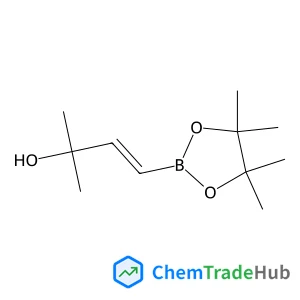
(E)-2-methyl-4-(4,4,5,5-tetramethyl-1,3,2-dioxaborolan-2-yl)but-3-en-2-ol
CAS Number:
581802-26-8
Molecular Formula:
C11H21BO3
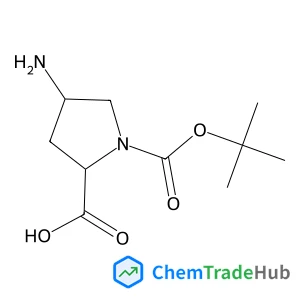
(2R,4R)-1-Boc-4-Aminopyrrolidine-2-carboxylic acid
CAS Number:
132622-98-1
Molecular Formula:
C10H18N2O4

Recommended Suppliers





Disclaimer
This page provides academic journal information for reference and research purposes only. We are not affiliated with any journal publishers and do not handle publication submissions. For publication-related inquiries, please contact the respective journal publishers directly.
If you notice any inaccuracies in the information displayed, please contact us at support@chemtradehub.com. We will promptly review and address your concerns.