












Preparation of mechanoresponsive hairy particles using polymeric surfactants in emulsion polymerization
Literature Information
Publication Date
2017-05-08
DOI
10.1039/C7PY00468K
Impact Factor
5.582
Authors
Hui Li, Yuyu Zhang, Yibin Liu, Rint P. Sijbesma, Johan P. A. Heuts, Qiuyu Zhang
View Original
Abstract
We demonstrate that diblock copolymers comprising hydrophobic polystyrene and hydrophilic poly(acrylic acid) blocks connected by an off-center anthracene–maleimide Diels–Alder adduct mechanophore are mechanochemically active when sonicated in the form of micelles. Non-crosslinked and crosslinked hairy poly(butyl acrylate) latex particles were synthesized using amphiphilic block copolymers as stabilizers in emulsion polymerization. Both non-crosslinked and crosslinked hairy particles can be mechanically activated by sonication, which means that the “hairs” on the surface of particles can be selectively cleaved. The sensitivity to mechanical force enhanced with increasing crosslinking of the PBA particles, but it may also lead to particle degradation. The mechanoresponsive hairy latex particles may facilitate the design of stress-sensing probes in aqueous systems.
Related Literature
Inverse micellar phases of phospholipids and glycolipids. Invited Lecture
J. M. Seddon, J. Robins, T. Gulik-Krzywicki, H. Delacroix
2000-10-03
Paper
DOI: 10.1039/B004916F
Laser induced ionisation/dissociation of cyclopentanone in the 320–370 nm region
Paper
DOI: 10.1039/A902027F
Reaction mechanism in the photoreduction of CO2 with CH4 over ZrO2
2000-10-26
Paper
DOI: 10.1039/B005315P
Structures and phase transitions in aqueous dispersions of branched-chain glycerophosphoethanolamines
Frank Bringezu, Gert Rapp, Bodo Dobner, Peter Nuhn, Gerald Brezesinski
2000-09-18
Paper
DOI: 10.1039/B003516P
Isobaric heat capacity in non-reacting and in reacting systems
2000-09-27
Paper
DOI: 10.1039/B002375M
Gas phase multicollisional reactions of metal cluster cations with water molecules
Paper
DOI: 10.1039/A903044A
Kinetics of excited-state Cr(a5S2, a5DJ, a5GJ) depletion by simple hydrocarbons
Paper
DOI: 10.1039/A902886B
The thermal unimolecular decomposition rate constants of ethoxy radicals
Paper
DOI: 10.1039/A901768B
Characterization of the interactions between various hexadecylmannoside–phospholipid model membranes with the lectin Concanavalin A
Udo Bakowsky, Willi Rettig, Gerd Bendas, Jan Vogel, Heike Bakowsky, Catalin Harnagea, Ulrich Rothe
2000-09-22
Paper
DOI: 10.1039/B003727N
Density functional theory: X-ray reflectivity studies of pure fluid liquid/vapour interfaces
Paper
DOI: 10.1039/A902914A
You might also like
Compound Q&A
What precautions should be taken when handling 4-(2-Furylmethyl)thiomorpholine 1,1-dioxide (CAS: 79206-94-3)?
When handling 4-(2-Furylmethyl)thiomorpholine 1,1-dioxide (CAS: 79206-94-3), it ...
79206-94-34-(2-Furylmethyl)thi...
Compound Q&A
What precautions should be taken when handling 4-Chloro-N-[2-(4-morpholinyl)ethyl]benzamide (CAS: 71320-77-9)?
When handling 4-Chloro-N-[2-(4-morpholinyl)ethyl]benzamide (CAS: 71320-77-9), it...
71320-77-94-Chloro-N-[2-(4-mor...
Compound Q&A
How should waste containing 2-[2-(2-Methoxyethoxy)ethoxy]ethyl 4-methylbenzenesulfonate (CAS: 62921-74-8) be handled?
Waste containing this compound (CAS: 62921-74-8) should be handled according to ...
62921-74-82-[2-(2-Methoxyethox...
Compound Q&A
How should waste containing (S)-Methyl 2-amino-3-cyclohexylpropanoate be handled?
Waste containing (S)-Methyl 2-amino-3-cyclohexylpropanoate should be collected i...
40056-18-6(S)-Methyl 2-amino-3...
Compound Q&A
How is 5-({4-[(2S,4R)-4-Hydroxy-2-methyltetrahydro-2H-pyran-4-yl]-2-thienyl}sulfanyl)-1-methyl-1,3-dihydro-2H-indol-2-one (CAS: 166882-70-8) typically synthesized?
This compound can be synthesized using a multi-step process involving the conjug...
166882-70-85-({4-[(2S,4R)-4-Hyd...
Compound Q&A
Are there alternatives to (2E)-3-(3,4-Dichlorophenyl)acrylic acid (CAS: 7312-27-8) in synthesis?
There are several alternatives to (2E)-3-(3,4-Dichlorophenyl)acrylic acid in syn...
7312-27-8(2E)-3-(3,4-Dichloro...
Compound Q&A
How should Ethyl 6-(2-nitrophenyl)imidazo[2,1-b][1,3]thiazole-3-carboxylate (CAS: 925437-84-9) be stored?
Ethyl 6-(2-nitrophenyl)imidazo[2,1-b][1,3]thiazole-3-carboxylate (CAS: 925437-84...
925437-84-9Ethyl 6-(2-nitrophen...
Compound Q&A
How should waste containing 2-(1,3-Thiazol-2-yl)ethanamine (CAS: 18453-07-1) be handled?
Waste containing 2-(1,3-Thiazol-2-yl)ethanamine (CAS: 18453-07-1) should be coll...
18453-07-12-(1,3-Thiazol-2-yl)...
Compound Q&A
How is Methyl 5-iodo-2-methylbenzoate (CAS: 103440-54-6) typically synthesized?
Methyl 5-iodo-2-methylbenzoate can be synthesized through the iodination of meth...
103440-54-6Methyl 5-iodo-2-meth...
Compound Q&A
How is 5-Chloro[1,2,4]triazolo[1,5-a]pyridine (CAS: 1427399-34-5) typically synthesized?
5-Chloro[1,2,4]triazolo[1,5-a]pyridine is commonly synthesized via the condensat...
1427399-34-55-Chloro[1,2,4]triaz...
Source Journal
Polymer Chemistry

CiteScore:
8.6
Self-citation Rate:
7.3%
Articles per Year:
457
Polymer Chemistry welcomes submissions in all areas of polymer science that have a strong focus on macromolecular chemistry. Manuscripts may cover a broad range of fields, yet no direct application focus is required.
Recommended Compounds
![N-[(Benzyloxy)carbonyl]serine structure](https://static.chemtradehub.com/structs/276/2768-56-1-77f7.webp "N-[(Benzyloxy)carbonyl]serine structure")
![1,2-Diphenyl-4-[2-(phenylsulfinyl)ethyl]-3,5-pyrazolidinedione structure](https://static.chemtradehub.com/structs/57-/57-96-5-efcc.webp "1,2-Diphenyl-4-[2-(phenylsulfinyl)ethyl]-3,5-pyrazolidinedione structure")
1,2-Diphenyl-4-[2-(phenylsulfinyl)ethyl]-3,5-pyrazolidinedione
CAS Number:
57-96-5
Molecular Formula:
C23H20N2O3S
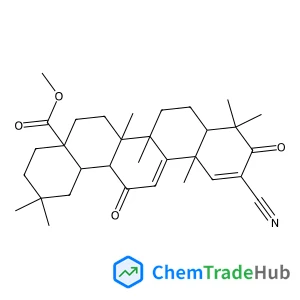
Methyl 2-cyano-3,12-dioxooleana-1,9(11)-dien-28-oate
CAS Number:
218600-53-4
Molecular Formula:
C32H43NO4
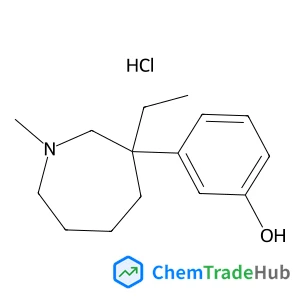
3-(3-Ethyl-1-methyl-3-azepanyl)phenol hydrochloride (1:1)
CAS Number:
59263-76-2
Molecular Formula:
C15H24ClNO
Recommended Suppliers






Disclaimer
This page provides academic journal information for reference and research purposes only. We are not affiliated with any journal publishers and do not handle publication submissions. For publication-related inquiries, please contact the respective journal publishers directly.
If you notice any inaccuracies in the information displayed, please contact us at support@chemtradehub.com. We will promptly review and address your concerns.