













Density functional theory: X-ray reflectivity studies of pure fluid liquid/vapour interfaces
Literature Information
Publication Date
DOI
10.1039/A902914A
Impact Factor
3.676
Authors
View Original
Abstract
Although there are numerous model independent methods for the extraction of a density profile from X-ray reflectivity data, for many systems there are fundamental limitations to the uniqueness of profiles so determined owing to the limited range of scattering data and the nature of the inverse transformation. Based on density functional theory (DFT) of inhomogeneous fluids we model the liquid/vapour interface of some pure simple liquids (Ar, N2, Kr, CCl4). Attractive contributions to the Helmholtz free energy are treated by a mean-field approximation (MF). Both local density approximation (LDA) and smoothed density approximation (SDA) are applied to the repulsive reference system described by a hard sphere equation of state. A cut-off and shifted Lennard-Jones potential divided according to the Weeks–Chandler–Andersen (WCA)-prescription is used as intermolecular interaction force model. The potential parameters were determined by modelling saturated liquid densities of a pure fluid. Computed theoretical density profiles are used to predict X-ray specular reflectivities. Capillary waves models of Braslau etal. (Phys. Rev. A, 1998, 38, 2457), Evans etal. (Mol. Phys., 1981, 42, 1169) and of Meunier (J. Phys. (Paris), 1987, 48, 1819) are adopted to approximate these contributions to both specular reflectivities and surface tension. We propose a parameter free procedure based on the intrinsic interfacial thickness to calculate these terms. The agreement of predicted X-ray reflectivities with experimental data is good in the case where these terms are included. Similarly the surface tension is calculated from the intrinsic part plus contributions due to capillary wave roughening. All the calculations are based exclusively on potential parameters determined from saturated liquid densities.
Related Literature
Halogen-induced selectivity in heterogeneous epoxidation is an electronic effect—fluorine, chlorine, bromine and iodine in the Ag-catalysed selective oxidation of ethene
Richard M. Lambert, Rachael L. Cropley, Alifiya Husain, Mintcho S. Tikhov
2003-04-16
Communication
DOI: 10.1039/B302620E
Optical and electrical properties of the wide gap, n-type semiconductors: ZnBi2O6 and MgBi2O6
Hiroshi Mizoguchi, Nattamai S. P. Bhuvanesh, Patrick M. Woodward
2003-04-07
Communication
DOI: 10.1039/B300635B
Asymmetric protonation of lithium enolates of α-amino acid derivatives with α-amino acid-based chiral Brønsted acids
Kentaro Futatsugi, Akira Yanagisawa, Hisashi Yamamoto
2003-01-30
Communication
DOI: 10.1039/B211523A
Understanding the building-up process of three dimensional open-framework metal phosphates: Acid degradation of the 3D structures to lower dimensional structures
Amitava Choudhury
2003-01-06
Communication
DOI: 10.1039/B210037C
Structural and magnetic properties of a self-assembled spheroidal triakonta-hexanuclear Cu36 cluster
Tareque S. M. Abedin, Laurence K. Thompson, David O. Miller, Erik Krupicka
2003-02-14
Communication
DOI: 10.1039/B211401C
Bond energy M–C/H–C correlations: dual theoretical and experimental approach to the sensitivity of M–C bond strength to substituents
Eric Clot, Maria Besora, Feliu Maseras, Claire Mégret, Odile Eisenstein, Beatriz Oelckers, Robin N. Perutz
2003-01-24
Communication
DOI: 10.1039/B210036N
Photomediated asymmetric synthesis of (−)-cuparene
Richard S. Grainger, Aslam Patel
2003-03-31
Communication
DOI: 10.1039/B300815K
Synthesis, spectroscopic characterisation and structure of the first chiral heteroleptic bis(phthalocyaninato) rare earth complexes
Yongzhong Bian, Rongming Wang, Jianzhuang Jiang, Chi-Hang Lee, Jinzhi Wang, Dennis K. P. Ng
2003-04-17
Communication
DOI: 10.1039/B301139A
Systematic manipulation of surface chemical reaction on the nanoscale: a novel approach for constructing three-dimensional nanostructures
Xiuzhu Wang, Dejian Zhou, Trevor Rayment, Chris Abell
2003-01-20
Communication
DOI: 10.1039/B211906D
Regiocontrolled Ru-catalyzed addition of carboxylic acids to alkynes: practical protocols for the synthesis of vinyl esters
2003-02-17
Communication
DOI: 10.1039/B211277A
You might also like
Compound Q&A
What precautions should be taken when handling 4-(2-Furylmethyl)thiomorpholine 1,1-dioxide (CAS: 79206-94-3)?
When handling 4-(2-Furylmethyl)thiomorpholine 1,1-dioxide (CAS: 79206-94-3), it ...
79206-94-34-(2-Furylmethyl)thi...
Compound Q&A
What precautions should be taken when handling 4-Chloro-N-[2-(4-morpholinyl)ethyl]benzamide (CAS: 71320-77-9)?
When handling 4-Chloro-N-[2-(4-morpholinyl)ethyl]benzamide (CAS: 71320-77-9), it...
71320-77-94-Chloro-N-[2-(4-mor...
Compound Q&A
How should waste containing 2-[2-(2-Methoxyethoxy)ethoxy]ethyl 4-methylbenzenesulfonate (CAS: 62921-74-8) be handled?
Waste containing this compound (CAS: 62921-74-8) should be handled according to ...
62921-74-82-[2-(2-Methoxyethox...
Compound Q&A
How should waste containing (S)-Methyl 2-amino-3-cyclohexylpropanoate be handled?
Waste containing (S)-Methyl 2-amino-3-cyclohexylpropanoate should be collected i...
40056-18-6(S)-Methyl 2-amino-3...
Compound Q&A
How is 5-({4-[(2S,4R)-4-Hydroxy-2-methyltetrahydro-2H-pyran-4-yl]-2-thienyl}sulfanyl)-1-methyl-1,3-dihydro-2H-indol-2-one (CAS: 166882-70-8) typically synthesized?
This compound can be synthesized using a multi-step process involving the conjug...
166882-70-85-({4-[(2S,4R)-4-Hyd...
Compound Q&A
Are there alternatives to (2E)-3-(3,4-Dichlorophenyl)acrylic acid (CAS: 7312-27-8) in synthesis?
There are several alternatives to (2E)-3-(3,4-Dichlorophenyl)acrylic acid in syn...
7312-27-8(2E)-3-(3,4-Dichloro...
Compound Q&A
How should Ethyl 6-(2-nitrophenyl)imidazo[2,1-b][1,3]thiazole-3-carboxylate (CAS: 925437-84-9) be stored?
Ethyl 6-(2-nitrophenyl)imidazo[2,1-b][1,3]thiazole-3-carboxylate (CAS: 925437-84...
925437-84-9Ethyl 6-(2-nitrophen...
Compound Q&A
How should waste containing 2-(1,3-Thiazol-2-yl)ethanamine (CAS: 18453-07-1) be handled?
Waste containing 2-(1,3-Thiazol-2-yl)ethanamine (CAS: 18453-07-1) should be coll...
18453-07-12-(1,3-Thiazol-2-yl)...
Compound Q&A
How is Methyl 5-iodo-2-methylbenzoate (CAS: 103440-54-6) typically synthesized?
Methyl 5-iodo-2-methylbenzoate can be synthesized through the iodination of meth...
103440-54-6Methyl 5-iodo-2-meth...
Compound Q&A
How is 5-Chloro[1,2,4]triazolo[1,5-a]pyridine (CAS: 1427399-34-5) typically synthesized?
5-Chloro[1,2,4]triazolo[1,5-a]pyridine is commonly synthesized via the condensat...
1427399-34-55-Chloro[1,2,4]triaz...
Source Journal
Physical Chemistry Chemical Physics

CiteScore:
5.5
Self-citation Rate:
10.3%
Articles per Year:
3036
Physical Chemistry Chemical Physics (PCCP) is an international journal co-owned by 19 physical chemistry and physics societies from around the world. This journal publishes original, cutting-edge research in physical chemistry, chemical physics and biophysical chemistry. To be suitable for publication in PCCP, articles must include significant innovation and/or insight into physical chemistry; this is the most important criterion that reviewers and Editors will judge against when evaluating submissions. The journal has a broad scope and welcomes contributions spanning experiment, theory, computation and data science. Topical coverage includes spectroscopy, dynamics, kinetics, statistical mechanics, thermodynamics, electrochemistry, catalysis, surface science, quantum mechanics, quantum computing and machine learning. Interdisciplinary research areas such as polymers and soft matter, materials, nanoscience, energy, surfaces/interfaces, and biophysical chemistry are welcomed if they demonstrate significant innovation and/or insight into physical chemistry. Joined experimental/theoretical studies are particularly appreciated when complementary and based on up-to-date approaches.
Recommended Compounds
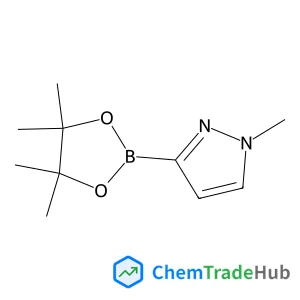
1-Methyl-3-(4,4,5,5-tetramethyl-1,3,2-dioxaborolan-2-yl)-1H-pyrazole
CAS Number:
1020174-04-2
Molecular Formula:
C10H17BN2O2
![[4-(Heptyloxy)phenyl]boronic acid structure](https://static.chemtradehub.com/structs/136/136370-19-9-ad33.webp "[4-(Heptyloxy)phenyl]boronic acid structure")
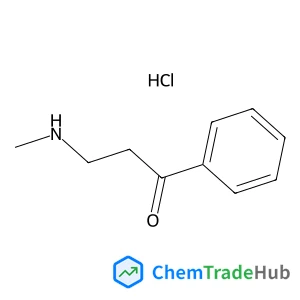
3-(Methylamino)-1-phenyl-1-propanone hydrochloride (1:1)
CAS Number:
2538-50-3
Molecular Formula:
C10H14ClNO

(3beta,7beta,12beta)-3,7,12-Trihydroxy-11,15,23-trioxolanost-8-en-26-oic acid
CAS Number:
98665-22-6
Molecular Formula:
C30H44O8
Recommended Suppliers


Disclaimer
This page provides academic journal information for reference and research purposes only. We are not affiliated with any journal publishers and do not handle publication submissions. For publication-related inquiries, please contact the respective journal publishers directly.
If you notice any inaccuracies in the information displayed, please contact us at support@chemtradehub.com. We will promptly review and address your concerns.