


Synthesis and structural investigation of a series of mannose-containing oligosaccharides using mass spectrometry
Literature Information
Publication Date
2017-12-05
DOI
10.1039/C7OB02723K
Impact Factor
3.876
Authors
S. Daikoku, R. Pendrill, Y. Kanie, Y. Ito, G. Widmalm, O. Kanie
View Original
Abstract
A series of compounds associated with naturally occurring and biologically relevant glycans consisting of α-mannosides were prepared and analyzed using collision-induced dissociation (CID), energy-resolved mass spectrometry (ERMS), and 1H nuclear magnetic resonance spectroscopy. The CID experiments of sodiated species of disaccharides and ERMS experiments revealed that the order of stability of mannosyl linkages was as follows: 6-linked > 4-linked ≧ 2-linked > 3-linked mannosyl residues. Analysis of linear trisaccharides revealed that the order observed in disaccharides could be applied to higher glycans. A branched trisaccharide showed a distinct dissociation pattern with two constituting disaccharide ions. The estimation of the content of this ion mixture was possible using the disaccharide spectra. The hydrolysis of mannose linkages at 3- and 6-positions in the branched trisaccharide revealed that the 3-linkage was cleaved twice as fast as the 6-linkage. It was observed that the solution-phase hydrolysis and gas-phase dissociation have similar energetics.
Recommended Journals

Russian Journal of General Chemistry

Chemical Communications

Nature Medicine

Crystallography Reports

Journal of Peptide Science

Current Opinion in Colloid & Interface Science

Russian Journal of Bioorganic Chemistry

Current Opinion in Solid State & Materials Science

Chemistry Education Research and Practice

Organic Process Research & Development
Related Literature
Photoionization and imaging spectroscopy of rubidium atoms attached to helium nanodroplets
C. Callegari
2012-02-13
Paper
DOI: 10.1039/C2CP22749E
Time-resolved vibrational spectroscopy of a molecular shuttle
Matthijs R. Panman, Pavol Bodis, Danny J. Shaw, Bert H. Bakker, Arthur C. Newton, Euan R. Kay, David A. Leigh, Wybren Jan Buma, Albert M. Brouwer, Sander Woutersen
2011-10-28
Paper
DOI: 10.1039/C1CP22146A
On the modeling of aggregates of an optically active regioregular polythiophene
Juan Torras, Cristina Sanchez-Navas, Oscar Bertran
2011-12-06
Paper
DOI: 10.1039/C2CP23122K
Cooperative effect of temperature and linker functionality on CO2 capture from industrial gas mixtures in metal–organic frameworks: a combined experimental and molecular simulation study
Wenjuan Zhang, Hongliang Huang, Chongli Zhong, Dahuan Liu
2011-12-08
Paper
DOI: 10.1039/C2CP23839J
Reversible transient hydrogenstorage in a fuelcell–supercapacitor hybrid device
Jesus E. Zerpa Unda, Emil Roduner
2012-02-09
Paper
DOI: 10.1039/C2CP23140A
Density minimum of confined water at low temperatures: a combined study by small-angle scattering of X-rays and neutrons
M. Erko, D. Wallacher, A. Hoell, T. Hauß, I. Zizak, O. Paris
2012-01-23
Paper
DOI: 10.1039/C2CP24075K
A rotating disk electrode study of the particle size effects of Pt for the hydrogen oxidation reaction
Yu Sun, Yu Dai, Yuwen Liu, Shengli Chen
2012-01-12
Paper
DOI: 10.1039/C2CP22761D
Molecular dynamics calculation of molecular volumes and volumes of activation
J. Spooner, N. Boon, E. Deglint, E. Edwards, B. Yanciw, B. Patton, L. Thiele, P. Dance
2012-01-12
Paper
DOI: 10.1039/C2CP22949H
Influence of a charged graphene surface on the orientation and conformation of covalently attached oligonucleotides: a molecular dynamics study
O. Kroutil, M. Předota, F. Lankaš, M. Šíp
2012-02-07
Paper
DOI: 10.1039/C2CP23540D
Confinement effects in the hydrogen adsorption on paddle wheel containing metal–organic frameworks
Diego A. Gomez, Aldo F. Combariza, German Sastre
2012-01-17
Paper
DOI: 10.1039/C2CP23146H
You might also like
Compound Q&A
What are the main uses of (3.beta.)-3-Hydroxy-N,N-dimethyl-chol-5-en-24-amide (CAS: 79066-03-8)?
(3.beta.)-3-Hydroxy-N,N-dimethyl-chol-5-en-24-amide (CAS: 79066-03-8) is primari...
79066-03-8(3.beta.)-3-Hydroxy-...
Compound Q&A
What regulatory guidelines apply to 5-(aminomethyl)-2-methoxyphenol (CAS: 89702-89-6)?
5-(Aminomethyl)-2-methoxyphenol (CAS: 89702-89-6) is classified under GHS as a s...
89702-89-65-(aminomethyl)-2-me...
Compound Q&A
What is Thieno[2,3-c]pyridin-7(6H)-one (CAS: 28981-13-7)?
Thieno[2,3-c]pyridin-7(6H)-one (CAS: 28981-13-7) is a heterocyclic organic compo...
28981-13-7Thieno[2,3-c]pyridin...
Compound Q&A
Is 1-[(6-Methoxy-3-pyridinyl)methyl]-4-piperidinamine dihydrochloride (CAS: 1185311-28-7) safe?
1-[(6-Methoxy-3-pyridinyl)methyl]-4-piperidinamine dihydrochloride is generally ...
1185311-28-71-[(6-Methoxy-3-pyri...
Compound Q&A
What regulatory guidelines apply to [(2E)-3-Phenyl-2-propen-1-yl]phosphonic acid (CAS: 146404-58-2)?
[(2E)-3-Phenyl-2-propen-1-yl]phosphonic acid (CAS: 146404-58-2) is regulated und...
146404-58-2[(2E)-3-Phenyl-2-pro...
Compound Q&A
What regulatory guidelines apply to 6-Bromo-7-methoxyquinoline (CAS: 1620515-86-7)?
6-Bromo-7-methoxyquinoline (CAS: 1620515-86-7) falls under the scope of the Glob...
1620515-86-76-Bromo-7-methoxyqui...
Compound Q&A
What industries use (2R)-1-(1-Benzofuran-2-yl)-N-propyl-2-pentanamine (CAS: 260550-89-8)?
This compound is primarily used in the pharmaceutical industry for the developme...
260550-89-8(2R)-1-(1-Benzofuran...
Compound Q&A
What are the main uses of 1-Ethyl-7-[2-methyl-6-(4H-1,2,4-triazol-3-yl)-3-pyridinyl]-3,5-dihydropyrazino[2,3-b]pyrazin-2(1H)-one (CAS: 1228013-15-7)?
1-Ethyl-7-[2-methyl-6-(4H-1,2,4-triazol-3-yl)-3-pyridinyl]-3,5-dihydropyrazino[2...
1228013-15-71-Ethyl-7-[2-methyl-...
Compound Q&A
Are there alternatives to {5-(Acryloylamino)-2-[(dimethylamino)methyl]phenyl}boronic acid (CAS: 1217500-78-1) in synthesis?
Alternative reagents such as 2-[(dimethylamino)methyl]phenylboronic acid or rela...
1217500-78-1{5-(Acryloylamino)-2...
Compound Q&A
What is 3-(Piperidin-4-yloxy)pyridine (CAS: 310881-48-2)?
3-(Piperidin-4-yloxy)pyridine (CAS: 310881-48-2) is an organic compound with the...
310881-48-23-(Piperidin-4-yloxy...
Source Journal
Organic & Biomolecular Chemistry

CiteScore:
3.4
Self-citation Rate:
10.3%
Articles per Year:
1041
Organic & Biomolecular Chemistry (OBC) publishes original and high impact research and reviews in organic chemistry. We welcome research that shows new or significantly improved protocols or methodologies in total synthesis, synthetic methodology or physical and theoretical organic chemistry as well as research that shows a significant advance in the organic chemistry or molecular design aspects of chemical biology, catalysis, supramolecular and macromolecular chemistry, theoretical chemistry, mechanism-oriented physical organic chemistry, medicinal chemistry or natural products. Articles published in the journal should report new work which makes a highly-significant impact in the field. Routine and incremental work is generally not suitable for publication in the journal. More details about key areas of our scope are below. In all cases authors should include in their article clear rationale for why their research has been carried out.
Recommended Compounds
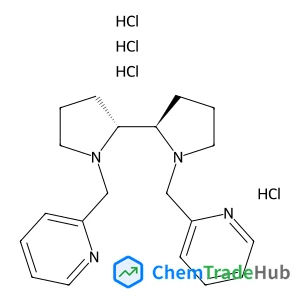
(2R,2'R)-1,1'-Bis(2-pyridinylmethyl)-2,2'-bipyrrolidine tetrahydrochloride
CAS Number:
1228077-88-0
Molecular Formula:
C20H30Cl4N4
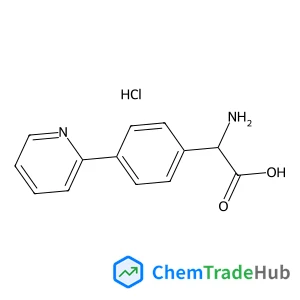
2-Amino-2-(4-(pyridin-2-YL)phenyl)acetic acid hydrochloride
CAS Number:
1135818-89-1
Molecular Formula:
C13H13ClN2O2
Recommended Suppliers






Disclaimer
This page provides academic journal information for reference and research purposes only. We are not affiliated with any journal publishers and do not handle publication submissions. For publication-related inquiries, please contact the respective journal publishers directly.
If you notice any inaccuracies in the information displayed, please contact us at support@chemtradehub.com. We will promptly review and address your concerns.