












Reversible transient hydrogenstorage in a fuelcell–supercapacitor hybrid device
Literature Information
Publication Date
2012-02-09
DOI
10.1039/C2CP23140A
Impact Factor
3.676
Authors
Jesus E. Zerpa Unda, Emil Roduner
View Original
Abstract
A new concept is investigated for hydrogen storage in a supercapacitor based on large-surface-area carbon material (Black Pearls 2000). Protons and electrons of hydrogen are separated on a fuel cell-type electrode and then stored separately in the electrical double layer, the electrons on the carbon and the protons in the aqueous electrolyte of the supercapacitor electrode. The merit of this concept is that it works spontaneously and reversibly near ambient pressure and temperature. This is in pronounced contrast to what has been known as electrochemical hydrogen storage, which does not involve hydrogen gas and where electrical work has to be spent in the loading process. With the present hybrid device, a H2 storage capacity of 0.13 wt% was obtained, one order of magnitude more than what can be stored by conventional physisorption on large-surface-area carbons at the same pressure and temperature. Raising the pressure from 1.5 to 3.5 bar increased the capacity by less than 20%, indicating saturation. A capacitance of 11 μF cm−2, comparable with that of a commercial double layer supercapacitor, was found using H2SO4 as electrolyte. The chemical energy of the stored H2 is almost a factor of 3 larger than the electrical energy stored in the supercapacitor. Further developments of this concept relate to a hydrogen buffer integrated inside a proton exchange membrane fuel cell to be used in case of peak power demand. This serial setup takes advantage of the suggested novel concept of hydrogen storage. It is fundamentally different from previous ways of operating a conventional supercapacitor hooked up in parallel to a fuel cell.
Related Literature
Diffusion ordered spectroscopy (DOSY) as applied to polymers
2017-10-25
Review Article
DOI: 10.1039/C7PY01577A
ROS-responsive poly(ε-caprolactone) with pendent thioether and selenide motifs
Li Yu, Mei Zhang, Fu-Sheng Du, Zi-Chen Li
2018-06-21
Paper
DOI: 10.1039/C8PY00620B
Macroporous poly(ionic liquid)/ionic liquid gels via CO2-based emulsion-templating polymerization
Kevin Mathieu, Christine Jérôme, Antoine Debuigne
2017-12-13
Paper
DOI: 10.1039/C7PY01952A
Reversible star assembly of polyolefins using interconversion between boroxine and boronic acid
Ryo Tanaka, Naoki Tonoko, Shin-ichi Kihara, Yuushou Nakayama, Takeshi Shiono
2018-06-12
Paper
DOI: 10.1039/C8PY00519B
Force-induced cleavage of a labile bond for enhanced mechanochemical crosslinking
Shu Wang, Grant A. Knappe, Norman J. Wagner
2017-10-03
Communication
DOI: 10.1039/C7PY01431G
Exploiting CH/π interactions in robust supramolecular adhesives
Taiki Yamate, Takayuki Fujiwara, Toru Yamaguchi, Hiroshi Suzuki, Motohiro Akazome
2018-07-20
Paper
DOI: 10.1039/C8PY00592C
Assembly of a visible light photoreactor: an inexpensive tool for bottlebrush polymer synthesis via photoiniferter polymerization
Kyle J. Arrington, John B. Matson
2017-11-30
Communication
DOI: 10.1039/C7PY01741C
Continuous-flow chemistry for the determination of comonomer reactivity ratios
Marcus H. Reis, Cullen L. G. Davidson, IV, Frank A. Leibfarth
2018-01-05
Paper
DOI: 10.1039/C7PY01938F
You might also like
Compound Q&A
What are the main uses of (3.beta.)-3-Hydroxy-N,N-dimethyl-chol-5-en-24-amide (CAS: 79066-03-8)?
(3.beta.)-3-Hydroxy-N,N-dimethyl-chol-5-en-24-amide (CAS: 79066-03-8) is primari...
79066-03-8(3.beta.)-3-Hydroxy-...
Compound Q&A
What regulatory guidelines apply to 5-(aminomethyl)-2-methoxyphenol (CAS: 89702-89-6)?
5-(Aminomethyl)-2-methoxyphenol (CAS: 89702-89-6) is classified under GHS as a s...
89702-89-65-(aminomethyl)-2-me...
Compound Q&A
What is Thieno[2,3-c]pyridin-7(6H)-one (CAS: 28981-13-7)?
Thieno[2,3-c]pyridin-7(6H)-one (CAS: 28981-13-7) is a heterocyclic organic compo...
28981-13-7Thieno[2,3-c]pyridin...
Compound Q&A
Is 1-[(6-Methoxy-3-pyridinyl)methyl]-4-piperidinamine dihydrochloride (CAS: 1185311-28-7) safe?
1-[(6-Methoxy-3-pyridinyl)methyl]-4-piperidinamine dihydrochloride is generally ...
1185311-28-71-[(6-Methoxy-3-pyri...
Compound Q&A
What regulatory guidelines apply to [(2E)-3-Phenyl-2-propen-1-yl]phosphonic acid (CAS: 146404-58-2)?
[(2E)-3-Phenyl-2-propen-1-yl]phosphonic acid (CAS: 146404-58-2) is regulated und...
146404-58-2[(2E)-3-Phenyl-2-pro...
Compound Q&A
What regulatory guidelines apply to 6-Bromo-7-methoxyquinoline (CAS: 1620515-86-7)?
6-Bromo-7-methoxyquinoline (CAS: 1620515-86-7) falls under the scope of the Glob...
1620515-86-76-Bromo-7-methoxyqui...
Compound Q&A
What industries use (2R)-1-(1-Benzofuran-2-yl)-N-propyl-2-pentanamine (CAS: 260550-89-8)?
This compound is primarily used in the pharmaceutical industry for the developme...
260550-89-8(2R)-1-(1-Benzofuran...
Compound Q&A
What are the main uses of 1-Ethyl-7-[2-methyl-6-(4H-1,2,4-triazol-3-yl)-3-pyridinyl]-3,5-dihydropyrazino[2,3-b]pyrazin-2(1H)-one (CAS: 1228013-15-7)?
1-Ethyl-7-[2-methyl-6-(4H-1,2,4-triazol-3-yl)-3-pyridinyl]-3,5-dihydropyrazino[2...
1228013-15-71-Ethyl-7-[2-methyl-...
Compound Q&A
Are there alternatives to {5-(Acryloylamino)-2-[(dimethylamino)methyl]phenyl}boronic acid (CAS: 1217500-78-1) in synthesis?
Alternative reagents such as 2-[(dimethylamino)methyl]phenylboronic acid or rela...
1217500-78-1{5-(Acryloylamino)-2...
Compound Q&A
What is 3-(Piperidin-4-yloxy)pyridine (CAS: 310881-48-2)?
3-(Piperidin-4-yloxy)pyridine (CAS: 310881-48-2) is an organic compound with the...
310881-48-23-(Piperidin-4-yloxy...
Source Journal
Physical Chemistry Chemical Physics

CiteScore:
5.5
Self-citation Rate:
10.3%
Articles per Year:
3036
Physical Chemistry Chemical Physics (PCCP) is an international journal co-owned by 19 physical chemistry and physics societies from around the world. This journal publishes original, cutting-edge research in physical chemistry, chemical physics and biophysical chemistry. To be suitable for publication in PCCP, articles must include significant innovation and/or insight into physical chemistry; this is the most important criterion that reviewers and Editors will judge against when evaluating submissions. The journal has a broad scope and welcomes contributions spanning experiment, theory, computation and data science. Topical coverage includes spectroscopy, dynamics, kinetics, statistical mechanics, thermodynamics, electrochemistry, catalysis, surface science, quantum mechanics, quantum computing and machine learning. Interdisciplinary research areas such as polymers and soft matter, materials, nanoscience, energy, surfaces/interfaces, and biophysical chemistry are welcomed if they demonstrate significant innovation and/or insight into physical chemistry. Joined experimental/theoretical studies are particularly appreciated when complementary and based on up-to-date approaches.
Recommended Compounds
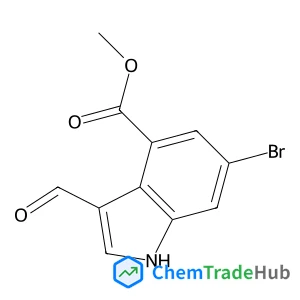
methyl 6-bromo-3-formyl-1H-indole-4-carboxylate
CAS Number:
1353636-63-1
Molecular Formula:
C11H8BrNO3
![N-[(6-Bromo-3-pyridinyl)methyl]ethanamine structure](https://static.chemtradehub.com/structs/120/120740-05-8-ca55.webp "N-[(6-Bromo-3-pyridinyl)methyl]ethanamine structure")
Recommended Suppliers




Disclaimer
This page provides academic journal information for reference and research purposes only. We are not affiliated with any journal publishers and do not handle publication submissions. For publication-related inquiries, please contact the respective journal publishers directly.
If you notice any inaccuracies in the information displayed, please contact us at support@chemtradehub.com. We will promptly review and address your concerns.