













Influence of a charged graphene surface on the orientation and conformation of covalently attached oligonucleotides: a molecular dynamics study
Literature Information
Publication Date
2012-02-07
DOI
10.1039/C2CP23540D
Impact Factor
3.676
Authors
O. Kroutil, M. Předota, F. Lankaš, M. Šíp
View Original
Abstract
Molecular dynamics (MD) simulations of single-stranded (ss) and double-stranded (ds) oligonucleotides anchored via an aliphatic linker to a graphene surface were performed in order to investigate the role of the surface charge density in the structure and orientation of attached DNA. Two types of interactions of DNA with the surface are crucial for the stabilisation of the DNA–surface system. Whereas for a surface with a zero or low positive charge density the dispersion forces between the base(s) and the surface dominate, the higher charge densities applied on the surface lead to a strong electrostatic interaction between the phosphate groups of DNA, the surface and the ions. At high-charge densities, the interaction of the DNA with the surface is strongly affected by the formation of a low-mobility layer of counterions compensating for the charge of the surface. A considerable difference in the behaviour of the ds-DNA and ss-DNA anchored to the layer was observed. The ds-DNA interacts with the surface at low- and zero-charge densities exclusively by the nearest base pair. It keeps its geometry close to the canonical B-DNA form, even at surfaces with high-charge densities. The ss-DNA, owing to its much higher flexibility, has a tendency to maximise the attraction to the surface exploiting more bases for the interaction. The interaction of the polar amino group(s) of the base(s) of ss-DNA with a negatively charged surface also contributes significantly to the system stability.
Related Literature
Polyallene-based amphiphilic triblock copolymer via successive free radical polymerization and ATRP
Hao Guo, Xiaoyu Huang
2017-11-27
Paper
DOI: 10.1039/C7PY01407D
In situ synthesis of diblock copolymer nano-assemblies via dispersion RAFT polymerization induced self-assembly and Ag/copolymer composite nanoparticles thereof
Mengting Tan, Yan Shi, Zhifeng Fu, Wantai Yang
2018-02-05
Paper
DOI: 10.1039/C7PY01905J
Exploiting CH/π interactions in robust supramolecular adhesives
Taiki Yamate, Takayuki Fujiwara, Toru Yamaguchi, Hiroshi Suzuki, Motohiro Akazome
2018-07-20
Paper
DOI: 10.1039/C8PY00592C
The effect of fluorination on chain transfer reactions in the radical polymerization of oligo ethylene glycol ethenesulfonate monomers
Hubertus Burchardt-Tofaute, Mukundan Thelakkat
2018-07-09
Paper
DOI: 10.1039/C8PY00623G
Main-chain benzoxazine precursor block copolymers
Zeynep Deliballi, Baris Kiskan, Yusuf Yagci
2017-11-28
Paper
DOI: 10.1039/C7PY01873H
Synthesis of enzyme-responsive phosphoramidate dendrimers for cancer drug delivery
Zhen Zhang, Yongcun Zhou, Zhuxian Zhou, Ying Piao, Nagendra Kalva, Xiangrui Liu, Jianbin Tang, Youqing Shen
2017-12-18
Paper
DOI: 10.1039/C7PY01492A
Highly efficient access to well-defined linear polymers with substantial vinyl pendants via ATRP of divinyl monomers
Xiao-Yan Wang, Xiu-Li Sun, Zhi-Hao Chen, Feng Wang, Sunewang R. Wang, Yong Tang
2018-07-26
Paper
DOI: 10.1039/C8PY00797G
A user's guide to the thiol-thioester exchange in organic media: scope, limitations, and applications in material science
Brady T. Worrell, Sudheendran Mavila, Chen Wang, Taylor M. Kontour, Chern-Hooi Lim, Matthew K. McBride, Charles B. Musgrave, Richard Shoemaker
2018-08-14
Paper
DOI: 10.1039/C8PY01031E
Macroporous poly(ionic liquid)/ionic liquid gels via CO2-based emulsion-templating polymerization
Kevin Mathieu, Christine Jérôme, Antoine Debuigne
2017-12-13
Paper
DOI: 10.1039/C7PY01952A
You might also like
Compound Q&A
What are the main uses of (3.beta.)-3-Hydroxy-N,N-dimethyl-chol-5-en-24-amide (CAS: 79066-03-8)?
(3.beta.)-3-Hydroxy-N,N-dimethyl-chol-5-en-24-amide (CAS: 79066-03-8) is primari...
79066-03-8(3.beta.)-3-Hydroxy-...
Compound Q&A
What regulatory guidelines apply to 5-(aminomethyl)-2-methoxyphenol (CAS: 89702-89-6)?
5-(Aminomethyl)-2-methoxyphenol (CAS: 89702-89-6) is classified under GHS as a s...
89702-89-65-(aminomethyl)-2-me...
Compound Q&A
What is Thieno[2,3-c]pyridin-7(6H)-one (CAS: 28981-13-7)?
Thieno[2,3-c]pyridin-7(6H)-one (CAS: 28981-13-7) is a heterocyclic organic compo...
28981-13-7Thieno[2,3-c]pyridin...
Compound Q&A
Is 1-[(6-Methoxy-3-pyridinyl)methyl]-4-piperidinamine dihydrochloride (CAS: 1185311-28-7) safe?
1-[(6-Methoxy-3-pyridinyl)methyl]-4-piperidinamine dihydrochloride is generally ...
1185311-28-71-[(6-Methoxy-3-pyri...
Compound Q&A
What regulatory guidelines apply to [(2E)-3-Phenyl-2-propen-1-yl]phosphonic acid (CAS: 146404-58-2)?
[(2E)-3-Phenyl-2-propen-1-yl]phosphonic acid (CAS: 146404-58-2) is regulated und...
146404-58-2[(2E)-3-Phenyl-2-pro...
Compound Q&A
What regulatory guidelines apply to 6-Bromo-7-methoxyquinoline (CAS: 1620515-86-7)?
6-Bromo-7-methoxyquinoline (CAS: 1620515-86-7) falls under the scope of the Glob...
1620515-86-76-Bromo-7-methoxyqui...
Compound Q&A
What industries use (2R)-1-(1-Benzofuran-2-yl)-N-propyl-2-pentanamine (CAS: 260550-89-8)?
This compound is primarily used in the pharmaceutical industry for the developme...
260550-89-8(2R)-1-(1-Benzofuran...
Compound Q&A
What are the main uses of 1-Ethyl-7-[2-methyl-6-(4H-1,2,4-triazol-3-yl)-3-pyridinyl]-3,5-dihydropyrazino[2,3-b]pyrazin-2(1H)-one (CAS: 1228013-15-7)?
1-Ethyl-7-[2-methyl-6-(4H-1,2,4-triazol-3-yl)-3-pyridinyl]-3,5-dihydropyrazino[2...
1228013-15-71-Ethyl-7-[2-methyl-...
Compound Q&A
Are there alternatives to {5-(Acryloylamino)-2-[(dimethylamino)methyl]phenyl}boronic acid (CAS: 1217500-78-1) in synthesis?
Alternative reagents such as 2-[(dimethylamino)methyl]phenylboronic acid or rela...
1217500-78-1{5-(Acryloylamino)-2...
Compound Q&A
What is 3-(Piperidin-4-yloxy)pyridine (CAS: 310881-48-2)?
3-(Piperidin-4-yloxy)pyridine (CAS: 310881-48-2) is an organic compound with the...
310881-48-23-(Piperidin-4-yloxy...
Source Journal
Physical Chemistry Chemical Physics

CiteScore:
5.5
Self-citation Rate:
10.3%
Articles per Year:
3036
Physical Chemistry Chemical Physics (PCCP) is an international journal co-owned by 19 physical chemistry and physics societies from around the world. This journal publishes original, cutting-edge research in physical chemistry, chemical physics and biophysical chemistry. To be suitable for publication in PCCP, articles must include significant innovation and/or insight into physical chemistry; this is the most important criterion that reviewers and Editors will judge against when evaluating submissions. The journal has a broad scope and welcomes contributions spanning experiment, theory, computation and data science. Topical coverage includes spectroscopy, dynamics, kinetics, statistical mechanics, thermodynamics, electrochemistry, catalysis, surface science, quantum mechanics, quantum computing and machine learning. Interdisciplinary research areas such as polymers and soft matter, materials, nanoscience, energy, surfaces/interfaces, and biophysical chemistry are welcomed if they demonstrate significant innovation and/or insight into physical chemistry. Joined experimental/theoretical studies are particularly appreciated when complementary and based on up-to-date approaches.
Recommended Compounds
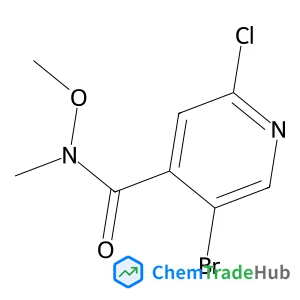
5-Bromo-2-chloro-N-methoxy-N-methylisonicotinamide
CAS Number:
1256790-08-5
Molecular Formula:
C8H8BrClN2O2

(4aS,10aS)-7-Isopropyl-1,4a-dimethyl-5,8-dioxo-3,4,4a,5,8,9,10,10a-octahydro-2-phenanthrenecarboxylic acid
CAS Number:
142950-86-5
Molecular Formula:
C20H24O4

2-Amino-2-(4-(pyridin-2-YL)phenyl)acetic acid hydrochloride
CAS Number:
1135818-89-1
Molecular Formula:
C13H13ClN2O2
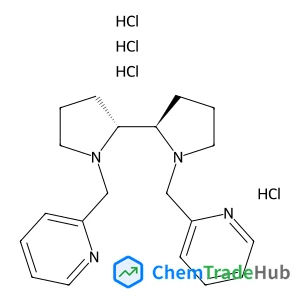
(2R,2'R)-1,1'-Bis(2-pyridinylmethyl)-2,2'-bipyrrolidine tetrahydrochloride
CAS Number:
1228077-88-0
Molecular Formula:
C20H30Cl4N4
Recommended Suppliers






Disclaimer
This page provides academic journal information for reference and research purposes only. We are not affiliated with any journal publishers and do not handle publication submissions. For publication-related inquiries, please contact the respective journal publishers directly.
If you notice any inaccuracies in the information displayed, please contact us at support@chemtradehub.com. We will promptly review and address your concerns.