












Harvesting visible light with MoO3 nanorods modified by Fe(iii) nanoclusters for effective photocatalytic degradation of organic pollutants
Literature Information
Publication Date
2018-01-17
DOI
10.1039/C7CP08206A
Impact Factor
3.676
Authors
U. Alam, S. Kumar, J. Koch, C. Tegenkamp, M. Muneer
View Original
Abstract
The photocatalytic performance of MoO3 is limited due to its weak visible light absorption ability and quick recombination of charge carriers. In the present work, we report the facile synthesis of Fe(III)-grafted MoO3 nanorods using a hydrothermal method followed by an impregnation technique with the aim of enhancing the light harvesting ability and photocatalytic efficiency of MoO3. The prepared samples were characterized through the standard analytical techniques of XRD, SEM-EDS, TEM, XPS, UV-Vis-DRS, FT-IR, TG-DTA and PL spectrophotometry. XPS and TEM analyses reveal that Fe(III) ions are successfully grafted onto the surface of the MoO3 nanorod with intimate interfacial contact. The photocatalytic performances of the prepared samples were investigated by studying the degradation of methylene blue (MB), rhodamine B (RhB) and 4-nitrophenol (4-NP) under visible light irradiation. The surface-modified MoO3 with Fe(III) ions showed excellent photocatalytic activity towards the degradation of the above-mentioned pollutants, where Fe(III) ions act as effective cocatalytic sites to produce hydroxyl radicals through multi-electron reduction of oxygen molecules. The improved photocatalytic activity could be ascribed to the effective separation of charge carriers and efficient production of hydroxyl radicals via the rapid capture of electrons by Fe(III) through a well-known photoinduced interfacial charge transfer mechanism. Based on scavenger analysis study, a mechanism for the enhanced photocatalytic activity has been discussed and proposed. The concept of surface grafting onto large bandgap semiconductors with ubiquitous elements opens up a new avenue for the development of visible-light-responsive photocatalysts with excellent photocatalytic activity.
Related Literature
Water binding to FeIII hemes studied in a cooled ion trap: characterization of a strong ‘weak’ ligand
Mohammad Aarabi, Satchin Soorkia, Gilles Grégoire, Aurélien de la Lande, Benoît Soep, Reza Omidyan, Niloufar Shafizadeh
2019-09-02
Paper
DOI: 10.1039/C9CP03608C
Enhanced electromagnon excitations in Nd-doped BiFeO3 nanoparticles near morphotropic phase boundaries
Yuan Zhang, Yi Zhang, Quan Guo, Dongwen Zhang, Shuaizhi Zheng, Ming Feng, Xiangli Zhong, Congbing Tan, Zhihui Lu, Jinbin Wang, Pengfei Hou, Yichun Zhou, Jianmin Yuan
2019-09-16
Paper
DOI: 10.1039/C9CP04194J
Nitrogen doping in coexposed (001)–(101) anatase TiO2 surfaces: a DFT study
Giovanni Di Liberto, Sergio Tosoni, Gianfranco Pacchioni
2019-09-10
Paper
DOI: 10.1039/C9CP03930A
Germanene/GaGeTe heterostructure: a promising electric-field induced data storage device with high carrier mobility
Liang Zhang, Jin Zhang, Pei-ji Wang, Chang-Wen Zhang
2020-02-04
Paper
DOI: 10.1039/C9CP06445A
Molecular dynamics simulation of thermo-mechanical behaviour of elastomer cross-linked via multifunctional zwitterions
Naveed Athir, Ling Shi, Sayyed Asim Ali Shah, Zhiyu Zhang, Jue Cheng, Jun Liu, Junying Zhang
2019-09-08
Paper
DOI: 10.1039/C9CP03221E
Exploring the reaction mechanism of ethanol synthesis from acetic acid over a Ni2In(100) surface
2020-03-06
Paper
DOI: 10.1039/D0CP00241K
Improved SERS activity of non-stoichiometric copper sulfide nanostructures related to charge-transfer resonance
Chaocang Weng, Lei Gao, Guotao Duan
2020-02-01
Paper
DOI: 10.1039/C9CP05930J
Photoexcited triplet states of twisted acenes investigated by Electron Paramagnetic Resonance
Claudia E. Tait, Anjan Bedi, Ori Gidron, Jan Behrends
2019-09-20
Paper
DOI: 10.1039/C9CP04135D
Correction: Enhancement of electron accepting ability of para-benzoquinone by a single water molecule
Golda Mensa-Bonsu, Aude Lietard, Jan R. R. Verlet
2020-03-03
Correction
DOI: 10.1039/D0CP90056G
You might also like
Compound Q&A
Is 6-(3-Fluorophenyl)picolinic acid (CAS: 887982-40-3) safe?
6-(3-Fluorophenyl)picolinic acid is generally considered safe for laboratory use...
887982-40-36-(3-Fluorophenyl)pi...
Compound Q&A
What industries use (3R)-3-Pyrrolidinol (CAS: 2799-21-5)?
(3R)-3-Pyrrolidinol is used in the pharmaceutical industry as a precursor for dr...
2799-21-5(3R)-3-Pyrrolidinol
Compound Q&A
What precautions should be taken when handling (4R,5R)-4,5-Diethoxycarbonyl-2,2-dimethyldioxolane (CAS: 59779-75-8)?
When handling (4R,5R)-4,5-Diethoxycarbonyl-2,2-dimethyldioxolane (CAS: 59779-75-...
59779-75-8(4R,5R)-4,5-Diethoxy...
Compound Q&A
How is 1-(6-Chloroimidazo[1,2-b]pyridazin-3-yl)ethanone (CAS: 90734-71-7) typically synthesized?
1-(6-Chloroimidazo[1,2-b]pyridazin-3-yl)ethanone is often synthesized via a mult...
90734-71-71-(6-Chloroimidazo[1...
Compound Q&A
What is the market or research trend for N-Ethyl-3,4-dimethylbenzylamine (CAS: 39180-83-1)?
The market for N-Ethyl-3,4-dimethylbenzylamine (CAS: 39180-83-1) remains steady,...
39180-83-1N-Ethyl-3,4-dimethyl...
Compound Q&A
What is Tert-butyl 3-(pyrrolidin-1-yl)azetidine-1-carboxylate (CAS: 1019008-21-9)?
Tert-butyl 3-(pyrrolidin-1-yl)azetidine-1-carboxylate is a chemical compound wit...
1019008-21-9Tert-butyl 3-(pyrrol...
Compound Q&A
What regulatory guidelines apply to 1-Bromo-3-chloro-2,4-dimethoxybenzene (CAS: 1228956-93-1)?
1-Bromo-3-chloro-2,4-dimethoxybenzene (CAS: 1228956-93-1) falls under the classi...
1228956-93-11-Bromo-3-chloro-2,4...
Compound Q&A
Is 8-Bromo-2-methyl-3,4-dihydroisoquinolin-1(2H)-one (CAS: 1368622-07-4) safe?
The safety of 8-Bromo-2-methyl-3,4-dihydroisoquinolin-1(2H)-one (CAS: 1368622-07...
1368622-07-48-Bromo-2-methyl-3,4...
Compound Q&A
Is Benzyl [(3S)-2,6-dioxo-3-piperidinyl]carbamate (CAS: 22785-43-9) safe?
Benzyl [(3S)-2,6-dioxo-3-piperidinyl]carbamate is generally safe when handled wi...
22785-43-9Benzyl [(3S)-2,6-dio...
Compound Q&A
How should 1-{[4-(4,4,5,5-Tetramethyl-1,3,2-dioxaborolan-2-yl)phenyl]sulfonyl}pyrrolidine (CAS: 928657-21-0) be stored?
1-{[4-(4,4,5,5-Tetramethyl-1,3,2-dioxaborolan-2-yl)phenyl]sulfonyl}pyrrolidine s...
928657-21-01-{[4-(4,4,5,5-Tetra...
Source Journal
Physical Chemistry Chemical Physics

CiteScore:
5.5
Self-citation Rate:
10.3%
Articles per Year:
3036
Physical Chemistry Chemical Physics (PCCP) is an international journal co-owned by 19 physical chemistry and physics societies from around the world. This journal publishes original, cutting-edge research in physical chemistry, chemical physics and biophysical chemistry. To be suitable for publication in PCCP, articles must include significant innovation and/or insight into physical chemistry; this is the most important criterion that reviewers and Editors will judge against when evaluating submissions. The journal has a broad scope and welcomes contributions spanning experiment, theory, computation and data science. Topical coverage includes spectroscopy, dynamics, kinetics, statistical mechanics, thermodynamics, electrochemistry, catalysis, surface science, quantum mechanics, quantum computing and machine learning. Interdisciplinary research areas such as polymers and soft matter, materials, nanoscience, energy, surfaces/interfaces, and biophysical chemistry are welcomed if they demonstrate significant innovation and/or insight into physical chemistry. Joined experimental/theoretical studies are particularly appreciated when complementary and based on up-to-date approaches.
Recommended Compounds
![[4-Chloro-3-(diethylcarbamoyl)phenyl]boronic acid structure](https://static.chemtradehub.com/structs/871/871332-68-2-0e3b.webp "[4-Chloro-3-(diethylcarbamoyl)phenyl]boronic acid structure")
[4-Chloro-3-(diethylcarbamoyl)phenyl]boronic acid
CAS Number:
871332-68-2
Molecular Formula:
C11H15BClNO3
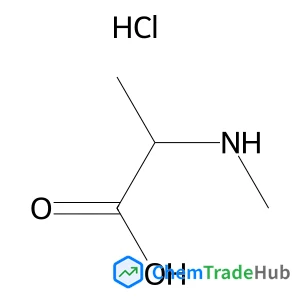
(R)-2-(Methylamino)propanoic acid hydrochloride
CAS Number:
1155878-14-0
Molecular Formula:
C4H10ClNO2
![Benzyl spiro[indole-3,4'-piperidine]-1(2H)-carboxylate hydrochloride (1:1) structure](https://static.chemtradehub.com/structs/159/159635-46-8-8de0.webp "Benzyl spiro[indole-3,4'-piperidine]-1(2H)-carboxylate hydrochloride (1:1) structure")
Benzyl spiro[indole-3,4'-piperidine]-1(2H)-carboxylate hydrochloride (1:1)
CAS Number:
159635-46-8
Molecular Formula:
C20H23ClN2O2
Recommended Suppliers




Disclaimer
This page provides academic journal information for reference and research purposes only. We are not affiliated with any journal publishers and do not handle publication submissions. For publication-related inquiries, please contact the respective journal publishers directly.
If you notice any inaccuracies in the information displayed, please contact us at support@chemtradehub.com. We will promptly review and address your concerns.