


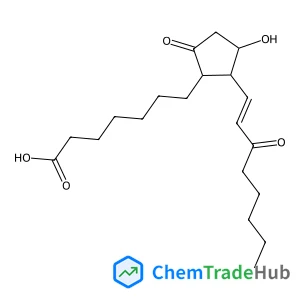
(11alpha,13E)-11-Hydroxy-9,15-dioxoprost-13-en-1-oic acid
CAS Number:
22973-19-9
Molecular Formula:
C20H32O5
A low-cost and high-efficiency nickel-indium bimetallic catalyst is designed to improve the activity of acetic acid hydrogenation to ethanol, which can make full use of the overproduced acetic acid. In this work, density functional theory (DFT) calculations are carried out to explore the mechanism of ethanol synthesis from acetic acid on the Ni2In(100) surface and tailor the catalyst to acquire enhanced properties. The results show that the most feasible pathway is CH3COOH → CH3CO → CH3CHO → CH3CHOH → CH3CH2OH, and the rate-determining step is the hydrogenation of CH3CHOH* to CH3CH2OH, with an activation barrier of 1.20 eV and an endothermic energy of 0.15 eV. Compared with the Cu2In(100) surface, the Ni2In(100) surface converts the reaction pathway to the acetyl species direction, which shows great advantages for the following CH3CHO* formation. Furthermore, the effects of indium doping in the nickel catalyst on the side reaction is also discussed by comparing with the monometallic Ni(111) surface. The addition of indium turns out to cause a significant inhibition on the C–C bond breaking and is beneficial for promoting the acetic acid hydrogenation to ethanol. Electronic analysis proves that the role of In is to donate electrons, which can increase the electron density of Ni and enhance the catalytic activity.

Journal of Natural Medicines

Russian Journal of Coordination Chemistry

Current Opinion in Solid State & Materials Science

Organic Process Research & Development

Journal of Peptide Science

Acta Materialia

Chemistry Education Research and Practice

Saudi Pharmaceutical Journal

Chemical Communications

Russian Journal of Organic Chemistry
Arnar Hafliðason, Huasheng Wang, Ágúst Kvaran
DOI: 10.1039/C5CP06097D
Talal M. Althagafi, Saud A. Algarni, Abdullah Al Naim, Javed Mazher, Martin Grell
DOI: 10.1039/C5CP03326H
Yicong Ma, Sajal K. Ghosh, Sambhunath Bera, Zhang Jiang, Christian M. Schlepütz, Evguenia Karapetrova, Laurence B. Lurio, Sunil K. Sinha
DOI: 10.1039/C5CP04703J
Kongfa Chen, Na Ai, San Ping Jiang
DOI: 10.1039/C5CP05065K
Laura Berstis, Kim K. Baldridge
DOI: 10.1039/C5CP01861G
Gil O. Rutter, David Quigley, Tiffany R. Walsh
DOI: 10.1039/C5CP05652G
Jun Ma, Xizi Cao, Xiaopeng Xing, Xuefeng Wang, Joel H. Parks
DOI: 10.1039/C5CP06116D
Marc Nadal-Ferret, Ricard Gelabert, Miquel Moreno
DOI: 10.1039/C5CP01067E
Manish Chopra, Niharendu Choudhury
DOI: 10.1039/C5CP90224J
S. Balaji, K. Kannan, I. S. Moon
DOI: 10.1039/C5CP04151A
6-(3-Fluorophenyl)picolinic acid is generally considered safe for laboratory use...
(3R)-3-Pyrrolidinol is used in the pharmaceutical industry as a precursor for dr...
When handling (4R,5R)-4,5-Diethoxycarbonyl-2,2-dimethyldioxolane (CAS: 59779-75-...
1-(6-Chloroimidazo[1,2-b]pyridazin-3-yl)ethanone is often synthesized via a mult...
The market for N-Ethyl-3,4-dimethylbenzylamine (CAS: 39180-83-1) remains steady,...
Tert-butyl 3-(pyrrolidin-1-yl)azetidine-1-carboxylate is a chemical compound wit...
1-Bromo-3-chloro-2,4-dimethoxybenzene (CAS: 1228956-93-1) falls under the classi...
The safety of 8-Bromo-2-methyl-3,4-dihydroisoquinolin-1(2H)-one (CAS: 1368622-07...
Benzyl [(3S)-2,6-dioxo-3-piperidinyl]carbamate is generally safe when handled wi...
1-{[4-(4,4,5,5-Tetramethyl-1,3,2-dioxaborolan-2-yl)phenyl]sulfonyl}pyrrolidine s...

Physical Chemistry Chemical Physics (PCCP) is an international journal co-owned by 19 physical chemistry and physics societies from around the world. This journal publishes original, cutting-edge research in physical chemistry, chemical physics and biophysical chemistry. To be suitable for publication in PCCP, articles must include significant innovation and/or insight into physical chemistry; this is the most important criterion that reviewers and Editors will judge against when evaluating submissions. The journal has a broad scope and welcomes contributions spanning experiment, theory, computation and data science. Topical coverage includes spectroscopy, dynamics, kinetics, statistical mechanics, thermodynamics, electrochemistry, catalysis, surface science, quantum mechanics, quantum computing and machine learning. Interdisciplinary research areas such as polymers and soft matter, materials, nanoscience, energy, surfaces/interfaces, and biophysical chemistry are welcomed if they demonstrate significant innovation and/or insight into physical chemistry. Joined experimental/theoretical studies are particularly appreciated when complementary and based on up-to-date approaches.
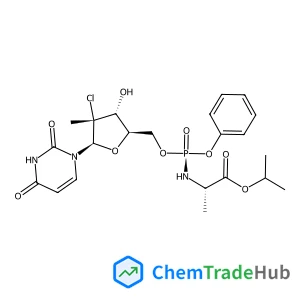
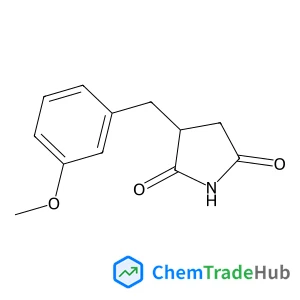
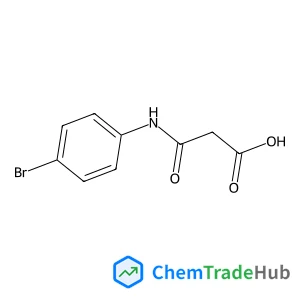
![2-[({[(2-Methyl-2-propanyl)oxy]carbonyl}amino)methyl]isonicotinic acid structure](https://static.chemtradehub.com/structs/473/473924-63-9-973b.webp "2-[({[(2-Methyl-2-propanyl)oxy]carbonyl}amino)methyl]isonicotinic acid structure")




