












Improved SERS activity of non-stoichiometric copper sulfide nanostructures related to charge-transfer resonance
Literature Information
Publication Date
2020-02-01
DOI
10.1039/C9CP05930J
Impact Factor
3.676
Authors
Chaocang Weng, Lei Gao, Guotao Duan
View Original
Abstract
The low enhancement factor of semiconductor SERS substrates is a major obstacle for their practical application. Therefore, there is a need to explore the facile synthesis of new SERS substrates and reveal the SERS enhancement mechanism. Here, we develop a simple, facile and low-cost two-step method to synthesize copper sulfide based nanostructures with different Cu7.2S4 contents. The as-synthesized sample is composed of nanosheets with the CuS phase structure. With the increase of the annealing temperature to 300 °C, the CuS content gradually decreases and disappears, and the content of Cu7.2S4 and CuSO4 appears and gradually increases. At the annealing temperature of 350 °C, only CuSO4 exists. Compared with pure CuS or pure CuSO4, the detection limit of R6G molecules is the lowest for the composite sample with a higher content of Cu7.2S4, indicating that the introduction of non-stoichiometric Cu7.2S4 can improve the SERS performance and the higher content of Cu7.2S4 leads to a higher SERS activity. Furthermore, to investigate the SERS mechanism, the energy band structures and energy-level diagrams of different probe molecules over CuS, Cu7.2S4 and CuxS are studied by DFT calculations. Theoretical calculations indicate that the excellent SERS behavior depends on charge transfer resonance. Our work provides a general approach for the construction of excellent metal compound semiconductor SERS active substrates.
Recommended Journals
Related Literature
Dual function of amino acid ionic liquids (Bmim[AA]) on the degradation of the organophosphorus pesticide, Paraoxon®
Javiera I. Morales, Roberto Figueroa, Mabel Rojas, Daniela Millán, Ricardo A. Tapia, Paulina Pavez
2018-09-18
Paper
DOI: 10.1039/C8OB01928B
Cross coupling reactions of organozinc iodides with solid-supported electrophiles: synthesis of 4-substituted benzoic and 3-substituted (E)- and (Z)-propenoic acids and amides
Leslie J. Oates, Richard F. W. Jackson, Michael H. Block
2002-11-29
Paper
DOI: 10.1039/B208632H
Ruthenium(ii)-catalyzed synthesis of indazolone-fused cinnolines via C–H coupling with diazo compounds
Lin Su, Zheng Yu, Peiling Ren, Zhi Luo, Wei Hou, Hongtao Xu
2018-09-13
Paper
DOI: 10.1039/C8OB02071J
Chemoselective synthesis of isolated and fused fluorenones and their photophysical and antiviral properties
Ismail Althagafi, Ranjay Shaw, Rahul Panwar, Shally, Chanda Sinha, Amit Kumar, Yong-Tang Zheng, Ramendra Pratap
2018-09-19
Paper
DOI: 10.1039/C8OB01733F
Singlet-energy transfer in quadruple hydrogen-bonded oligo(p-phenylenevinylene)perylene-diimide dyads
Edda E. Neuteboom, Edwin H. A. Beckers, Stefan C. J. Meskers, E. W. Meijer, René A. J. Janssen
2002-11-29
Paper
DOI: 10.1039/B208824J
Total synthesis of (±)-rhazinal, an alkaloidal spindle toxin from Kopsia teoi
Martin G. Banwell, Alison J. Edwards, Jason A. Smith, Ernest Hamel, Pascal Verdier-Pinard
2002-12-19
Paper
DOI: 10.1039/B209992F
A pendant peptide endows a sunscreen with water-resistance
Aubrey J. Ellison
2018-09-10
Communication
DOI: 10.1039/C8OB01773E
Hydride-exchange reactions between NADH and NAD+ model compounds under non-steady-state conditions. Apparent and real kinetic isotope effects
Yun Lu, Yixing Zhao, Kishan L. Handoo, Vernon D. Parker
2002-11-22
Paper
DOI: 10.1039/B208186E
Promoting laccase activity towards non-phenolic substrates: a mechanistic investigation with some laccase–mediator systems
Paola Baiocco, Anna Maria Barreca, Maura Fabbrini, Carlo Galli, Patrizia Gentili
2002-11-29
Paper
DOI: 10.1039/B208951C
Natural products as modulators of the cyclic-AMP pathway: evaluation and synthesis of lead compounds
Saumitra Sengupta, Goverdhan Mehta
2018-08-24
Review Article
DOI: 10.1039/C8OB01388H
You might also like
Compound Q&A
Is 6-(3-Fluorophenyl)picolinic acid (CAS: 887982-40-3) safe?
6-(3-Fluorophenyl)picolinic acid is generally considered safe for laboratory use...
887982-40-36-(3-Fluorophenyl)pi...
Compound Q&A
What industries use (3R)-3-Pyrrolidinol (CAS: 2799-21-5)?
(3R)-3-Pyrrolidinol is used in the pharmaceutical industry as a precursor for dr...
2799-21-5(3R)-3-Pyrrolidinol
Compound Q&A
What precautions should be taken when handling (4R,5R)-4,5-Diethoxycarbonyl-2,2-dimethyldioxolane (CAS: 59779-75-8)?
When handling (4R,5R)-4,5-Diethoxycarbonyl-2,2-dimethyldioxolane (CAS: 59779-75-...
59779-75-8(4R,5R)-4,5-Diethoxy...
Compound Q&A
How is 1-(6-Chloroimidazo[1,2-b]pyridazin-3-yl)ethanone (CAS: 90734-71-7) typically synthesized?
1-(6-Chloroimidazo[1,2-b]pyridazin-3-yl)ethanone is often synthesized via a mult...
90734-71-71-(6-Chloroimidazo[1...
Compound Q&A
What is the market or research trend for N-Ethyl-3,4-dimethylbenzylamine (CAS: 39180-83-1)?
The market for N-Ethyl-3,4-dimethylbenzylamine (CAS: 39180-83-1) remains steady,...
39180-83-1N-Ethyl-3,4-dimethyl...
Compound Q&A
What is Tert-butyl 3-(pyrrolidin-1-yl)azetidine-1-carboxylate (CAS: 1019008-21-9)?
Tert-butyl 3-(pyrrolidin-1-yl)azetidine-1-carboxylate is a chemical compound wit...
1019008-21-9Tert-butyl 3-(pyrrol...
Compound Q&A
What regulatory guidelines apply to 1-Bromo-3-chloro-2,4-dimethoxybenzene (CAS: 1228956-93-1)?
1-Bromo-3-chloro-2,4-dimethoxybenzene (CAS: 1228956-93-1) falls under the classi...
1228956-93-11-Bromo-3-chloro-2,4...
Compound Q&A
Is 8-Bromo-2-methyl-3,4-dihydroisoquinolin-1(2H)-one (CAS: 1368622-07-4) safe?
The safety of 8-Bromo-2-methyl-3,4-dihydroisoquinolin-1(2H)-one (CAS: 1368622-07...
1368622-07-48-Bromo-2-methyl-3,4...
Compound Q&A
Is Benzyl [(3S)-2,6-dioxo-3-piperidinyl]carbamate (CAS: 22785-43-9) safe?
Benzyl [(3S)-2,6-dioxo-3-piperidinyl]carbamate is generally safe when handled wi...
22785-43-9Benzyl [(3S)-2,6-dio...
Compound Q&A
How should 1-{[4-(4,4,5,5-Tetramethyl-1,3,2-dioxaborolan-2-yl)phenyl]sulfonyl}pyrrolidine (CAS: 928657-21-0) be stored?
1-{[4-(4,4,5,5-Tetramethyl-1,3,2-dioxaborolan-2-yl)phenyl]sulfonyl}pyrrolidine s...
928657-21-01-{[4-(4,4,5,5-Tetra...
Source Journal
Physical Chemistry Chemical Physics

CiteScore:
5.5
Self-citation Rate:
10.3%
Articles per Year:
3036
Physical Chemistry Chemical Physics (PCCP) is an international journal co-owned by 19 physical chemistry and physics societies from around the world. This journal publishes original, cutting-edge research in physical chemistry, chemical physics and biophysical chemistry. To be suitable for publication in PCCP, articles must include significant innovation and/or insight into physical chemistry; this is the most important criterion that reviewers and Editors will judge against when evaluating submissions. The journal has a broad scope and welcomes contributions spanning experiment, theory, computation and data science. Topical coverage includes spectroscopy, dynamics, kinetics, statistical mechanics, thermodynamics, electrochemistry, catalysis, surface science, quantum mechanics, quantum computing and machine learning. Interdisciplinary research areas such as polymers and soft matter, materials, nanoscience, energy, surfaces/interfaces, and biophysical chemistry are welcomed if they demonstrate significant innovation and/or insight into physical chemistry. Joined experimental/theoretical studies are particularly appreciated when complementary and based on up-to-date approaches.
Recommended Compounds
![2-Methyl-2-propanyl [(2S)-1-hydroxy-3-(4-hydroxyphenyl)-2-propanyl]carbamate structure](https://static.chemtradehub.com/structs/833/83345-46-4-eec2.webp "2-Methyl-2-propanyl [(2S)-1-hydroxy-3-(4-hydroxyphenyl)-2-propanyl]carbamate structure")
2-Methyl-2-propanyl [(2S)-1-hydroxy-3-(4-hydroxyphenyl)-2-propanyl]carbamate
CAS Number:
83345-46-4
Molecular Formula:
C14H21NO4

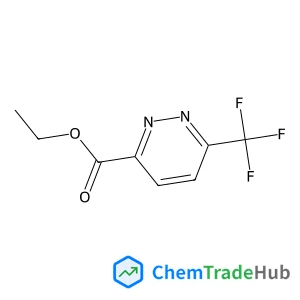
Ethyl 6-(trifluoromethyl)pyridazine-3-carboxylate
CAS Number:
1192155-06-8
Molecular Formula:
C8H7F3N2O2
Recommended Suppliers






Disclaimer
This page provides academic journal information for reference and research purposes only. We are not affiliated with any journal publishers and do not handle publication submissions. For publication-related inquiries, please contact the respective journal publishers directly.
If you notice any inaccuracies in the information displayed, please contact us at support@chemtradehub.com. We will promptly review and address your concerns.