












![(2E)-4-[(1R,2S,8R,19S,21R)-14-Hydroxy-11-isopropenyl-8,23,23-trimethyl-5-(3-methyl-2-buten-1-yl)-16,20-dioxo-3,7,22-trioxaheptacyclo[17.4.1.1~8,12~.0~2,17~.0~2,21~.0~4,15~.0~6,13~]pentacosa-4(15),5,13
,17-tetraen-21-yl]-2-methyl-2-butenoic acid structure](https://static.chemtradehub.com/structs/173/173867-04-4-d2d3.webp "(2E)-4-[(1R,2S,8R,19S,21R)-14-Hydroxy-11-isopropenyl-8,23,23-trimethyl-5-(3-methyl-2-buten-1-yl)-16,20-dioxo-3,7,22-trioxaheptacyclo[17.4.1.1~8,12~.0~2,17~.0~2,21~.0~4,15~.0~6,13~]pentacosa-4(15),5,13
,17-tetraen-21-yl]-2-methyl-2-butenoic acid structure")
Zr2Si: an antiferromagnetic Dirac MXene
Literature Information
Publication Date
2018-01-17
DOI
10.1039/C7CP08108A
Impact Factor
3.676
Authors
Xiaofei Shao, Xiaobiao Liu, Xiaoming Zhang, Junru Wang, Mingwen Zhao
View Original
Abstract
MXenes, which constitute a kind of graphene-like material, have been intensively investigated due to their applications in future nanoelectronics technology. These MXenes are either metallic or semiconducting, whereas Dirac cones similar to graphene have rarely been reported. Using first-principles calculations, we proposed a new MXene, namely Zr2Si, whose antiferromagnetic (AFM) ground state exhibited in these calculations anisotropic Dirac cones with Fermi velocities comparable to that in graphene. The Dirac spectrum here was determined to arise mainly from the dx2−y2 and dz2 orbitals of Zr atoms. Additionally, the Dirac cones can be gapped when taking the spin–orbit coupling (SOC) and Coulomb repulsive interaction (U) into account, which opens an avenue for using the Zr2Si MXene for electronics applications.
Related Literature
Correction: A hexagonal Ni6 cluster protected by 2-phenylethanethiol for catalytic conversion of toluene to benzaldehyde
Anthony M. S. Pembere, Chaonan Cui, Rajini Anumula, Haiming Wu, Pan An, Tongling Liang, Zhixun Luo
2020-02-28
Correction
DOI: 10.1039/D0CP90052D
Molecular dynamics simulation of thermo-mechanical behaviour of elastomer cross-linked via multifunctional zwitterions
Naveed Athir, Ling Shi, Sayyed Asim Ali Shah, Zhiyu Zhang, Jue Cheng, Jun Liu, Junying Zhang
2019-09-08
Paper
DOI: 10.1039/C9CP03221E
Boron-based inorganic heterocyclic clusters: electronic structure, chemical bonding, aromaticity, and analogy to hydrocarbons
Lin-Yan Feng, Rui Li, Hua-Jin Zhai
2019-07-04
Perspective
DOI: 10.1039/C9CP03254A
Exploring the reaction mechanism of ethanol synthesis from acetic acid over a Ni2In(100) surface
2020-03-06
Paper
DOI: 10.1039/D0CP00241K
Sodium-assisted passivation of grain boundaries and defects in Cu2ZnSnSe4 thin films
Juran Kim, Gee Yeong Kim, Trang Thi Thu Nguyen, Seokhyun Yoon, Yoon-Koo Kim, Seung-Yong Lee, Miyoung Kim, Dae-Hyung Cho, Yong-Duck Chung, Je-Ho Lee, Maeng-Je Seong, William Jo
2020-03-11
Paper
DOI: 10.1039/C9CP06537G
Improved SERS activity of non-stoichiometric copper sulfide nanostructures related to charge-transfer resonance
Chaocang Weng, Lei Gao, Guotao Duan
2020-02-01
Paper
DOI: 10.1039/C9CP05930J
The binding mode of vilazodone in the human serotonin transporter elucidated by ligand docking and molecular dynamics simulations
Guoxun Zheng, Tingting Fu, Jiajun Hong, Fengcheng Li, Xiaojun Yao, Weiwei Xue
2020-01-23
Paper
DOI: 10.1039/C9CP05764A
Pyridine–acetaldehyde, a molecular balance to explore the n→π* interaction
Susana Blanco, Alberto Macario, Juan Carlos López
2019-09-06
Communication
DOI: 10.1039/C9CP04088A
Phase transition and electronic properties of skutterudite-type IrP3 under high pressure
Xuejiao Ma, Dan Zhou, Yan Yan, Jing Xu, Siyuan Liu, Yulan Wang, Manai Cui, Yuheng Cheng, Yu Miao, Yanhui Liu
2019-08-27
Paper
DOI: 10.1039/C9CP02422K
Bio-mimetic self-assembled computationally designed catalysts of Mo and W for hydrogenation of CO2/dehydrogenation of HCOOH inspired by the active site of formate dehydrogenase
Bilal Ahmad Shiekh, Damanjit Kaur, Sourav Kumar
2019-09-10
Paper
DOI: 10.1039/C9CP03406D
You might also like
Compound Q&A
Is 6-(3-Fluorophenyl)picolinic acid (CAS: 887982-40-3) safe?
6-(3-Fluorophenyl)picolinic acid is generally considered safe for laboratory use...
887982-40-36-(3-Fluorophenyl)pi...
Compound Q&A
What industries use (3R)-3-Pyrrolidinol (CAS: 2799-21-5)?
(3R)-3-Pyrrolidinol is used in the pharmaceutical industry as a precursor for dr...
2799-21-5(3R)-3-Pyrrolidinol
Compound Q&A
What precautions should be taken when handling (4R,5R)-4,5-Diethoxycarbonyl-2,2-dimethyldioxolane (CAS: 59779-75-8)?
When handling (4R,5R)-4,5-Diethoxycarbonyl-2,2-dimethyldioxolane (CAS: 59779-75-...
59779-75-8(4R,5R)-4,5-Diethoxy...
Compound Q&A
How is 1-(6-Chloroimidazo[1,2-b]pyridazin-3-yl)ethanone (CAS: 90734-71-7) typically synthesized?
1-(6-Chloroimidazo[1,2-b]pyridazin-3-yl)ethanone is often synthesized via a mult...
90734-71-71-(6-Chloroimidazo[1...
Compound Q&A
What is the market or research trend for N-Ethyl-3,4-dimethylbenzylamine (CAS: 39180-83-1)?
The market for N-Ethyl-3,4-dimethylbenzylamine (CAS: 39180-83-1) remains steady,...
39180-83-1N-Ethyl-3,4-dimethyl...
Compound Q&A
What is Tert-butyl 3-(pyrrolidin-1-yl)azetidine-1-carboxylate (CAS: 1019008-21-9)?
Tert-butyl 3-(pyrrolidin-1-yl)azetidine-1-carboxylate is a chemical compound wit...
1019008-21-9Tert-butyl 3-(pyrrol...
Compound Q&A
What regulatory guidelines apply to 1-Bromo-3-chloro-2,4-dimethoxybenzene (CAS: 1228956-93-1)?
1-Bromo-3-chloro-2,4-dimethoxybenzene (CAS: 1228956-93-1) falls under the classi...
1228956-93-11-Bromo-3-chloro-2,4...
Compound Q&A
Is 8-Bromo-2-methyl-3,4-dihydroisoquinolin-1(2H)-one (CAS: 1368622-07-4) safe?
The safety of 8-Bromo-2-methyl-3,4-dihydroisoquinolin-1(2H)-one (CAS: 1368622-07...
1368622-07-48-Bromo-2-methyl-3,4...
Compound Q&A
Is Benzyl [(3S)-2,6-dioxo-3-piperidinyl]carbamate (CAS: 22785-43-9) safe?
Benzyl [(3S)-2,6-dioxo-3-piperidinyl]carbamate is generally safe when handled wi...
22785-43-9Benzyl [(3S)-2,6-dio...
Compound Q&A
How should 1-{[4-(4,4,5,5-Tetramethyl-1,3,2-dioxaborolan-2-yl)phenyl]sulfonyl}pyrrolidine (CAS: 928657-21-0) be stored?
1-{[4-(4,4,5,5-Tetramethyl-1,3,2-dioxaborolan-2-yl)phenyl]sulfonyl}pyrrolidine s...
928657-21-01-{[4-(4,4,5,5-Tetra...
Source Journal
Physical Chemistry Chemical Physics

CiteScore:
5.5
Self-citation Rate:
10.3%
Articles per Year:
3036
Physical Chemistry Chemical Physics (PCCP) is an international journal co-owned by 19 physical chemistry and physics societies from around the world. This journal publishes original, cutting-edge research in physical chemistry, chemical physics and biophysical chemistry. To be suitable for publication in PCCP, articles must include significant innovation and/or insight into physical chemistry; this is the most important criterion that reviewers and Editors will judge against when evaluating submissions. The journal has a broad scope and welcomes contributions spanning experiment, theory, computation and data science. Topical coverage includes spectroscopy, dynamics, kinetics, statistical mechanics, thermodynamics, electrochemistry, catalysis, surface science, quantum mechanics, quantum computing and machine learning. Interdisciplinary research areas such as polymers and soft matter, materials, nanoscience, energy, surfaces/interfaces, and biophysical chemistry are welcomed if they demonstrate significant innovation and/or insight into physical chemistry. Joined experimental/theoretical studies are particularly appreciated when complementary and based on up-to-date approaches.
Recommended Compounds
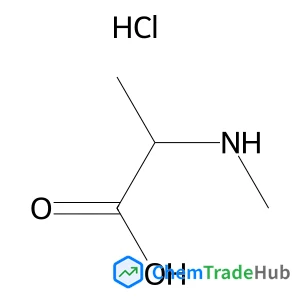
(R)-2-(Methylamino)propanoic acid hydrochloride
CAS Number:
1155878-14-0
Molecular Formula:
C4H10ClNO2
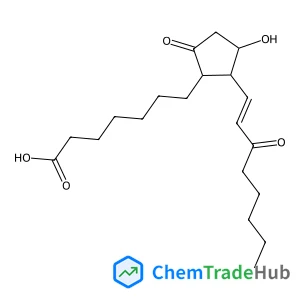
(11alpha,13E)-11-Hydroxy-9,15-dioxoprost-13-en-1-oic acid
CAS Number:
22973-19-9
Molecular Formula:
C20H32O5
Recommended Suppliers



Disclaimer
This page provides academic journal information for reference and research purposes only. We are not affiliated with any journal publishers and do not handle publication submissions. For publication-related inquiries, please contact the respective journal publishers directly.
If you notice any inaccuracies in the information displayed, please contact us at support@chemtradehub.com. We will promptly review and address your concerns.