![[4-Chloro-3-(diethylcarbamoyl)phenyl]boronic acid structure](https://static.chemtradehub.com/structs/871/871332-68-2-0e3b.webp "[4-Chloro-3-(diethylcarbamoyl)phenyl]boronic acid structure")
[4-Chloro-3-(diethylcarbamoyl)phenyl]boronic acid
CAS Number:
871332-68-2
Molecular Formula:
C11H15BClNO3
Lin-Yan Feng, Rui Li, Hua-Jin Zhai
This Perspective article deals with recent computational and experimental findings in boron-based heterocyclic clusters, which focuses on binary B–O and B–S clusters, as well as relevant ternary B–X–H (X = O, S, N) species. Boron is electron-deficient and boron clusters do not form monocyclic rings or linear chains. Boron-based heterocyclic clusters are intuitively even more electron-deficient and feature exotic chemical bonding, which make use of O 2p, S 3p, or N 2p lone-pairs for π delocalization over heterocyclic rings, facilitating new cluster structures and new types of bonding. Rhombic, pentagonal, hexagonal, and polycyclic clusters are discussed herein. Rhombic species are stabilized by four-center four-electron (4c-4e) π bonding, that is, the o-bond. An o-bond cluster differs from a typical 4π antiaromatic system, because it has 4π electrons in an unusual bonding/nonbonding combination, which takes advantage of the empty 2pz atomic orbitals from electron-deficient boron centers. A variety of examples (notably including boronyl boroxine) possess a hexagonal ring, as well as magic 6π electron-counting, making them new members of the inorganic benzene family. Pentagonal clusters bridge rhombic o-bond systems and inorganic benzenes, but they do not necessarily favor 6π electron-counting as in cyclopentadienide anion. In contrast, pentagonal 4π clusters are stable, leading to the concept of pentagonal o-bond. One electron can overturn the potential energy landscape of a system, enabling rhombic-to-hexagonal structural transition, which further reinforces the idea that 4π electron-counting is favorable for rhombic systems and 6π is magic for hexagonal rings. The bonding analogy between heterocyclic clusters and hydrocarbons goes beyond monocyclic species, which allows rational design of boron-based inorganic analogs of polycyclic aromatic hydrocarbons, including s-indacene as a puzzling aromatic/antiaromatic system. Selected linear B–O clusters are also briefly discussed, featuring dual 3c-4e π bonds, that is, ω-hyperbonds. Dual ω-hyperbonds, rhombic or pentagonal o-bond, and inorganic benzenes share a common chemical origin. The field of boron-based heterocyclic clusters is still in its infant stage, and much new chemistry remains to be discovered in forthcoming experimental and theoretical studies.
T. F. Otero, E. W. H. Jager
DOI: 10.1039/C5CP05841D
R. C. Hoffmann, M. Kaloumenos, D. Spiehl, E. Erdem, S. Repp, S. Weber, J. J. Schneider
DOI: 10.1039/C5CP05166E
Tianran Chen, Benjamin J. Foley, Madhusudan Tyagi, John R. D. Copley, Joshua J. Choi, Seung-Hun Lee
DOI: 10.1039/C5CP05348J
Jiadao Wang, Shuai Chen, Darong Chen
DOI: 10.1039/C5CP05045F
Martin Dahlqvist, Johanna Rosen
DOI: 10.1039/C5CP06021D
Laura Berstis, Kim K. Baldridge
DOI: 10.1039/C5CP01861G
Anita Dawes, Nigel John Mason, Helen Jane Fraser
DOI: 10.1039/C5CP05299H
Tiantian Hong, Zhifeng Liu, Weiguo Yan, Junqi Liu, Xueqi Zhang
DOI: 10.1039/C5CP05742F
Alexander Volk, Philipp Thaler, Daniel Knez, Andreas W. Hauser, Johannes Steurer, Werner Grogger, Ferdinand Hofer, Wolfgang E. Ernst
DOI: 10.1039/C5CP06248A
Linqi Shi, Jiabao Cui, Fei Zhao, Dejun Wang, Tengfeng Xie, Yanhong Lin
DOI: 10.1039/C5CP05935F
6-(3-Fluorophenyl)picolinic acid is generally considered safe for laboratory use...
(3R)-3-Pyrrolidinol is used in the pharmaceutical industry as a precursor for dr...
When handling (4R,5R)-4,5-Diethoxycarbonyl-2,2-dimethyldioxolane (CAS: 59779-75-...
1-(6-Chloroimidazo[1,2-b]pyridazin-3-yl)ethanone is often synthesized via a mult...
The market for N-Ethyl-3,4-dimethylbenzylamine (CAS: 39180-83-1) remains steady,...
Tert-butyl 3-(pyrrolidin-1-yl)azetidine-1-carboxylate is a chemical compound wit...
1-Bromo-3-chloro-2,4-dimethoxybenzene (CAS: 1228956-93-1) falls under the classi...
The safety of 8-Bromo-2-methyl-3,4-dihydroisoquinolin-1(2H)-one (CAS: 1368622-07...
Benzyl [(3S)-2,6-dioxo-3-piperidinyl]carbamate is generally safe when handled wi...
1-{[4-(4,4,5,5-Tetramethyl-1,3,2-dioxaborolan-2-yl)phenyl]sulfonyl}pyrrolidine s...

Physical Chemistry Chemical Physics (PCCP) is an international journal co-owned by 19 physical chemistry and physics societies from around the world. This journal publishes original, cutting-edge research in physical chemistry, chemical physics and biophysical chemistry. To be suitable for publication in PCCP, articles must include significant innovation and/or insight into physical chemistry; this is the most important criterion that reviewers and Editors will judge against when evaluating submissions. The journal has a broad scope and welcomes contributions spanning experiment, theory, computation and data science. Topical coverage includes spectroscopy, dynamics, kinetics, statistical mechanics, thermodynamics, electrochemistry, catalysis, surface science, quantum mechanics, quantum computing and machine learning. Interdisciplinary research areas such as polymers and soft matter, materials, nanoscience, energy, surfaces/interfaces, and biophysical chemistry are welcomed if they demonstrate significant innovation and/or insight into physical chemistry. Joined experimental/theoretical studies are particularly appreciated when complementary and based on up-to-date approaches.
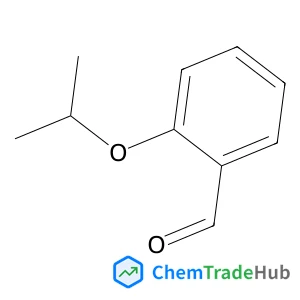
![Benzyl spiro[indole-3,4'-piperidine]-1(2H)-carboxylate hydrochloride (1:1) structure](https://static.chemtradehub.com/structs/159/159635-46-8-8de0.webp "Benzyl spiro[indole-3,4'-piperidine]-1(2H)-carboxylate hydrochloride (1:1) structure")