












First-principles study on thermodynamic stability of the hybrid interfacial structure of LiMn2O4 cathode and carbonate electrolyte in Li-ion batteries
Literature Information
Publication Date
2018-03-28
DOI
10.1039/C7CP08037A
Impact Factor
3.676
Authors
Daehyeon Choi, Joonhee Kang, Jinwoo Park, Byungchan Han
View Original
Abstract
The solid electrolyte interphase (SEI) of Li-ion batteries (LIBs) has been extensively studied, with most research focused on the anode, because of its significant impact on the prolonged cycle life, initial capacity loss, and safety issues. Using first-principles density functional theory (DFT) calculations and ab initio molecular dynamics (AIMD) simulations with the Hubbard correction, we examine the thermodynamic structure prediction and electrochemical stability of a spinel LiMn2O4 cathode interfaced with a carbonate electrolyte. The electronic energy levels of frontier orbitals of the electrolyte and the work function of the cathode offer clear characterization of the interfacial reactions. Our results based on both DFT calculations and AIMD simulations propose that the proton transfer mechanism at the hybrid interface is essential for initiating the SEI layer formation on the LiMn2O4 surface. Our results can be useful for identifying design concepts in the development of stable and high capacity LIBs with optimized electrodes and high-performance electrolytes.
Related Literature
Toward the total synthesis of patellazole B: synthesis of an advanced C1–C25 fragment corresponding to the macrocyclic skeleton
Andrew W. Phillips, Matthew J. Anketell, Tudor Balan, Nelson Y. S. Lam, Simon Williams, Ian Paterson
2018-09-07
Paper
DOI: 10.1039/C8OB01621F
Correction: A facile and high-yield formation of dipyrrin-boronic acid dyads and triads: a light-harvesting system in the visible region based on the efficient energy transfer
Masaki Yamamura, Shinya Yazaki, Motofumi Seki, Yasunori Matsui, Hiroshi Ikeda, Tatsuya Nabeshima
2018-07-20
Correction
DOI: 10.1039/C8OB90102C
Sulfono-γ-AA modified peptides that inhibit HIV-1 fusion
Olapeju Bolarinwa, Meng Zhang, Erin Mulry, Min Lu, Jianfeng Cai
2018-10-11
Paper
DOI: 10.1039/C8OB02159G
Tetraphenylethylene conjugated p-hydroxyphenacyl: fluorescent organic nanoparticles for the release of hydrogen sulfide under visible light with real-time cellular imaging
C. Parthiban, Pavithra M., L. Vinod Kumar Reddy, Dwaipayan Sen, Melvin Samuel S., N. D. Pradeep Singh
2018-10-03
Paper
DOI: 10.1039/C8OB01629A
Four novel sesquiterpenoids with their anti-Alzheimer's disease activity from Nardostachys chinensis
Pei-Qian Wu, Yi-Fan Yu, Ye Zhao, Chun-Xue Yu, De-Juan Zhi, Feng-Ming Qi
2018-11-07
Paper
DOI: 10.1039/C8OB02319K
Recent developments and applications of cyanamides in electrophilic cyanation
Manthena Chaitanya, Pazhamalai Anbarasan
2018-08-31
Review Article
DOI: 10.1039/C8OB01770K
Synthesis of 2-aminobenzophenones through acylation of anilines with α-oxocarboxylic acids assisted by tert-butyl nitrite
Xinying Zhang, Xuesen Fan
2018-10-03
Paper
DOI: 10.1039/C8OB01846D
Geometric deconstruction of core and electron activation of a π-system in a series of deformed porphyrins: mimics of heme
Qiuhua Liu, Jinjin Zhang, Min Tang, Yan Yang, Jian Zhang, Zaichun Zhou
2018-09-27
Paper
DOI: 10.1039/C8OB01959B
Diastereoselective construction of pyrrolo[2,1-a]isoquinoline-based bispirooxindoles through a three-component [3 + 2] cycloaddition
Jiaomei Guo, Yang Zhao, Dongmei Fang, Qilin Wang, Zhanwei Bu
2018-08-03
Paper
DOI: 10.1039/C8OB01493K
You might also like
Compound Q&A
What are the main uses of 1-(3-Aminophenyl)-3-[(3R)-1-(3,3-dimethyl-2-oxobutyl)-2-oxo-5-(2-pyridinyl)-2,3-dihydro-1H-1,4-benzodiazepin-3-yl]urea (CAS: 155412-88-7)?
This compound is mainly used as an intermediate in the synthesis of antipsychoti...
155412-88-71-(3-Aminophenyl)-3-...
Compound Q&A
How should waste containing 1-(D-Ribofuranosyl)-1,4-dihydro-3-pyridinecarboxamide (CAS: 19132-12-8) be handled?
Waste containing 1-(D-Ribofuranosyl)-1,4-dihydro-3-pyridinecarboxamide (CAS: 191...
19132-12-81-(D-Ribofuranosyl)-...
Compound Q&A
What regulatory guidelines apply to 2-Methyl-2-propanyl 3-bromo-3-(hydroxymethyl)-1-azetidinecarboxylate (CAS: 2007919-81-3)?
2-Methyl-2-propanyl 3-bromo-3-(hydroxymethyl)-1-azetidinecarboxylate (CAS: 20079...
2007919-81-32-Methyl-2-propanyl ...
Compound Q&A
What is N-(4-Chloro-2-pyridinyl)acetamide (CAS: 245056-66-0)?
N-(4-Chloro-2-pyridinyl)acetamide (CAS: 245056-66-0) is a chemical compound with...
245056-66-0N-(4-Chloro-2-pyridi...
Compound Q&A
What is 5-Chloro-2-hydroxybenzoic acid (CAS: 321-14-2)?
5-Chloro-2-hydroxybenzoic acid, also known as 5-chlorosalicylic acid, is an arom...
321-14-25-Chloro-2-hydroxybe...
Compound Q&A
What precautions should be taken when handling 1,1-Dichloro-1-fluoroethane (CAS: 1717-00-6)?
When handling 1,1-Dichloro-1-fluoroethane (CAS: 1717-00-6), it is important to u...
1717-00-61,1-Dichloro-1-fluor...
Compound Q&A
What are the physical and chemical properties of Fmoc-(2S,3R)-3-phenylpyrrolidine-2-carboxylic acid (CAS: 281655-32-1)?
Fmoc-(2S,3R)-3-phenylpyrrolidine-2-carboxylic acid is a white crystalline solid ...
281655-32-1Fmoc-(2S,3R)-3-pheny...
Compound Q&A
What are the main uses of 4-Amino-5-bromo-2-pyridinecarboxylic acid (CAS: 1363381-01-4)?
4-Amino-5-bromo-2-pyridinecarboxylic acid is primarily used as a precursor in th...
1363381-01-44-Amino-5-bromo-2-py...
Compound Q&A
What precautions should be taken when handling (S)-tert-butyl 2-((2-(4-bromophenyl)-2-oxoethyl)carbamoyl)pyrrolidine-1-carboxylate (CAS: 1007881-98-2)?
Handling this compound should be done with personal protective equipment (PPE) i...
1007881-98-2(S)-tert-butyl 2-((2...
Compound Q&A
What precautions should be taken when handling 8-bromo-2,2-dimethyl-3,4-dihydro-2H-1,4-benzoxazin-3-one (CAS: 688363-73-7)?
When handling 8-bromo-2,2-dimethyl-3,4-dihydro-2H-1,4-benzoxazin-3-one, use prop...
688363-73-78-bromo-2,2-dimethyl...
Source Journal
Physical Chemistry Chemical Physics

CiteScore:
5.5
Self-citation Rate:
10.3%
Articles per Year:
3036
Physical Chemistry Chemical Physics (PCCP) is an international journal co-owned by 19 physical chemistry and physics societies from around the world. This journal publishes original, cutting-edge research in physical chemistry, chemical physics and biophysical chemistry. To be suitable for publication in PCCP, articles must include significant innovation and/or insight into physical chemistry; this is the most important criterion that reviewers and Editors will judge against when evaluating submissions. The journal has a broad scope and welcomes contributions spanning experiment, theory, computation and data science. Topical coverage includes spectroscopy, dynamics, kinetics, statistical mechanics, thermodynamics, electrochemistry, catalysis, surface science, quantum mechanics, quantum computing and machine learning. Interdisciplinary research areas such as polymers and soft matter, materials, nanoscience, energy, surfaces/interfaces, and biophysical chemistry are welcomed if they demonstrate significant innovation and/or insight into physical chemistry. Joined experimental/theoretical studies are particularly appreciated when complementary and based on up-to-date approaches.
Recommended Compounds
![6-Benzyl-4,5,6,7-tetrahydro-1H-pyrazolo[3,4-c]pyridin-3(2H)-one structure](https://static.chemtradehub.com/structs/909/909187-64-0-f54f.webp "6-Benzyl-4,5,6,7-tetrahydro-1H-pyrazolo[3,4-c]pyridin-3(2H)-one structure")
6-Benzyl-4,5,6,7-tetrahydro-1H-pyrazolo[3,4-c]pyridin-3(2H)-one
CAS Number:
909187-64-0
Molecular Formula:
C13H15N3O
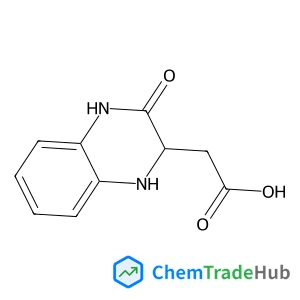
(3-Oxo-1,2,3,4-tetrahydro-2-quinoxalinyl)acetic acid
CAS Number:
136584-14-0
Molecular Formula:
C10H10N2O3
Recommended Suppliers




Disclaimer
This page provides academic journal information for reference and research purposes only. We are not affiliated with any journal publishers and do not handle publication submissions. For publication-related inquiries, please contact the respective journal publishers directly.
If you notice any inaccuracies in the information displayed, please contact us at support@chemtradehub.com. We will promptly review and address your concerns.