












![1-[6-(1H-Imidazol-1-yl)-3-pyridinyl]methanamine structure](https://static.chemtradehub.com/structs/914/914637-08-4-8825.webp "1-[6-(1H-Imidazol-1-yl)-3-pyridinyl]methanamine structure")
Tetraphenylethylene conjugated p-hydroxyphenacyl: fluorescent organic nanoparticles for the release of hydrogen sulfide under visible light with real-time cellular imaging
Literature Information
Publication Date
2018-10-03
DOI
10.1039/C8OB01629A
Impact Factor
3.876
Authors
C. Parthiban, Pavithra M., L. Vinod Kumar Reddy, Dwaipayan Sen, Melvin Samuel S., N. D. Pradeep Singh
View Original
Abstract
Hydrogen sulfide (H2S) behaves like a two-edged sword, at low concentrations it has beneficial and cytoprotective effects, while at higher concentrations it exhibits toxicity. Hence there is a keen interest in developing light responsive H2S donors with a spatio-temporal controlled release. Herein, we report visible light activatable tetraphenylethylene conjugated p-hydroxyphenacyl (TPE-pHP-H2S) nanoparticles for the release of hydrogen sulfide (H2S) with a real time monitoring ability. Our newly designed photoresponsive single component organic nanoparticle based H2S donor is built by integrating the tetraphenylethylene (TPE) moiety and p-hydroxyphenacyl (pHP) group so that it can display both aggregation-induced emission (AIE) and excited state intramolecular proton transfer (ESIPT) properties. Aggregation-induced emission enhancement was exhibited by our TPE-pHP-H2S NP donor, which was then explored for the cellular imaging application. The ESIPT by the pHP moiety provided unique advantages to our TPE-pHP-H2S NP donor which include (i) the excitation wavelength extended to >410 nm (ii) a large Stokes shift (iii) a low inner filter effect and (iv) real-time monitoring of H2S release by a simple fluorescent colour change. In vitro studies showed that the TPE-pHP-H2S NP donor presents excellent properties like real-time monitoring, photoregulated H2S release and biocompatibility.
Related Literature
Dependence of the liquid crystalline properties on the exactly controlled single-site functionalized density of mesogens focused on the alternating copolymer model
Ruixue Zhang, Xuwen Li, Hongwei Ma, Li Han, Chao Li, Songbo Zhang, Hongyuan Bai, Yang Li
2021-11-01
Paper
DOI: 10.1039/D1PY01310F
Propylene homopolymerization and copolymerization with ethylene by acenaphthene-based α-diimine nickel complexes to access EPR-like elastomers
Heng Liu, Chunyu Zhang, Xuequan Zhang
2021-10-12
Paper
DOI: 10.1039/D1PY00923K
General approach to prepare polymers bearing pendant isocyanate groups
Rodrigo Navarro, Carolina García, Juan Rodríguez-Hernández, Carlos Elvira, Angel Marcos-Fernández, Alberto Gallardo, Helmut Reinecke
2020-07-28
Communication
DOI: 10.1039/D0PY00989J
Crystallization behavior, structure, morphology, and thermal properties of crystalline and amorphous stereo diblock copolymers, poly(l-lactide)-b-poly(dl-lactide)
Hideto Tsuji, Kazumasa Iguchi, Kohji Tashiro, Yuki Arakawa
2020-08-28
Paper
DOI: 10.1039/D0PY01115K
Syndiospecific coordination (Co)polymerization of carbazole-substituted styrene derivatives using the scandium catalyst system
Xiaochun Mu, Yang Li
2021-10-21
Paper
DOI: 10.1039/D1PY00896J
Poly(ε-caprolactone) with pH and UCST responsiveness as a 5-fluorouracil carrier
Shuang Zhu, Lianlei Wen, Yan Xiao, Meidong Lang
2020-07-13
Paper
DOI: 10.1039/D0PY00865F
Ring opening polymerization of macrocyclic oligoesters derived from renewable sources
Antxon Martínez de Ilarduya, Sebastián Muñoz Guerra
2020-03-17
Review Article
DOI: 10.1039/D0PY00258E
Reversible cyclic-linear topological transformation using a long-range rotaxane switch
Daisuke Aoki, Gota Aibara
2021-10-07
Communication
DOI: 10.1039/D1PY01197A
Facile synthesis of well-controlled poly(1-vinyl imidazole) by the RAFT process
Bo Fan, Jing Wan, Alasdair McKay, Zhenyuan Qu, San H. Thang
2020-07-28
Paper
DOI: 10.1039/D0PY00985G
Polymer actuators based on covalent adaptable networks
Yahe Wu, Yan Ji
2020-05-14
Review Article
DOI: 10.1039/D0PY00075B
You might also like
Compound Q&A
What is the market or research trend for N-(4-Methoxybenzyl)-2-pyridinamine (CAS: 52818-63-0)?
N-(4-Methoxybenzyl)-2-pyridinamine (CAS: 52818-63-0) is increasingly being used ...
52818-63-0N-(4-Methoxybenzyl)-...
Compound Q&A
What precautions should be taken when handling Ethyl 4-(2-chlorophenyl)-1,3-thiazole-2-carboxylate (CAS: 1050507-06-6)?
When handling Ethyl 4-(2-chlorophenyl)-1,3-thiazole-2-carboxylate, appropriate p...
1050507-06-6Ethyl 4-(2-chlorophe...
Compound Q&A
What regulatory guidelines apply to diethyldiselane (CAS: 628-39-7)?
Diethyldiselane (CAS: 628-39-7) is classified under the Globally Harmonized Syst...
628-39-7Diethyldiselane
Compound Q&A
What is the market or research trend for oxocopper (CAS: 12053-18-8)?
The market for oxocopper (CAS: 12053-18-8) is primarily driven by its use in cat...
12053-18-8oxocopper; oxo-(oxoc...
Compound Q&A
What is the market or research trend for 5-{[(2-Methyl-2-propanyl)oxy]carbonyl}-5-azaspiro[2.4]heptane-7-carboxylic acid?
The market for 5-{[(2-Methyl-2-propanyl)oxy]carbonyl}-5-azaspiro[2.4]heptane-7-c...
1268519-54-55-{[(2-Methyl-2-prop...
Compound Q&A
What is 2-(1-Pyrrolidinyl)-4-pyridinamine (CAS: 35981-63-6)?
2-(1-Pyrrolidinyl)-4-pyridinamine is a chemical compound with the CAS number 359...
35981-63-62-(1-Pyrrolidinyl)-4...
Compound Q&A
What are the physical and chemical properties of 2-(3-Pyridinyl)-1-azabicyclo[2.2.2]octane (CAS: 91556-75-1)?
2-(3-Pyridinyl)-1-azabicyclo[2.2.2]octane (CAS: 91556-75-1) is a crystalline sol...
91556-75-12-(3-Pyridinyl)-1-az...
Compound Q&A
How is (S)-Alpha-allyl-proline hydrochloride (CAS: 129704-91-2) typically synthesized?
(S)-Alpha-allyl-proline hydrochloride is usually synthesized via a Wittig reacti...
129704-91-2(S)-Alpha-allyl-prol...
Compound Q&A
What is 3-Methyl-1,2-oxazole-5-carboxylic acid (CAS: 4857-42-5)?
3-Methyl-1,2-oxazole-5-carboxylic acid (CAS: 4857-42-5) is an organic compound w...
4857-42-53-Methyl-1,2-oxazole...
Compound Q&A
How is Lys-SMCC-DM1 (CAS: 1281816-04-3) typically synthesized?
Lys-SMCC-DM1 is synthesized via a multi-step process involving the coupling of S...
1281816-04-3Lys-SMCC-DM1
Source Journal
Organic & Biomolecular Chemistry

CiteScore:
3.4
Self-citation Rate:
10.3%
Articles per Year:
1041
Organic & Biomolecular Chemistry (OBC) publishes original and high impact research and reviews in organic chemistry. We welcome research that shows new or significantly improved protocols or methodologies in total synthesis, synthetic methodology or physical and theoretical organic chemistry as well as research that shows a significant advance in the organic chemistry or molecular design aspects of chemical biology, catalysis, supramolecular and macromolecular chemistry, theoretical chemistry, mechanism-oriented physical organic chemistry, medicinal chemistry or natural products. Articles published in the journal should report new work which makes a highly-significant impact in the field. Routine and incremental work is generally not suitable for publication in the journal. More details about key areas of our scope are below. In all cases authors should include in their article clear rationale for why their research has been carried out.
Recommended Compounds
![N-{[(2-Methyl-2-propanyl)oxy]carbonyl}-L-methionylglycine structure](https://static.chemtradehub.com/structs/234/23446-03-9-e1e5.webp "N-{[(2-Methyl-2-propanyl)oxy]carbonyl}-L-methionylglycine structure")
N-{[(2-Methyl-2-propanyl)oxy]carbonyl}-L-methionylglycine
CAS Number:
23446-03-9
Molecular Formula:
C12H22N2O5S
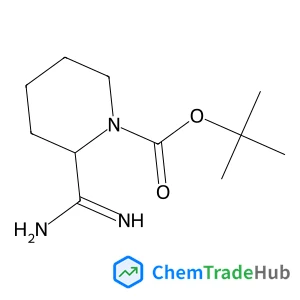
2-Methyl-2-propanyl 2-carbamimidoyl-1-piperidinecarboxylate
CAS Number:
1258640-98-0
Molecular Formula:
C11H21N3O2
Recommended Suppliers






Disclaimer
This page provides academic journal information for reference and research purposes only. We are not affiliated with any journal publishers and do not handle publication submissions. For publication-related inquiries, please contact the respective journal publishers directly.
If you notice any inaccuracies in the information displayed, please contact us at support@chemtradehub.com. We will promptly review and address your concerns.