












Back cover
Literature Information
Publication Date
DOI
10.1039/C8OB90153H
Impact Factor
3.876
Authors
View Original
Abstract
A graphical abstract is available for this content
Recommended Journals
Related Literature
Dependence of the liquid crystalline properties on the exactly controlled single-site functionalized density of mesogens focused on the alternating copolymer model
Ruixue Zhang, Xuwen Li, Hongwei Ma, Li Han, Chao Li, Songbo Zhang, Hongyuan Bai, Yang Li
2021-11-01
Paper
DOI: 10.1039/D1PY01310F
Folded amphiphilic homopolymer micelles in water: uniform self-assembly beyond amphiphilic random copolymers
Yoshihiko Kimura, Makoto Ouchi, Takaya Terashima
2020-07-06
Paper
DOI: 10.1039/D0PY00685H
Divergence of polycondensation by a tandem reaction based on sequential conjugate substitutions
Keito Hagiwara
2020-07-08
Communication
DOI: 10.1039/D0PY00648C
BODIPY bearing alkylthienyl side chains: a new building block to design conjugated polymers with near infrared absorption for organic photovoltaics
Chuandong Dou
2020-08-05
Paper
DOI: 10.1039/D0PY00868K
Effect of polymerisation by microwave on the physical properties of molecularly imprinted polymers (MIPs) specific for caffeine
Heli A. Brahmbhatt, Alexander Surtees, Cavan Tierney, Oluwabukunmi A. Ige, Elena V. Piletska, Thomas Swift
2020-08-12
Paper
DOI: 10.1039/D0PY00921K
Designing self-propagating polymers with ultrasensitivity through feedback signal amplification
Jiajia Tan, Jinming Hu, Shiyong Liu
2021-10-12
Minireview
DOI: 10.1039/D1PY01095F
High chemical recyclability of vinyl lactone acrylic bioplastics
Reid A. Gilsdorf, Matthew A. Nicki, Eugene Y.-X. Chen
2020-07-01
Paper
DOI: 10.1039/D0PY00786B
Dicarboxylic acid-epoxy vitrimers: influence of the off-stoichiometric acid content on cure reactions and thermo-mechanical properties
Jonny J. Blaker, Constantinos Soutis, François Tournilhac, Matthieu Gresil
2020-06-17
Paper
DOI: 10.1039/D0PY00342E
Anion-induced thermoresponsiveness in cationic polycysteine and DNA binding
Mahammad Anas, Priyanka Dinda, Mahuya Kar, Tarun K. Mandal
2021-10-12
Paper
DOI: 10.1039/D1PY01187A
Multi-responsive poly(oligo(ethylene glycol)methyl methacrylate)-co-poly(2-(diisopropylamino)ethyl methacrylate) hyperbranched copolymers via reversible addition fragmentation chain transfer polymerization
Dimitrios Selianitis, Stergios Pispas
2021-11-03
Paper
DOI: 10.1039/D1PY01320C
You might also like
Compound Q&A
What is the market or research trend for N-(4-Methoxybenzyl)-2-pyridinamine (CAS: 52818-63-0)?
N-(4-Methoxybenzyl)-2-pyridinamine (CAS: 52818-63-0) is increasingly being used ...
52818-63-0N-(4-Methoxybenzyl)-...
Compound Q&A
What precautions should be taken when handling Ethyl 4-(2-chlorophenyl)-1,3-thiazole-2-carboxylate (CAS: 1050507-06-6)?
When handling Ethyl 4-(2-chlorophenyl)-1,3-thiazole-2-carboxylate, appropriate p...
1050507-06-6Ethyl 4-(2-chlorophe...
Compound Q&A
What regulatory guidelines apply to diethyldiselane (CAS: 628-39-7)?
Diethyldiselane (CAS: 628-39-7) is classified under the Globally Harmonized Syst...
628-39-7Diethyldiselane
Compound Q&A
What is the market or research trend for oxocopper (CAS: 12053-18-8)?
The market for oxocopper (CAS: 12053-18-8) is primarily driven by its use in cat...
12053-18-8oxocopper; oxo-(oxoc...
Compound Q&A
What is the market or research trend for 5-{[(2-Methyl-2-propanyl)oxy]carbonyl}-5-azaspiro[2.4]heptane-7-carboxylic acid?
The market for 5-{[(2-Methyl-2-propanyl)oxy]carbonyl}-5-azaspiro[2.4]heptane-7-c...
1268519-54-55-{[(2-Methyl-2-prop...
Compound Q&A
What is 2-(1-Pyrrolidinyl)-4-pyridinamine (CAS: 35981-63-6)?
2-(1-Pyrrolidinyl)-4-pyridinamine is a chemical compound with the CAS number 359...
35981-63-62-(1-Pyrrolidinyl)-4...
Compound Q&A
What are the physical and chemical properties of 2-(3-Pyridinyl)-1-azabicyclo[2.2.2]octane (CAS: 91556-75-1)?
2-(3-Pyridinyl)-1-azabicyclo[2.2.2]octane (CAS: 91556-75-1) is a crystalline sol...
91556-75-12-(3-Pyridinyl)-1-az...
Compound Q&A
How is (S)-Alpha-allyl-proline hydrochloride (CAS: 129704-91-2) typically synthesized?
(S)-Alpha-allyl-proline hydrochloride is usually synthesized via a Wittig reacti...
129704-91-2(S)-Alpha-allyl-prol...
Compound Q&A
What is 3-Methyl-1,2-oxazole-5-carboxylic acid (CAS: 4857-42-5)?
3-Methyl-1,2-oxazole-5-carboxylic acid (CAS: 4857-42-5) is an organic compound w...
4857-42-53-Methyl-1,2-oxazole...
Compound Q&A
How is Lys-SMCC-DM1 (CAS: 1281816-04-3) typically synthesized?
Lys-SMCC-DM1 is synthesized via a multi-step process involving the coupling of S...
1281816-04-3Lys-SMCC-DM1
Source Journal
Organic & Biomolecular Chemistry

CiteScore:
3.4
Self-citation Rate:
10.3%
Articles per Year:
1041
Organic & Biomolecular Chemistry (OBC) publishes original and high impact research and reviews in organic chemistry. We welcome research that shows new or significantly improved protocols or methodologies in total synthesis, synthetic methodology or physical and theoretical organic chemistry as well as research that shows a significant advance in the organic chemistry or molecular design aspects of chemical biology, catalysis, supramolecular and macromolecular chemistry, theoretical chemistry, mechanism-oriented physical organic chemistry, medicinal chemistry or natural products. Articles published in the journal should report new work which makes a highly-significant impact in the field. Routine and incremental work is generally not suitable for publication in the journal. More details about key areas of our scope are below. In all cases authors should include in their article clear rationale for why their research has been carried out.
Recommended Compounds
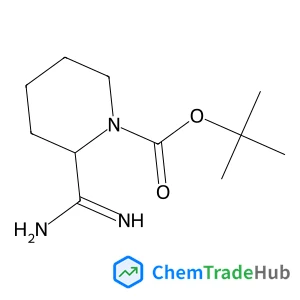
2-Methyl-2-propanyl 2-carbamimidoyl-1-piperidinecarboxylate
CAS Number:
1258640-98-0
Molecular Formula:
C11H21N3O2
Recommended Suppliers




Disclaimer
This page provides academic journal information for reference and research purposes only. We are not affiliated with any journal publishers and do not handle publication submissions. For publication-related inquiries, please contact the respective journal publishers directly.
If you notice any inaccuracies in the information displayed, please contact us at support@chemtradehub.com. We will promptly review and address your concerns.