


Four novel sesquiterpenoids with their anti-Alzheimer's disease activity from Nardostachys chinensis
Literature Information
Publication Date
2018-11-07
DOI
10.1039/C8OB02319K
Impact Factor
3.876
Authors
Pei-Qian Wu, Yi-Fan Yu, Ye Zhao, Chun-Xue Yu, De-Juan Zhi, Feng-Ming Qi
View Original
Abstract
Nardochinins A–D (1–4), four novel sesquiterpenoids, along with four known ones were isolated from the underground parts of Nardostachys chinensis Batal in ethanol. Their structures were determined by extensive spectroscopic methods and single-crystal X-ray diffraction. Nardochinin A (1) possessed a norsesquiterpene skeleton with an unusual 3/6/5/5 tetracyclic ring system, which had not appeared in natural products. Nardochinins B (2) and C (3) were the first time found naturally occurring sesquiterpenoids with a 4,5-seco-nardosinane skeleton. Besides, compound 3 represented an unprecedented 4,5-seco-nardosinane type norsesquiterpenoid with losing an isopropenyl at C-6 compared with 2 in the structural framework. Nardochinin D (4) was a novel, highly oxygenated valerenane-type sesquiterpenoid possessing a rare 3,12-epoxy group and an unusual 9,11-epoxy group. The anti-Alzheimer's disease (AD) activities of 1–4 were also evaluated using the Caenorhabditis elegans AD pathological model, and nardochinin B (2) had the highest anti-AD activity.
Recommended Journals

Advances in Colloid and Interface Science

Chemical & Pharmaceutical Bulletin

Accounts of Chemical Research

Chemistry of Heterocyclic Compounds

Chemical Reviews

Journal of the Chinese Chemical Society

Cement and Concrete Research

Analyst

Australian Journal of Chemistry

Journal of the American Chemical Society
Related Literature
Ab initio modelling of methane hydrate thermophysical properties
Z. M. Jendi, P. Servio, A. D. Rey
2016-03-14
Paper
DOI: 10.1039/C5CP06530E
Isothermal microcalorimetry as a tool to study solid–electrolyte interphase formation in lithium-ion cells
David S. Hall, Stephen L. Glazier, J. R. Dahn
2016-03-31
Paper
DOI: 10.1039/C6CP01309K
Ether cleavage-triggered degradation of benzyl alkylammonium cations for polyethersulfone anion exchange membranes
2016-03-24
Paper
DOI: 10.1039/C6CP00579A
Novel scroll peapod produced by spontaneous scrolling of graphene onto fullerene string
Shuqiong Xu, Hongjin Fu, Chengmao Zhang, Zonglei Gu, Danhui Zhang
2016-03-14
Paper
DOI: 10.1039/C6CP00385K
Improvement of the electron collection efficiency in porous hematite using a thin iron oxide underlayer: towards efficient all-iron based photoelectrodes
Nicola Dalle Carbonare, Stefano Carli, Roberto Argazzi, Michele Orlandi, Nicola Bazzanella, Antonio Miotello, Stefano Caramori, Carlo A. Bignozzi
2015-10-19
Paper
DOI: 10.1039/C5CP04152J
Formation of Li3O4 nano particles in the discharge products of non-aqueous lithium–oxygen batteries leads to lower charge overvoltage
L. Shi, A. Xu, T. S. Zhao
2015-10-02
Paper
DOI: 10.1039/C5CP03886C
Silane-initiated nucleation in chemically active plasmas: validation of density functionals, mechanisms, and pressure-dependent variational transition state calculations
Junwei Lucas Bao, Donald G. Truhlar
2016-03-11
Paper
DOI: 10.1039/C6CP00816J
In situ spectroelectrochemical and theoretical study on the oxidation of a 4H-imidazole-ruthenium dye adsorbed on nanocrystalline TiO2 thin film electrodes
Stephan Kupfer, Thomas Bocklitz, Julien Guthmuller, Sven Rau
2015-10-19
Paper
DOI: 10.1039/C5CP04484G
Phase diagrams of diblock copolymers in electric fields: a self-consistent field theory study
Ji Wu, Xianghong Wang, Yongyun Ji, Linli He, Shiben Li
2016-03-14
Paper
DOI: 10.1039/C5CP08030D
Improved charge carrier separation in barium tantalate composites investigated by laser flash photolysis
Jenny Schneider, Michael Wark, Roland Marschall
2015-12-15
Paper
DOI: 10.1039/C5CP07115A
You might also like
Compound Q&A
What is the market or research trend for N-(4-Methoxybenzyl)-2-pyridinamine (CAS: 52818-63-0)?
N-(4-Methoxybenzyl)-2-pyridinamine (CAS: 52818-63-0) is increasingly being used ...
52818-63-0N-(4-Methoxybenzyl)-...
Compound Q&A
What precautions should be taken when handling Ethyl 4-(2-chlorophenyl)-1,3-thiazole-2-carboxylate (CAS: 1050507-06-6)?
When handling Ethyl 4-(2-chlorophenyl)-1,3-thiazole-2-carboxylate, appropriate p...
1050507-06-6Ethyl 4-(2-chlorophe...
Compound Q&A
What regulatory guidelines apply to diethyldiselane (CAS: 628-39-7)?
Diethyldiselane (CAS: 628-39-7) is classified under the Globally Harmonized Syst...
628-39-7Diethyldiselane
Compound Q&A
What is the market or research trend for oxocopper (CAS: 12053-18-8)?
The market for oxocopper (CAS: 12053-18-8) is primarily driven by its use in cat...
12053-18-8oxocopper; oxo-(oxoc...
Compound Q&A
What is the market or research trend for 5-{[(2-Methyl-2-propanyl)oxy]carbonyl}-5-azaspiro[2.4]heptane-7-carboxylic acid?
The market for 5-{[(2-Methyl-2-propanyl)oxy]carbonyl}-5-azaspiro[2.4]heptane-7-c...
1268519-54-55-{[(2-Methyl-2-prop...
Compound Q&A
What is 2-(1-Pyrrolidinyl)-4-pyridinamine (CAS: 35981-63-6)?
2-(1-Pyrrolidinyl)-4-pyridinamine is a chemical compound with the CAS number 359...
35981-63-62-(1-Pyrrolidinyl)-4...
Compound Q&A
What are the physical and chemical properties of 2-(3-Pyridinyl)-1-azabicyclo[2.2.2]octane (CAS: 91556-75-1)?
2-(3-Pyridinyl)-1-azabicyclo[2.2.2]octane (CAS: 91556-75-1) is a crystalline sol...
91556-75-12-(3-Pyridinyl)-1-az...
Compound Q&A
How is (S)-Alpha-allyl-proline hydrochloride (CAS: 129704-91-2) typically synthesized?
(S)-Alpha-allyl-proline hydrochloride is usually synthesized via a Wittig reacti...
129704-91-2(S)-Alpha-allyl-prol...
Compound Q&A
What is 3-Methyl-1,2-oxazole-5-carboxylic acid (CAS: 4857-42-5)?
3-Methyl-1,2-oxazole-5-carboxylic acid (CAS: 4857-42-5) is an organic compound w...
4857-42-53-Methyl-1,2-oxazole...
Compound Q&A
How is Lys-SMCC-DM1 (CAS: 1281816-04-3) typically synthesized?
Lys-SMCC-DM1 is synthesized via a multi-step process involving the coupling of S...
1281816-04-3Lys-SMCC-DM1
Source Journal
Organic & Biomolecular Chemistry

CiteScore:
3.4
Self-citation Rate:
10.3%
Articles per Year:
1041
Organic & Biomolecular Chemistry (OBC) publishes original and high impact research and reviews in organic chemistry. We welcome research that shows new or significantly improved protocols or methodologies in total synthesis, synthetic methodology or physical and theoretical organic chemistry as well as research that shows a significant advance in the organic chemistry or molecular design aspects of chemical biology, catalysis, supramolecular and macromolecular chemistry, theoretical chemistry, mechanism-oriented physical organic chemistry, medicinal chemistry or natural products. Articles published in the journal should report new work which makes a highly-significant impact in the field. Routine and incremental work is generally not suitable for publication in the journal. More details about key areas of our scope are below. In all cases authors should include in their article clear rationale for why their research has been carried out.
Recommended Compounds
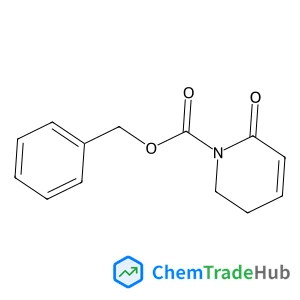
Benzyl 6-oxo-3,6-dihydro-1(2H)-pyridinecarboxylate
CAS Number:
725746-35-0
Molecular Formula:
C13H13NO3
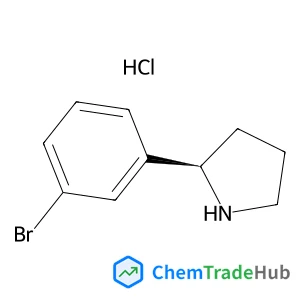
(2R)-2-(3-Bromophenyl)pyrrolidine hydrochloride (1:1)
CAS Number:
1391550-13-2
Molecular Formula:
C10H13BrClN
Recommended Suppliers






Disclaimer
This page provides academic journal information for reference and research purposes only. We are not affiliated with any journal publishers and do not handle publication submissions. For publication-related inquiries, please contact the respective journal publishers directly.
If you notice any inaccuracies in the information displayed, please contact us at support@chemtradehub.com. We will promptly review and address your concerns.