


Geometric deconstruction of core and electron activation of a π-system in a series of deformed porphyrins: mimics of heme
Literature Information
Publication Date
2018-09-27
DOI
10.1039/C8OB01959B
Impact Factor
3.876
Authors
Qiuhua Liu, Jinjin Zhang, Min Tang, Yan Yang, Jian Zhang, Zaichun Zhou
View Original
Abstract
The predominant distortion of heme is responsible for its electronic activity, catalytic ability and spectral properties. In this work, altogether 12 new X-ray structures of saddled, waved and ruffled porphyrins are reported. Three types of deformed porphyrins as mimics of heme were evaluated and analyzed by geometric deconstruction, spectral comparison, and electrochemical tracking, which shows a unique relationship of deformation fashions and distortion degree to the geometry of the core and electron transfer ability of rings in these enzyme containing porphyrins. These mimics can adjust their core geometry for changing the structures of potential metals; while for rings themselves, they can also regulate the electron activity by switching the HOMO of the large π systems. These deformed porphyrins can be used as ideal mimics for heme. These findings help us to understand the principle and contribution of these deformations to electron transfer in catalytic oxidation and photoreactions. The nonplanar mimics have been synthesized through a modular synthetic approach under Adler–Longo or Lindsey condensation conditions.
Recommended Journals

Nature Medicine

Chemical Communications

Russian Journal of Organic Chemistry

Crystallography Reports

Russian Journal of Applied Chemistry

Journal of Saudi Chemical Society

Current Opinion in Colloid & Interface Science

Journal of Peptide Science

Current Opinion in Solid State & Materials Science

Drug Discovery Today
Related Literature
Inspired by mussel adhesive protein: hydrophilic cationic copoly(2-oxazoline)s carrying catecholic side chains
Nils Lüdecke, Helmut Schlaad
2021-08-24
Paper
DOI: 10.1039/D1PY00679G
Facile preparation of polycarbonates from bio-based eugenol and 2-methoxy-4-vinylphenol
Mengqian Huang, De Bai, Qin Chen, Changbo Zhao, Tianhua Ren, Caijuan Huang, Michael North, Haibo Xie
2020-06-30
Communication
DOI: 10.1039/D0PY00291G
Biobased poly(ester-co-glycoside) from reactive natural Brønsted acidic deep eutectic solvent analogue
Gabriel Duaux, Etienne Fleury, Daniel Portinha
2021-08-27
Paper
DOI: 10.1039/D1PY00990G
Recent developments in stimuli-responsive luminescent polymers composed of boron compounds
Shunichiro Ito, Masayuki Gon, Kazuo Tanaka, Yoshiki Chujo
2021-10-01
Review Article
DOI: 10.1039/D1PY01170G
Aluminum-catalyzed statistical copolymerization of mono-, tri- and penta-fluorophenyl glycidyl ether with ethylene oxide and epichlorohydrin
Fang Guo, Ming Deng, Fan Li, Shoulong Chen
2021-09-06
Paper
DOI: 10.1039/D1PY00938A
Sequence regulation in living anionic terpolymerization of styrene and two categories of 1,1-diphenylethylene (DPE) derivatives
Lincan Yang, Heyu Shen, Li Han, Hongwei Ma, Chao Li, Lan Lei, Songbo Zhang, Pibo Liu, Yang Li
2020-07-14
Paper
DOI: 10.1039/D0PY00731E
Synthesis and optoelectronic properties of benzodithiophene-based conjugated polymers with hydrogen bonding nucleobase side chain functionality
Sina Sabury, Tyler J. Adams, Margaret Kocherga, Michael G. Walter
2020-08-11
Paper
DOI: 10.1039/D0PY00972E
Divergence of polycondensation by a tandem reaction based on sequential conjugate substitutions
Keito Hagiwara
2020-07-08
Communication
DOI: 10.1039/D0PY00648C
Screening RAFT agents and photocatalysts to mediate PET-RAFT polymerization using a high throughput approach
Gervase Ng, Kenward Jung, Jun Li, Chenyu Wu, Liwen Zhang, Cyrille Boyer
2021-10-27
Paper
DOI: 10.1039/D1PY01258D
You might also like
Compound Q&A
What is the market or research trend for N-(4-Methoxybenzyl)-2-pyridinamine (CAS: 52818-63-0)?
N-(4-Methoxybenzyl)-2-pyridinamine (CAS: 52818-63-0) is increasingly being used ...
52818-63-0N-(4-Methoxybenzyl)-...
Compound Q&A
What precautions should be taken when handling Ethyl 4-(2-chlorophenyl)-1,3-thiazole-2-carboxylate (CAS: 1050507-06-6)?
When handling Ethyl 4-(2-chlorophenyl)-1,3-thiazole-2-carboxylate, appropriate p...
1050507-06-6Ethyl 4-(2-chlorophe...
Compound Q&A
What regulatory guidelines apply to diethyldiselane (CAS: 628-39-7)?
Diethyldiselane (CAS: 628-39-7) is classified under the Globally Harmonized Syst...
628-39-7Diethyldiselane
Compound Q&A
What is the market or research trend for oxocopper (CAS: 12053-18-8)?
The market for oxocopper (CAS: 12053-18-8) is primarily driven by its use in cat...
12053-18-8oxocopper; oxo-(oxoc...
Compound Q&A
What is the market or research trend for 5-{[(2-Methyl-2-propanyl)oxy]carbonyl}-5-azaspiro[2.4]heptane-7-carboxylic acid?
The market for 5-{[(2-Methyl-2-propanyl)oxy]carbonyl}-5-azaspiro[2.4]heptane-7-c...
1268519-54-55-{[(2-Methyl-2-prop...
Compound Q&A
What is 2-(1-Pyrrolidinyl)-4-pyridinamine (CAS: 35981-63-6)?
2-(1-Pyrrolidinyl)-4-pyridinamine is a chemical compound with the CAS number 359...
35981-63-62-(1-Pyrrolidinyl)-4...
Compound Q&A
What are the physical and chemical properties of 2-(3-Pyridinyl)-1-azabicyclo[2.2.2]octane (CAS: 91556-75-1)?
2-(3-Pyridinyl)-1-azabicyclo[2.2.2]octane (CAS: 91556-75-1) is a crystalline sol...
91556-75-12-(3-Pyridinyl)-1-az...
Compound Q&A
How is (S)-Alpha-allyl-proline hydrochloride (CAS: 129704-91-2) typically synthesized?
(S)-Alpha-allyl-proline hydrochloride is usually synthesized via a Wittig reacti...
129704-91-2(S)-Alpha-allyl-prol...
Compound Q&A
What is 3-Methyl-1,2-oxazole-5-carboxylic acid (CAS: 4857-42-5)?
3-Methyl-1,2-oxazole-5-carboxylic acid (CAS: 4857-42-5) is an organic compound w...
4857-42-53-Methyl-1,2-oxazole...
Compound Q&A
How is Lys-SMCC-DM1 (CAS: 1281816-04-3) typically synthesized?
Lys-SMCC-DM1 is synthesized via a multi-step process involving the coupling of S...
1281816-04-3Lys-SMCC-DM1
Source Journal
Organic & Biomolecular Chemistry

CiteScore:
3.4
Self-citation Rate:
10.3%
Articles per Year:
1041
Organic & Biomolecular Chemistry (OBC) publishes original and high impact research and reviews in organic chemistry. We welcome research that shows new or significantly improved protocols or methodologies in total synthesis, synthetic methodology or physical and theoretical organic chemistry as well as research that shows a significant advance in the organic chemistry or molecular design aspects of chemical biology, catalysis, supramolecular and macromolecular chemistry, theoretical chemistry, mechanism-oriented physical organic chemistry, medicinal chemistry or natural products. Articles published in the journal should report new work which makes a highly-significant impact in the field. Routine and incremental work is generally not suitable for publication in the journal. More details about key areas of our scope are below. In all cases authors should include in their article clear rationale for why their research has been carried out.
Recommended Compounds
![(2R,6S)-6-[(Benzyloxy)methyl]-4-{[(2-methyl-2-propanyl)oxy]carbonyl}-2-morpholinecarboxylic acid structure](https://static.chemtradehub.com/structs/109/1093085-91-6-3382.webp "(2R,6S)-6-[(Benzyloxy)methyl]-4-{[(2-methyl-2-propanyl)oxy]carbonyl}-2-morpholinecarboxylic acid structure")
(2R,6S)-6-[(Benzyloxy)methyl]-4-{[(2-methyl-2-propanyl)oxy]carbonyl}-2-morpholinecarboxylic acid
CAS Number:
1093085-91-6
Molecular Formula:
C18H25NO6
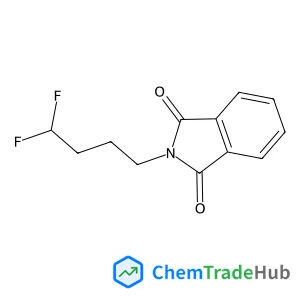
2-(4,4-Difluorobutyl)-1H-isoindole-1,3(2H)-dione
CAS Number:
1265341-14-7
Molecular Formula:
C12H11F2NO2
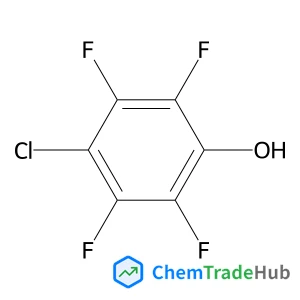
![1-oxaspiro[4.4]nonan-6-one structure](https://static.chemtradehub.com/structs/134/134179-01-4-e051.webp "1-oxaspiro[4.4]nonan-6-one structure")
Recommended Suppliers





Disclaimer
This page provides academic journal information for reference and research purposes only. We are not affiliated with any journal publishers and do not handle publication submissions. For publication-related inquiries, please contact the respective journal publishers directly.
If you notice any inaccuracies in the information displayed, please contact us at support@chemtradehub.com. We will promptly review and address your concerns.