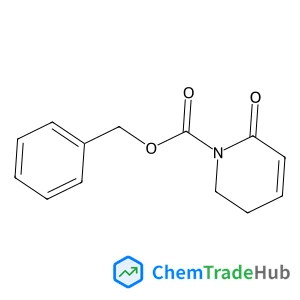
Benzyl 6-oxo-3,6-dihydro-1(2H)-pyridinecarboxylate
CAS Number:
725746-35-0
Molecular Formula:
C13H13NO3
Andrew W. Phillips, Matthew J. Anketell, Tudor Balan, Nelson Y. S. Lam, Simon Williams, Ian Paterson
The patellazoles are a family of complex marine macrolides that exhibit potent cytotoxicity against cancer cell lines. However, despite extensive characterisation efforts, their full stereochemical assignment has remained elusive. We report our approach towards the synthesis-enabled structural elucidation of patellazole B (4), a 24-membered macrolide with 16 stereocentres and a signature thiazole-containing side chain. Our plan hinges upon isolating the unknown stereocentres into a single C20–C25 fragment to facilitate the flexible assembly of various possible diastereomers of an advanced C1–C25 fragment. Towards this end, a highly convergent and modular synthesis of one candidate diastereomer 37, corresponding to the patellazole B macrocyclic skeleton, has been achieved based on the strategic application of stereocontrolled aldol methodology, combined with Suzuki and Heck cross-coupling reactions.
Zhe Wang, Hongwen Liang, Mo Xian, Xiaowu Wang
DOI: 10.1039/D0PY00572J
Yuki Tsukamoto, Jumpei Kida, Daisuke Aoki, Hideyuki Otsuka
DOI: 10.1039/D1PY00657F
Maximilian Felix Toni Meier, Franck Thetiot, Narsimhulu Pittala, Ingo Lieberwirth, Cleiton Kunzler, Smail Triki, Ulrich Jonas
DOI: 10.1039/D1PY00847A
Matthias Rohmer, Özgün Ucak, Rahul Fredrick, Wolfgang H. Binder
DOI: 10.1039/D1PY01021B
Riqiang Li, Wenzhuo Chen, Ying Yang, Hui Li, Fenfen Xu, Zhaozhao Duan, Tongxiang Liang, Herui Wen, Wei Tian
DOI: 10.1039/D0PY00829J
Lincan Yang, Heyu Shen, Li Han, Hongwei Ma, Chao Li, Lan Lei, Songbo Zhang, Pibo Liu, Yang Li
DOI: 10.1039/D0PY00731E
Ru Dong, Qi Chen, Xuediao Cai, Qi Zhang, Zhike Liu
DOI: 10.1039/D0PY00680G
Shunichiro Ito, Masayuki Gon, Kazuo Tanaka, Yoshiki Chujo
DOI: 10.1039/D1PY01170G
N-(4-Methoxybenzyl)-2-pyridinamine (CAS: 52818-63-0) is increasingly being used ...
When handling Ethyl 4-(2-chlorophenyl)-1,3-thiazole-2-carboxylate, appropriate p...
Diethyldiselane (CAS: 628-39-7) is classified under the Globally Harmonized Syst...
The market for oxocopper (CAS: 12053-18-8) is primarily driven by its use in cat...
The market for 5-{[(2-Methyl-2-propanyl)oxy]carbonyl}-5-azaspiro[2.4]heptane-7-c...
2-(1-Pyrrolidinyl)-4-pyridinamine is a chemical compound with the CAS number 359...
2-(3-Pyridinyl)-1-azabicyclo[2.2.2]octane (CAS: 91556-75-1) is a crystalline sol...
(S)-Alpha-allyl-proline hydrochloride is usually synthesized via a Wittig reacti...
3-Methyl-1,2-oxazole-5-carboxylic acid (CAS: 4857-42-5) is an organic compound w...
Lys-SMCC-DM1 is synthesized via a multi-step process involving the coupling of S...

Organic & Biomolecular Chemistry (OBC) publishes original and high impact research and reviews in organic chemistry. We welcome research that shows new or significantly improved protocols or methodologies in total synthesis, synthetic methodology or physical and theoretical organic chemistry as well as research that shows a significant advance in the organic chemistry or molecular design aspects of chemical biology, catalysis, supramolecular and macromolecular chemistry, theoretical chemistry, mechanism-oriented physical organic chemistry, medicinal chemistry or natural products. Articles published in the journal should report new work which makes a highly-significant impact in the field. Routine and incremental work is generally not suitable for publication in the journal. More details about key areas of our scope are below. In all cases authors should include in their article clear rationale for why their research has been carried out.

![N-{15-[(2,5-Dioxo-1-pyrrolidinyl)oxy]-15-oxo-3,6,9,12-tetraoxapentadec-1-yl}-2-(2-propyn-1-yloxy)acetamide structure](https://static.chemtradehub.com/structs/210/2101206-92-0-2eb5.webp "N-{15-[(2,5-Dioxo-1-pyrrolidinyl)oxy]-15-oxo-3,6,9,12-tetraoxapentadec-1-yl}-2-(2-propyn-1-yloxy)acetamide structure")