












Towards understanding the behavior of polyelectrolyte–surfactant mixtures at the water/vapor interface closer to technologically-relevant conditions
Literature Information
Publication Date
2017-12-18
DOI
10.1039/C7CP05528E
Impact Factor
3.676
Authors
Sara Llamas, Laura Fernández-Peña, Víctor Ortega, Aurelio G. Csaky, Richard A. Campbell
View Original
Abstract
Polyelectrolyte–surfactant mixtures and their interactions with fluid interfaces are an important research field due to their use in technological applications. Most of the existing knowledge on these systems is based on models in which the polyelectrolyte concentration is around 50 times lower than that used in commercial formulations. The present work marks a step to close the gap on the understanding of their behavior under more practically-relevant conditions. The adsorption of concentrated mixtures of poly(diallyldimethyl-ammonium) chloride and sodium N-lauroyl-N-methyltaurate at the water/vapor interface with a crude mixing protocol has been studied by different surface tension techniques, Brewster angle microscopy, neutron reflectometry, and several bulk characterization techniques. Kinetically-trapped aggregates formed during mixing influence the interfacial morphology of mixtures produced in the equilibrium one-phase region, yet fluctuations in the surface tension isotherm result depending on the tensiometric technique applied. At low bulk surfactant concentrations, the free surfactant concentration is very low, and the interfacial composition matches the trend of the bulk complexes, which is a behavior that has not been observed in studies on more dilute mixtures. Nevertheless, a transition to synergistic co-adsorption of complexes and free surfactant is observed at the higher bulk surfactant concentrations studied. This transition appears to be a special feature of these more concentrated mixtures, which deserves attention in future studies of systems with additional components.
Related Literature
Novel N,O-Cu(OAc)2 complex catalysed diastereo- and enantioselective 1,4-addition of glycine derivatives to alkylidene malonates
Ming Wang, Yu-Hua Shi, Jun-Fei Luo, Wenting Du, Xiao-Xin Shi, Wei-Ping Deng
2011-02-04
Paper
DOI: 10.1039/C0CY00001A
Optically pure bulky (hetero)arylalkyl carbinols via kinetic resolution
Bin Hu, Meng Meng, Weimin Mo, Xinquan Hu, Wei-Ping Deng
2011-09-05
Communication
DOI: 10.1039/C1CC14591F
High throughput discovery of heteroaromatic-modifying enzymes allows enhancement of novobiocin selectivity
Sital M. Patel, Maria de la Fuente, Song Ke, Andreia M. R. Guimarães, Adeola O. Oliyide, Xiaoyun Ji, Paul Stapleton, Anne Osbourn, Yi Pan, Dianna J. Bowles, Benjamin G. Davis, Andreas Schatzlein, Min Yang
2011-08-24
Communication
DOI: 10.1039/C1CC13552J
A synthetic approach to kingianin A based on biosynthetic speculation
Pallavi Sharma, Dougal J. Ritson, James Burnley, John E. Moses
2011-08-24
Communication
DOI: 10.1039/C1CC13949E
Diastereo- and enantioselective conjugate addition of α-substituted nitroacetates to maleimides under base-free neutral phase-transfer conditions‡
Seiji Shirakawa, Shogo J. Terao, Rongjun He, Keiji Maruoka
2011-08-25
Communication
DOI: 10.1039/C1CC14043D
One-pot synthesis of hybrid TiO2–polyaniline nanoparticles by self-catalyzed hydroamination and oxidative polymerization from TiO2–methacrylic acid nanoparticles
Woo Jin Bae, Andrew R. Davis, Jaewoong Jung, Won Ho Jo, Kenneth R. Carter, E. Bryan Coughlin
2011-09-05
Communication
DOI: 10.1039/C1CC13137K
Synthesis, characterization and ethylene oligomerization behaviour of 8-(1-aryliminoethylidene)quinaldinylnickel dihalides
Shengju Song, Tianpengfei Xiao, Tongling Liang, Fosong Wang, Carl Redshaw, Wen-Hua Sun
2011-02-08
Paper
DOI: 10.1039/C0CY00002G
Synthesis of 2,4,6-trisubstituted pyridinesvia an olefin cross-metathesis/Heck–cyclisation–elimination sequence
Timothy J. Donohoe, John F. Bower, David B. Baker, José A. Basutto, Louis K. M. Chan, Peter Gallagher
2011-08-25
Communication
DOI: 10.1039/C1CC14257G
An energy efficient and facile synthesis of high molecular weight polyesters using ketenes
Martin Wolffs
2011-08-30
Communication
DOI: 10.1039/C1CC14055H
Brief, efficient and highly diastereoselective synthesis of (±)-pumiliotoxin C based on the generation of an octahydroquinoline precursor via a four-component reaction
Swarupananda Maiti, J. Carlos Menéndez
2011-05-06
Communication
DOI: 10.1039/C1CC11246E
You might also like
Compound Q&A
What industries use (1R,3S)-1,3-Cyclopentanediol (CAS: 16326-97-9)?
(1R,3S)-1,3-Cyclopentanediol finds applications in various industries. In the ph...
16326-97-9(1R,3S)-1,3-Cyclopen...
Compound Q&A
What precautions should be taken when handling N'-[4-(Dimethylamino)phenyl]-N,N-dimethyl-1,4-benzenediamine (CAS: 637-31-0)?
When handling N'-[4-(Dimethylamino)phenyl]-N,N-dimethyl-1,4-benzenediamine, it i...
637-31-0N'-[4-(Dimethylamino...
Compound Q&A
Are there alternatives to 5-(2,4-Difluorophenyl)-2-methoxypyrimidine (CAS: 1352318-16-1) in synthesis?
There are several alternatives to 5-(2,4-Difluorophenyl)-2-methoxypyrimidine in ...
1352318-16-15-(2,4-Difluoropheny...
Compound Q&A
What regulatory guidelines apply to 1-(3-Methoxyphenoxy)propan-2-ol (CAS: 382141-68-6)?
1-(3-Methoxyphenoxy)propan-2-ol (CAS: 382141-68-6) must comply with the Globally...
382141-68-61-(3-Methoxyphenoxy)...
Compound Q&A
Is Tetrodotoxin Citrate (CAS: 18660-81-6) safe?
Tetrodotoxin Citrate is extremely dangerous and should be handled with extreme c...
18660-81-6Tetrodotoxin Citrate
Compound Q&A
What are the main uses of 2-Methyl-2-propanyl [(1R,3S)-3-hydroxycyclopentyl]carbamate (CAS: 225641-84-9)?
2-Methyl-2-propanyl [(1R,3S)-3-hydroxycyclopentyl]carbamate (CAS: 225641-84-9) i...
225641-84-92-Methyl-2-propanyl ...
Compound Q&A
How should waste containing 4-(2-Hydroxyhexafluoroisopropyl)Benzoic Acid (CAS: 16261-80-6) be handled?
Waste containing 4-(2-Hydroxyhexafluoroisopropyl)Benzoic Acid (CAS: 16261-80-6) ...
16261-80-64-(2-Hydroxyhexafluo...
Compound Q&A
How is 2-Methyl-2-proanyl {(2S)-1-[(benzyloxy)amino]-3-hydroxy-3-methyl-1-oxo-2-butanyl}carbamate (CAS: 102507-19-7) typically synthesized?
2-Methyl-2-proanyl {(2S)-1-[(benzyloxy)amino]-3-hydroxy-3-methyl-1-oxo-2-butanyl...
102507-19-72-Methyl-2-propanyl ...
Compound Q&A
What is Benzeneethanamine, α-ethyl-, hydrochloride (1:1) (CAS: 20735-15-3)?
Benzeneethanamine, α-ethyl-, hydrochloride (1:1) is an organic compound with the...
20735-15-3Benzeneethanamine, α...
Compound Q&A
Are there alternatives to 3-{(E)-[4-(Dimethylamino)phenyl]diazenyl}benzoic acid (CAS: 20691-84-3) in synthesis?
In the synthesis of compounds similar to 3-{(E)-[4-(Dimethylamino)phenyl]diazeny...
20691-84-33-{(E)-[4-(Dimethyla...
Source Journal
Physical Chemistry Chemical Physics

CiteScore:
5.5
Self-citation Rate:
10.3%
Articles per Year:
3036
Physical Chemistry Chemical Physics (PCCP) is an international journal co-owned by 19 physical chemistry and physics societies from around the world. This journal publishes original, cutting-edge research in physical chemistry, chemical physics and biophysical chemistry. To be suitable for publication in PCCP, articles must include significant innovation and/or insight into physical chemistry; this is the most important criterion that reviewers and Editors will judge against when evaluating submissions. The journal has a broad scope and welcomes contributions spanning experiment, theory, computation and data science. Topical coverage includes spectroscopy, dynamics, kinetics, statistical mechanics, thermodynamics, electrochemistry, catalysis, surface science, quantum mechanics, quantum computing and machine learning. Interdisciplinary research areas such as polymers and soft matter, materials, nanoscience, energy, surfaces/interfaces, and biophysical chemistry are welcomed if they demonstrate significant innovation and/or insight into physical chemistry. Joined experimental/theoretical studies are particularly appreciated when complementary and based on up-to-date approaches.
Recommended Compounds
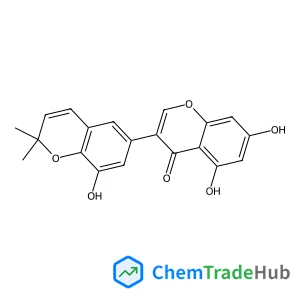
5,7,8'-Trihydroxy-2',2'-dimethyl-2'H,4H-3,6'-bichromen-4-one
CAS Number:
129280-33-7
Molecular Formula:
C20H16O6
![N-[(9H-Fluoren-9-ylmethoxy)carbonyl]-beta-phenyl-L-phenylalanine structure](https://static.chemtradehub.com/structs/201/201484-50-6-c2fc.webp "N-[(9H-Fluoren-9-ylmethoxy)carbonyl]-beta-phenyl-L-phenylalanine structure")
N-[(9H-Fluoren-9-ylmethoxy)carbonyl]-beta-phenyl-L-phenylalanine
CAS Number:
201484-50-6
Molecular Formula:
C30H25NO4
Recommended Suppliers




Disclaimer
This page provides academic journal information for reference and research purposes only. We are not affiliated with any journal publishers and do not handle publication submissions. For publication-related inquiries, please contact the respective journal publishers directly.
If you notice any inaccuracies in the information displayed, please contact us at support@chemtradehub.com. We will promptly review and address your concerns.