












The fountain effect of ice-like water across nanotubes at room temperature
Literature Information
Publication Date
2017-09-13
DOI
10.1039/C7CP04693F
Impact Factor
3.676
Authors
Kuiwen Zhao, Huiying Wu
View Original
Abstract
The well-known fountain effect of superfluid helium can directly convert heat to mechanical work by the transport of the superfluid across narrow channels under a temperature difference. But it is regarded as a unique feature of superfluids, only occurring below the temperature of 2.17 K. Here we report a peculiar fountain effect of ice-like water across nanotubes at room temperature. Based on molecular simulations, we observed fascinating ultrafast fountain flow across nanotubes from the cold side to the hot side under a small temperature difference, due to the near-dissipationless nature of ice-like ordered water inside the nanotubes. Water molecules exhibit collective behavior and spontaneously convert thermal energy from the surrounding into directed motion without dissipation. A surprising pressure difference of up to 256 bar is generated from a temperature difference of 23 K, almost reaching the thermodynamic limit. This finding is anticipated to provide a new protocol for power harvesting devices, heat engines and nanomotors.
Related Literature
Approximate DFT-based methods for generating diabatic states and calculating electronic couplings: models of two and more states
ChiYung Yam
2017-12-20
Paper
DOI: 10.1039/C7CP06660K
A general spin-complete spin-flip configuration interaction method
Joani Mato, Mark S. Gordon
2018-01-10
Paper
DOI: 10.1039/C7CP06837A
Photodissociation dynamics of acetone studied by time-resolved ion imaging and photofragment excitation spectroscopy
Benjamin W. Toulson, Dmitry A. Fishman, Craig Murray
2018-01-09
Paper
DOI: 10.1039/C7CP07320H
Hierarchical formation of Fe-9eG supramolecular networks via flexible coordination bonds
Chi Zhang, Lei Xie, Yuanqi Ding, Chunxue Yuan, Wei Xu
2018-01-05
Paper
DOI: 10.1039/C7CP08278A
Initial degree of detaching bubble adsorption coverage and the kinetics of dynamic adsorption layer formation
Dominik Kosior, Jan Zawala
2017-12-20
Paper
DOI: 10.1039/C7CP06099H
Spatial requirement for PAMO for transformation of non-native linear substrates
Miguel de Abreu, Lyndsey J. Ferguson, Derek J. Quinn, Meilan Huang
2018-01-03
Paper
DOI: 10.1039/C7CP07172H
Electrochemical behavior of Bi4B2O9 towards lithium-reversible conversion reactions without nanosizing
Goran Dražić
2017-12-15
Paper
DOI: 10.1039/C7CP07693B
Effect of transition-metal-ion dopants on the oxygen evolution reaction on NiOOH(0001)
Alexander J. Tkalych, John Mark P. Martirez, Emily A. Carter
2018-07-03
Paper
DOI: 10.1039/C8CP02849D
Revisiting the catalytic mechanism of Mo–Cu carbon monoxide dehydrogenase using QM/MM and DFT calculations
Kai Xu, Hajime Hirao
2018-05-10
Paper
DOI: 10.1039/C8CP00858B
Same building block, but diverse surface-confined self-assemblies: solvent and concentration effects-induced structural diversity towards chirality and achirality
Yi Hu, Shaogang Xu, Kai Miao, Xinrui Miao, Wenli Deng
2018-06-06
Paper
DOI: 10.1039/C8CP01308J
You might also like
Compound Q&A
What industries use (1R,3S)-1,3-Cyclopentanediol (CAS: 16326-97-9)?
(1R,3S)-1,3-Cyclopentanediol finds applications in various industries. In the ph...
16326-97-9(1R,3S)-1,3-Cyclopen...
Compound Q&A
What precautions should be taken when handling N'-[4-(Dimethylamino)phenyl]-N,N-dimethyl-1,4-benzenediamine (CAS: 637-31-0)?
When handling N'-[4-(Dimethylamino)phenyl]-N,N-dimethyl-1,4-benzenediamine, it i...
637-31-0N'-[4-(Dimethylamino...
Compound Q&A
Are there alternatives to 5-(2,4-Difluorophenyl)-2-methoxypyrimidine (CAS: 1352318-16-1) in synthesis?
There are several alternatives to 5-(2,4-Difluorophenyl)-2-methoxypyrimidine in ...
1352318-16-15-(2,4-Difluoropheny...
Compound Q&A
What regulatory guidelines apply to 1-(3-Methoxyphenoxy)propan-2-ol (CAS: 382141-68-6)?
1-(3-Methoxyphenoxy)propan-2-ol (CAS: 382141-68-6) must comply with the Globally...
382141-68-61-(3-Methoxyphenoxy)...
Compound Q&A
Is Tetrodotoxin Citrate (CAS: 18660-81-6) safe?
Tetrodotoxin Citrate is extremely dangerous and should be handled with extreme c...
18660-81-6Tetrodotoxin Citrate
Compound Q&A
What are the main uses of 2-Methyl-2-propanyl [(1R,3S)-3-hydroxycyclopentyl]carbamate (CAS: 225641-84-9)?
2-Methyl-2-propanyl [(1R,3S)-3-hydroxycyclopentyl]carbamate (CAS: 225641-84-9) i...
225641-84-92-Methyl-2-propanyl ...
Compound Q&A
How should waste containing 4-(2-Hydroxyhexafluoroisopropyl)Benzoic Acid (CAS: 16261-80-6) be handled?
Waste containing 4-(2-Hydroxyhexafluoroisopropyl)Benzoic Acid (CAS: 16261-80-6) ...
16261-80-64-(2-Hydroxyhexafluo...
Compound Q&A
How is 2-Methyl-2-proanyl {(2S)-1-[(benzyloxy)amino]-3-hydroxy-3-methyl-1-oxo-2-butanyl}carbamate (CAS: 102507-19-7) typically synthesized?
2-Methyl-2-proanyl {(2S)-1-[(benzyloxy)amino]-3-hydroxy-3-methyl-1-oxo-2-butanyl...
102507-19-72-Methyl-2-propanyl ...
Compound Q&A
What is Benzeneethanamine, α-ethyl-, hydrochloride (1:1) (CAS: 20735-15-3)?
Benzeneethanamine, α-ethyl-, hydrochloride (1:1) is an organic compound with the...
20735-15-3Benzeneethanamine, α...
Compound Q&A
Are there alternatives to 3-{(E)-[4-(Dimethylamino)phenyl]diazenyl}benzoic acid (CAS: 20691-84-3) in synthesis?
In the synthesis of compounds similar to 3-{(E)-[4-(Dimethylamino)phenyl]diazeny...
20691-84-33-{(E)-[4-(Dimethyla...
Source Journal
Physical Chemistry Chemical Physics

CiteScore:
5.5
Self-citation Rate:
10.3%
Articles per Year:
3036
Physical Chemistry Chemical Physics (PCCP) is an international journal co-owned by 19 physical chemistry and physics societies from around the world. This journal publishes original, cutting-edge research in physical chemistry, chemical physics and biophysical chemistry. To be suitable for publication in PCCP, articles must include significant innovation and/or insight into physical chemistry; this is the most important criterion that reviewers and Editors will judge against when evaluating submissions. The journal has a broad scope and welcomes contributions spanning experiment, theory, computation and data science. Topical coverage includes spectroscopy, dynamics, kinetics, statistical mechanics, thermodynamics, electrochemistry, catalysis, surface science, quantum mechanics, quantum computing and machine learning. Interdisciplinary research areas such as polymers and soft matter, materials, nanoscience, energy, surfaces/interfaces, and biophysical chemistry are welcomed if they demonstrate significant innovation and/or insight into physical chemistry. Joined experimental/theoretical studies are particularly appreciated when complementary and based on up-to-date approaches.
Recommended Compounds

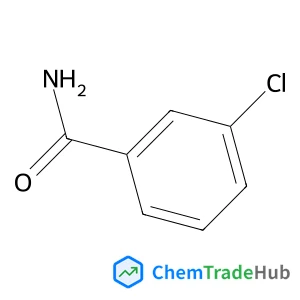

4-(5-(4,4,5,5-tetramethyl-1,3,2-dioxaborolan-2-yl)pyridin-2-yl)morpholine
CAS Number:
485799-04-0
Molecular Formula:
C15H23BN2O3
![N-[(1S,2R,4S)-2-Amino-4-(dimethylcarbamoyl)cyclohexyl]-N'-(5-chloro-2-pyridinyl)ethanediamide structure](https://static.chemtradehub.com/structs/480/480452-37-7-0898.webp "N-[(1S,2R,4S)-2-Amino-4-(dimethylcarbamoyl)cyclohexyl]-N'-(5-chloro-2-pyridinyl)ethanediamide structure")
N-[(1S,2R,4S)-2-Amino-4-(dimethylcarbamoyl)cyclohexyl]-N'-(5-chloro-2-pyridinyl)ethanediamide
CAS Number:
480452-37-7
Molecular Formula:
C16H22ClN5O3
Recommended Suppliers






Disclaimer
This page provides academic journal information for reference and research purposes only. We are not affiliated with any journal publishers and do not handle publication submissions. For publication-related inquiries, please contact the respective journal publishers directly.
If you notice any inaccuracies in the information displayed, please contact us at support@chemtradehub.com. We will promptly review and address your concerns.