


Photodissociation dynamics of acetone studied by time-resolved ion imaging and photofragment excitation spectroscopy
Literature Information
Publication Date
2018-01-09
DOI
10.1039/C7CP07320H
Impact Factor
3.676
Authors
Benjamin W. Toulson, Dmitry A. Fishman, Craig Murray
View Original
Abstract
The photodissociation dynamics of acetone has been investigated using velocity-map ion imaging and photofragment excitation (PHOFEX) spectroscopy across a range of wavelengths spanning the first absorption band (236–308 nm). The radical products of the Norrish Type I dissociation, methyl and acetyl, as well as the molecular product ketene have been detected by single-photon VUV ionization at 118 nm. Ketene appears to be formed with non-negligible yield at all wavelengths, with a maximum value of Φ ≈ 0.3 at 280 nm. The modest translational energy release is inconsistent with dissociation over high barriers on the S0 surface, and ketene formation is tentatively assigned to a roaming pathway involving frustrated dissociation to the radical products. Fast-moving radical products are detected at λ ≤ 305 nm with total translational energy distributions that extend to the energetic limit, consistent with dissociation occurring near-exclusively on the T1 surface following intersystem crossing. At energies below the T1 barrier a statistical component indicative of S0 dissociation is observed, although dissociation via the S1/S0 conical intersection is absent at shorter wavelengths, in contrast to acetaldehyde. The methyl radical yield is enhanced over that of acetyl in PHOFEX spectra at λ ≤ 260 nm due to the onset of secondary dissociation of internally excited acetyl radicals. Time-resolved ion imaging experiments using picosecond duration pulses at 266 nm find an appearance time constant of τ = 1490 ± 140 ps for CH3 radicals formed on T1. The associated rate is representative of S1 → T1 intersystem crossing. At 284 nm, CH3 is formed on T1 with two distinct timescales: a fast <10 ns component is accompanied by a slower component with τ = 42 ± 7 ns. A two-step mechanism involving fast internal conversion, followed by slower intersystem crossing (S1 → S0 → T1) is proposed to explain the slow component.
Recommended Journals

Current Pharmaceutical Biotechnology

Journal of Medical Biochemistry

Angewandte Chemie International Edition

Faraday Discussions

Photochemical & Photobiological Sciences

Molecular Diversity

Green Chemistry

Journal of Enzyme inhibition and Medicinal Chemistry

Nature Reviews Drug Discovery

Foundations of Chemistry
Related Literature
Evidence of tetraphenylporphyrin monoacids by ion-transfer voltammetry at polarized liquid|liquid interfaces
Bin Su, Fei Li, Raheleh Partovi-Nia, Claude Gros, Jean-Michel Barbe, Zdenek Samec, Hubert H. Girault
2008-09-12
Communication
DOI: 10.1039/B811886H
Cross-conjugated poly(p-phenylene) aided supramolecular self-organization of fullerene nanocrystallites
Muhammad Hanafiah Nurmawati, Parayil Kumaran Ajikumar, Lili Amanda Heng, Hairong Li
2008-08-30
Communication
DOI: 10.1039/B808689C
Two-dimensional ordering of benzenethiol self-assembled monolayers guided by displacement of cyclohexanethiols on Au(111)
Hungu Kang, Haiwon Lee, Youngjong Kang, Jaegeun Noh
2008-09-12
Communication
DOI: 10.1039/B809261C
Amino-substituted rylene dicarboximides and their quinoidal charge delocalization after deprotonation
Zhihong Liu, Chen Li, Manfred Wagner, Yuri Avlasevich, Andreas Herrmann, Klaus Müllen
2008-09-04
Communication
DOI: 10.1039/B811252E
Hollow hybrid spheres with silica inner shell for non-deformable, core exchangeable properties
Soon-Ryoung Hur, Yong Seok Kim, Jong Chan Won, Jae Heung Lee, Hyun Min Jung
2008-09-12
Communication
DOI: 10.1039/B811724A
Design of a novel molecular beacon: modification of the stem with artificially genetic alphabet
Pinpin Sheng, Zunyi Yang, Youngmi Kim, Yanrong Wu, Weihong Tan, Steven A. Benner
2008-09-26
Communication
DOI: 10.1039/B811159F
Supramolecular aptamer–thrombin linear and branched nanostructures
Yossi Weizmann, Adam B. Braunschweig, Ofer I. Wilner, Zoya Cheglakov, Itamar Willner
2008-09-22
Communication
DOI: 10.1039/B812486H
Deprotonation in anodic methoxylation of fluoroethyl phenyl sulfides using site-isolated heterogeneous bases
Toshiki Tajima, Hitoshi Kurihara
2008-09-10
Communication
DOI: 10.1039/B809998G
Constructing channel structures based on the assembly of p-sulfonatocalix[4]arene nanocapsules and [M(bpdo)3]2+(M = Cu, Zn)
2008-09-09
Communication
DOI: 10.1039/B807584K
Confined proteinadsorption into nanopore arrays fabricated by colloidal-assisted polymer patterning
Grazia M. L. Messina, Cristina Satriano, Giovanni Marletta
2008-09-05
Communication
DOI: 10.1039/B809664C
You might also like
Compound Q&A
What are the main uses of 1-(3-Aminophenyl)-3-[(3R)-1-(3,3-dimethyl-2-oxobutyl)-2-oxo-5-(2-pyridinyl)-2,3-dihydro-1H-1,4-benzodiazepin-3-yl]urea (CAS: 155412-88-7)?
This compound is mainly used as an intermediate in the synthesis of antipsychoti...
155412-88-71-(3-Aminophenyl)-3-...
Compound Q&A
How should waste containing 1-(D-Ribofuranosyl)-1,4-dihydro-3-pyridinecarboxamide (CAS: 19132-12-8) be handled?
Waste containing 1-(D-Ribofuranosyl)-1,4-dihydro-3-pyridinecarboxamide (CAS: 191...
19132-12-81-(D-Ribofuranosyl)-...
Compound Q&A
What regulatory guidelines apply to 2-Methyl-2-propanyl 3-bromo-3-(hydroxymethyl)-1-azetidinecarboxylate (CAS: 2007919-81-3)?
2-Methyl-2-propanyl 3-bromo-3-(hydroxymethyl)-1-azetidinecarboxylate (CAS: 20079...
2007919-81-32-Methyl-2-propanyl ...
Compound Q&A
What is N-(4-Chloro-2-pyridinyl)acetamide (CAS: 245056-66-0)?
N-(4-Chloro-2-pyridinyl)acetamide (CAS: 245056-66-0) is a chemical compound with...
245056-66-0N-(4-Chloro-2-pyridi...
Compound Q&A
What is 5-Chloro-2-hydroxybenzoic acid (CAS: 321-14-2)?
5-Chloro-2-hydroxybenzoic acid, also known as 5-chlorosalicylic acid, is an arom...
321-14-25-Chloro-2-hydroxybe...
Compound Q&A
What precautions should be taken when handling 1,1-Dichloro-1-fluoroethane (CAS: 1717-00-6)?
When handling 1,1-Dichloro-1-fluoroethane (CAS: 1717-00-6), it is important to u...
1717-00-61,1-Dichloro-1-fluor...
Compound Q&A
What are the physical and chemical properties of Fmoc-(2S,3R)-3-phenylpyrrolidine-2-carboxylic acid (CAS: 281655-32-1)?
Fmoc-(2S,3R)-3-phenylpyrrolidine-2-carboxylic acid is a white crystalline solid ...
281655-32-1Fmoc-(2S,3R)-3-pheny...
Compound Q&A
What are the main uses of 4-Amino-5-bromo-2-pyridinecarboxylic acid (CAS: 1363381-01-4)?
4-Amino-5-bromo-2-pyridinecarboxylic acid is primarily used as a precursor in th...
1363381-01-44-Amino-5-bromo-2-py...
Compound Q&A
What precautions should be taken when handling (S)-tert-butyl 2-((2-(4-bromophenyl)-2-oxoethyl)carbamoyl)pyrrolidine-1-carboxylate (CAS: 1007881-98-2)?
Handling this compound should be done with personal protective equipment (PPE) i...
1007881-98-2(S)-tert-butyl 2-((2...
Compound Q&A
What precautions should be taken when handling 8-bromo-2,2-dimethyl-3,4-dihydro-2H-1,4-benzoxazin-3-one (CAS: 688363-73-7)?
When handling 8-bromo-2,2-dimethyl-3,4-dihydro-2H-1,4-benzoxazin-3-one, use prop...
688363-73-78-bromo-2,2-dimethyl...
Source Journal
Physical Chemistry Chemical Physics

CiteScore:
5.5
Self-citation Rate:
10.3%
Articles per Year:
3036
Physical Chemistry Chemical Physics (PCCP) is an international journal co-owned by 19 physical chemistry and physics societies from around the world. This journal publishes original, cutting-edge research in physical chemistry, chemical physics and biophysical chemistry. To be suitable for publication in PCCP, articles must include significant innovation and/or insight into physical chemistry; this is the most important criterion that reviewers and Editors will judge against when evaluating submissions. The journal has a broad scope and welcomes contributions spanning experiment, theory, computation and data science. Topical coverage includes spectroscopy, dynamics, kinetics, statistical mechanics, thermodynamics, electrochemistry, catalysis, surface science, quantum mechanics, quantum computing and machine learning. Interdisciplinary research areas such as polymers and soft matter, materials, nanoscience, energy, surfaces/interfaces, and biophysical chemistry are welcomed if they demonstrate significant innovation and/or insight into physical chemistry. Joined experimental/theoretical studies are particularly appreciated when complementary and based on up-to-date approaches.
Recommended Compounds
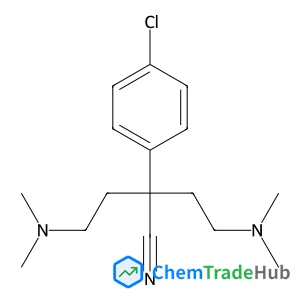
2-(4-Chlorophenyl)-4-(dimethylamino)-2-(2-(dimethylamino)ethyl)butanenitrile
CAS Number:
1246816-57-8
Molecular Formula:
C16H24ClN3
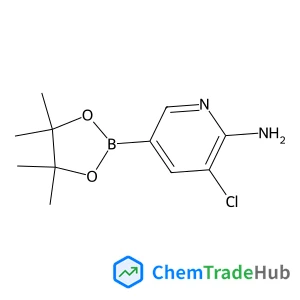
3-Chloro-5-(4,4,5,5-tetramethyl-1,3,2-dioxaborolan-2-yl)-2-pyridinamine
CAS Number:
1032758-99-8
Molecular Formula:
C11H16BClN2O2
Recommended Suppliers





Disclaimer
This page provides academic journal information for reference and research purposes only. We are not affiliated with any journal publishers and do not handle publication submissions. For publication-related inquiries, please contact the respective journal publishers directly.
If you notice any inaccuracies in the information displayed, please contact us at support@chemtradehub.com. We will promptly review and address your concerns.