












Approximate DFT-based methods for generating diabatic states and calculating electronic couplings: models of two and more states
Literature Information
Publication Date
2017-12-20
DOI
10.1039/C7CP06660K
Impact Factor
3.676
Authors
ChiYung Yam
View Original
Abstract
Four types of density functional theory (DFT)-based approaches are assessed in this work for the approximate construction of diabatic states and the evaluation of electronic couplings between these states. These approaches include the constrained DFT (CDFT) method, the constrained noninteracting electron (CNE) model to post-process Kohn–Sham operators, the approximate block-diagonalization (BD) of the Kohn–Sham operators, and the generalized Mulliken–Hush method. It is shown that the first three approaches provide a good description for long-distance intermolecular electron transfer (ET) reactions. On the other hand, inconsistent results were found when applying these approaches to intramolecular ET in strongly coupled, mixed-valence systems. Model analysis shows that this discrepancy is caused by the inappropriate use of the two-state model rather than the defects of the approaches themselves. The situation is much improved when more states are included in the model electronic Hamiltonian. The CNE and BD approaches can thus serve as efficient and robust alternatives for building ET models based on DFT calculations.
Related Literature
NOBIN-based phosphoramidite and phosphorodiamiditeligands and their use in asymmetric nickel-catalysed hydrovinylation
Mike Schmitkamp, Walter Leitner, Giancarlo Franciò
2012-11-01
Paper
DOI: 10.1039/C2CY20657A
Sequential chemical deposition of metal alloy jellyfish using polyaniline: redox chemistry at the metal–polymer interface
Elshan Akhadov, Leeyih Wang, Hsing-Lin Wang
2011-08-30
Communication
DOI: 10.1039/C1CC13025K
A Zn2GeO4–ethylenediamine hybrid nanoribbon membrane as a recyclable adsorbent for the highly efficient removal of heavy metals from contaminated water
Li Yu, Rujia Zou, Zhenyu Zhang, Guosheng Song, Zhigang Chen, Jianmao Yang, Junqing Hu
2011-08-30
Communication
DOI: 10.1039/C1CC14159G
High throughput discovery of heteroaromatic-modifying enzymes allows enhancement of novobiocin selectivity
Sital M. Patel, Maria de la Fuente, Song Ke, Andreia M. R. Guimarães, Adeola O. Oliyide, Xiaoyun Ji, Paul Stapleton, Anne Osbourn, Yi Pan, Dianna J. Bowles, Benjamin G. Davis, Andreas Schatzlein, Min Yang
2011-08-24
Communication
DOI: 10.1039/C1CC13552J
An energy efficient and facile synthesis of high molecular weight polyesters using ketenes
Martin Wolffs
2011-08-30
Communication
DOI: 10.1039/C1CC14055H
Oxidative, photo-activated TiO2nanoparticles in the catalytic acetylation of primary alcohols
Chien-Tien Chen, Jun-Qi Kao, Cheng-Yuan Liu, Ling-Yu Jiang
2011-01-31
Communication
DOI: 10.1039/C0CY00005A
Selective Diels–Alder cycloaddition on semiconducting single-walled carbon nanotubes for potential separation application
Jiao-Tong Sun, Lu-Yang Zhao, Chun-Yan Hong, Cai-Yuan Pan
2011-09-05
Communication
DOI: 10.1039/C1CC13437J
An organogel formed from a cyclic β-aminoalcohol
Chuanqing Kang, Zheng Bian, Yabing He, Fushe Han, Xuepeng Qiu, Lianxun Gao
2011-08-24
Communication
DOI: 10.1039/C1CC13179F
Pentametallic lanthanide-alkoxide square-based pyramids: high energy barrier for thermal relaxation in a holmium single molecule magnet‡
Robin J. Blagg, Floriana Tuna, Eric J. L. McInnes, Richard E. P. Winpenny
2011-09-01
Communication
DOI: 10.1039/C1CC14186D
Improvement of the prediction ability of multivariate calibration by a method based on the combination of data fusion and least squares support vector machines
Shouxin Ren, Ling Gao
2011-01-18
Paper
DOI: 10.1039/C0AN00433B
You might also like
Compound Q&A
What industries use (1R,3S)-1,3-Cyclopentanediol (CAS: 16326-97-9)?
(1R,3S)-1,3-Cyclopentanediol finds applications in various industries. In the ph...
16326-97-9(1R,3S)-1,3-Cyclopen...
Compound Q&A
What precautions should be taken when handling N'-[4-(Dimethylamino)phenyl]-N,N-dimethyl-1,4-benzenediamine (CAS: 637-31-0)?
When handling N'-[4-(Dimethylamino)phenyl]-N,N-dimethyl-1,4-benzenediamine, it i...
637-31-0N'-[4-(Dimethylamino...
Compound Q&A
Are there alternatives to 5-(2,4-Difluorophenyl)-2-methoxypyrimidine (CAS: 1352318-16-1) in synthesis?
There are several alternatives to 5-(2,4-Difluorophenyl)-2-methoxypyrimidine in ...
1352318-16-15-(2,4-Difluoropheny...
Compound Q&A
What regulatory guidelines apply to 1-(3-Methoxyphenoxy)propan-2-ol (CAS: 382141-68-6)?
1-(3-Methoxyphenoxy)propan-2-ol (CAS: 382141-68-6) must comply with the Globally...
382141-68-61-(3-Methoxyphenoxy)...
Compound Q&A
Is Tetrodotoxin Citrate (CAS: 18660-81-6) safe?
Tetrodotoxin Citrate is extremely dangerous and should be handled with extreme c...
18660-81-6Tetrodotoxin Citrate
Compound Q&A
What are the main uses of 2-Methyl-2-propanyl [(1R,3S)-3-hydroxycyclopentyl]carbamate (CAS: 225641-84-9)?
2-Methyl-2-propanyl [(1R,3S)-3-hydroxycyclopentyl]carbamate (CAS: 225641-84-9) i...
225641-84-92-Methyl-2-propanyl ...
Compound Q&A
How should waste containing 4-(2-Hydroxyhexafluoroisopropyl)Benzoic Acid (CAS: 16261-80-6) be handled?
Waste containing 4-(2-Hydroxyhexafluoroisopropyl)Benzoic Acid (CAS: 16261-80-6) ...
16261-80-64-(2-Hydroxyhexafluo...
Compound Q&A
How is 2-Methyl-2-proanyl {(2S)-1-[(benzyloxy)amino]-3-hydroxy-3-methyl-1-oxo-2-butanyl}carbamate (CAS: 102507-19-7) typically synthesized?
2-Methyl-2-proanyl {(2S)-1-[(benzyloxy)amino]-3-hydroxy-3-methyl-1-oxo-2-butanyl...
102507-19-72-Methyl-2-propanyl ...
Compound Q&A
What is Benzeneethanamine, α-ethyl-, hydrochloride (1:1) (CAS: 20735-15-3)?
Benzeneethanamine, α-ethyl-, hydrochloride (1:1) is an organic compound with the...
20735-15-3Benzeneethanamine, α...
Compound Q&A
Are there alternatives to 3-{(E)-[4-(Dimethylamino)phenyl]diazenyl}benzoic acid (CAS: 20691-84-3) in synthesis?
In the synthesis of compounds similar to 3-{(E)-[4-(Dimethylamino)phenyl]diazeny...
20691-84-33-{(E)-[4-(Dimethyla...
Source Journal
Physical Chemistry Chemical Physics

CiteScore:
5.5
Self-citation Rate:
10.3%
Articles per Year:
3036
Physical Chemistry Chemical Physics (PCCP) is an international journal co-owned by 19 physical chemistry and physics societies from around the world. This journal publishes original, cutting-edge research in physical chemistry, chemical physics and biophysical chemistry. To be suitable for publication in PCCP, articles must include significant innovation and/or insight into physical chemistry; this is the most important criterion that reviewers and Editors will judge against when evaluating submissions. The journal has a broad scope and welcomes contributions spanning experiment, theory, computation and data science. Topical coverage includes spectroscopy, dynamics, kinetics, statistical mechanics, thermodynamics, electrochemistry, catalysis, surface science, quantum mechanics, quantum computing and machine learning. Interdisciplinary research areas such as polymers and soft matter, materials, nanoscience, energy, surfaces/interfaces, and biophysical chemistry are welcomed if they demonstrate significant innovation and/or insight into physical chemistry. Joined experimental/theoretical studies are particularly appreciated when complementary and based on up-to-date approaches.
Recommended Compounds

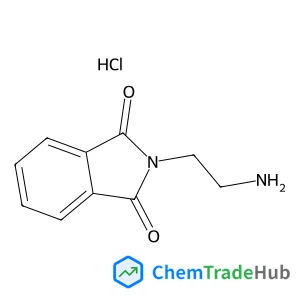
2-(2-Aminoethyl)-1H-isoindole-1,3(2H)-dione hydrochloride (1:1)
CAS Number:
30250-67-0
Molecular Formula:
C10H11ClN2O2


Recommended Suppliers



Disclaimer
This page provides academic journal information for reference and research purposes only. We are not affiliated with any journal publishers and do not handle publication submissions. For publication-related inquiries, please contact the respective journal publishers directly.
If you notice any inaccuracies in the information displayed, please contact us at support@chemtradehub.com. We will promptly review and address your concerns.