












Hierarchical formation of Fe-9eG supramolecular networks via flexible coordination bonds
Literature Information
Publication Date
2018-01-05
DOI
10.1039/C7CP08278A
Impact Factor
3.676
Authors
Chi Zhang, Lei Xie, Yuanqi Ding, Chunxue Yuan, Wei Xu
View Original
Abstract
From the interplay between high-resolution scanning tunneling microscopy imaging/manipulations and density functional theory calculations, we display the hierarchical formation of supramolecular networks by codeposition of 9eG molecules and Fe atoms on Au(111) based on the flexible coordination bonds (the adaptability and versatility in the coordination modes). In the first step, homochiral islands composed of homochiral G4Fe2 motifs are formed; and then in the second step, thermal treatment results in the transformation into the porous networks composed of heterochiral G4Fe2 motifs with the ratio of the components being constant. In situ STM manipulations and the coexistence of some other heterochiral G4Fe2 motifs and clusters also show the flexibility of the coordination bonds involved. These studies may provide a fundamental understanding of the regulations of multilevel supramolecular structures and shed light on the formation of designed supramolecular nanostructures.
Related Literature
Model oxide supported MoS2 HDS catalysts: structure and surface properties
Federico Cesano, Serena Bertarione, Andrea Piovano, Giovanni Agostini, Mohammed Mastabur Rahman, Elena Groppo, Francesca Bonino, Domenica Scarano, Carlo Lamberti, Silvia Bordiga, Luciano Montanari, Lucia Bonoldi, Roberto Millini, Adriano Zecchina
2011-01-31
Paper
DOI: 10.1039/C0CY00050G
Palladium nanoparticles in carbon thin film-lined SBA-15 nanoreactors: efficient heterogeneous catalysts for Suzuki–Miyaura cross coupling reaction in aqueous media
Jian Zhi, Depeng Song, Zhiwen Li, Xia Lei, Aiguo Hu
2011-09-05
Communication
DOI: 10.1039/C1CC14169D
Recent advances in hierarchically structured zeolites: synthesis and material performances
Zi Le Hua, Jian Zhou, Jian Lin Shi
2011-07-01
Feature Article
DOI: 10.1039/C1CC10261C
One-pot synthesis of luminol functionalized silver nanoparticles with chemiluminescence activity for ultrasensitive DNA sensing
Yi He, Danqing Liu, Xinyuan He, Hua Cui
2011-09-05
Communication
DOI: 10.1039/C1CC14389A
All-numerical noise filtering of fluorescence signals for achieving ultra-low limit of detection in biomedical applications
Chaitanya Dongre, Markus Pollnau, Hugo J. W. M. Hoekstra
2011-01-28
Paper
DOI: 10.1039/C0AN00692K
Structure and bonding in three-coordinate N-heterocyclic carbene adducts of iron(ii) bis(trimethylsilyl)amide
Joseph J. W. McDouall, Manfred Scheer, Christoph Schwarzmaier, Floriana Tuna
2011-09-01
Communication
DOI: 10.1039/C1CC14576B
Two-dimensional zeolites: dream or reality?
Wieslaw J. Roth, Jiří Čejka
2011-02-08
Perspective
DOI: 10.1039/C0CY00027B
Direct electrochemistry of an [FeFe]-hydrogenase on a TiO2 Electrode
Simone Morra, Francesca Valetti, Sheila J. Sadeghi, Paul W. King, Toby Meyer, Gianfranco Gilardi
2011-08-24
Communication
DOI: 10.1039/C1CC14535E
You might also like
Compound Q&A
What industries use (1R,3S)-1,3-Cyclopentanediol (CAS: 16326-97-9)?
(1R,3S)-1,3-Cyclopentanediol finds applications in various industries. In the ph...
16326-97-9(1R,3S)-1,3-Cyclopen...
Compound Q&A
What precautions should be taken when handling N'-[4-(Dimethylamino)phenyl]-N,N-dimethyl-1,4-benzenediamine (CAS: 637-31-0)?
When handling N'-[4-(Dimethylamino)phenyl]-N,N-dimethyl-1,4-benzenediamine, it i...
637-31-0N'-[4-(Dimethylamino...
Compound Q&A
Are there alternatives to 5-(2,4-Difluorophenyl)-2-methoxypyrimidine (CAS: 1352318-16-1) in synthesis?
There are several alternatives to 5-(2,4-Difluorophenyl)-2-methoxypyrimidine in ...
1352318-16-15-(2,4-Difluoropheny...
Compound Q&A
What regulatory guidelines apply to 1-(3-Methoxyphenoxy)propan-2-ol (CAS: 382141-68-6)?
1-(3-Methoxyphenoxy)propan-2-ol (CAS: 382141-68-6) must comply with the Globally...
382141-68-61-(3-Methoxyphenoxy)...
Compound Q&A
Is Tetrodotoxin Citrate (CAS: 18660-81-6) safe?
Tetrodotoxin Citrate is extremely dangerous and should be handled with extreme c...
18660-81-6Tetrodotoxin Citrate
Compound Q&A
What are the main uses of 2-Methyl-2-propanyl [(1R,3S)-3-hydroxycyclopentyl]carbamate (CAS: 225641-84-9)?
2-Methyl-2-propanyl [(1R,3S)-3-hydroxycyclopentyl]carbamate (CAS: 225641-84-9) i...
225641-84-92-Methyl-2-propanyl ...
Compound Q&A
How should waste containing 4-(2-Hydroxyhexafluoroisopropyl)Benzoic Acid (CAS: 16261-80-6) be handled?
Waste containing 4-(2-Hydroxyhexafluoroisopropyl)Benzoic Acid (CAS: 16261-80-6) ...
16261-80-64-(2-Hydroxyhexafluo...
Compound Q&A
How is 2-Methyl-2-proanyl {(2S)-1-[(benzyloxy)amino]-3-hydroxy-3-methyl-1-oxo-2-butanyl}carbamate (CAS: 102507-19-7) typically synthesized?
2-Methyl-2-proanyl {(2S)-1-[(benzyloxy)amino]-3-hydroxy-3-methyl-1-oxo-2-butanyl...
102507-19-72-Methyl-2-propanyl ...
Compound Q&A
What is Benzeneethanamine, α-ethyl-, hydrochloride (1:1) (CAS: 20735-15-3)?
Benzeneethanamine, α-ethyl-, hydrochloride (1:1) is an organic compound with the...
20735-15-3Benzeneethanamine, α...
Compound Q&A
Are there alternatives to 3-{(E)-[4-(Dimethylamino)phenyl]diazenyl}benzoic acid (CAS: 20691-84-3) in synthesis?
In the synthesis of compounds similar to 3-{(E)-[4-(Dimethylamino)phenyl]diazeny...
20691-84-33-{(E)-[4-(Dimethyla...
Source Journal
Physical Chemistry Chemical Physics

CiteScore:
5.5
Self-citation Rate:
10.3%
Articles per Year:
3036
Physical Chemistry Chemical Physics (PCCP) is an international journal co-owned by 19 physical chemistry and physics societies from around the world. This journal publishes original, cutting-edge research in physical chemistry, chemical physics and biophysical chemistry. To be suitable for publication in PCCP, articles must include significant innovation and/or insight into physical chemistry; this is the most important criterion that reviewers and Editors will judge against when evaluating submissions. The journal has a broad scope and welcomes contributions spanning experiment, theory, computation and data science. Topical coverage includes spectroscopy, dynamics, kinetics, statistical mechanics, thermodynamics, electrochemistry, catalysis, surface science, quantum mechanics, quantum computing and machine learning. Interdisciplinary research areas such as polymers and soft matter, materials, nanoscience, energy, surfaces/interfaces, and biophysical chemistry are welcomed if they demonstrate significant innovation and/or insight into physical chemistry. Joined experimental/theoretical studies are particularly appreciated when complementary and based on up-to-date approaches.
Recommended Compounds
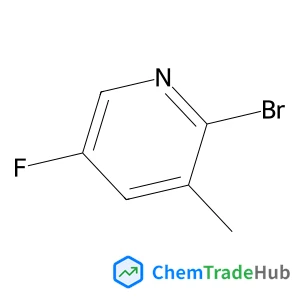
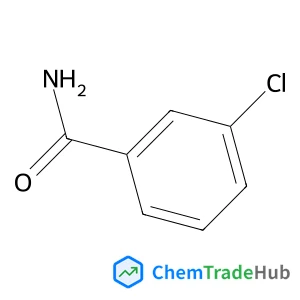
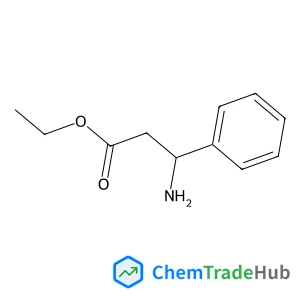

Recommended Suppliers



Disclaimer
This page provides academic journal information for reference and research purposes only. We are not affiliated with any journal publishers and do not handle publication submissions. For publication-related inquiries, please contact the respective journal publishers directly.
If you notice any inaccuracies in the information displayed, please contact us at support@chemtradehub.com. We will promptly review and address your concerns.