



Same building block, but diverse surface-confined self-assemblies: solvent and concentration effects-induced structural diversity towards chirality and achirality
Literature Information
Publication Date
2018-06-06
DOI
10.1039/C8CP01308J
Impact Factor
3.676
Authors
Yi Hu, Shaogang Xu, Kai Miao, Xinrui Miao, Wenli Deng
View Original
Abstract
Fabricating complex nano-networks on solid substrates is a research area that has attracted much attention in the field of molecular self-assembly. By designing a fluorenone derivative of 2-heptyloxy-7-pentadecyloxy-9-fluorenone (HPF), we obtained a surface-confined system that presented diverse nanostructures. The assembled networks for HPF were highly dependent on the solvent and concentration. At the liquid/solid interface, chiral tetramer-S, hexamer-S, and tetramer-linear structures as well as achiral irregular-linear and random structures were recorded. On the dry surface, we observed chiral octamer-S and achiral alternate configurations. During the self-assembly process, the short and long alkyl chains of HPF showed selective identification, which contributed to the formation of S-like or anti-S-like tetramers, hexamers and octamers, resulting in chiral structures. The nanopatterns were stabilized under the driving forces of dipolar interactions, hydrogen bonds and van der Waals interactions. Moreover, we performed forcefield calculations in order to further understand the underlying mechanisms from the viewpoints of their force strengths and binding energies. In general, the present work provides a significant impetus to induce polymorphous structures, and we believe that it will promote the study of chirality and achirality in the field of molecular self-assembly.
Recommended Journals

Nature Medicine

Journal of Natural Medicines

Chemical Communications

New Journal of Chemistry

Current Opinion in Solid State & Materials Science

Organic Process Research & Development

Drug Discovery Today

Russian Journal of General Chemistry

Russian Journal of Applied Chemistry

Journal of Saudi Chemical Society
Related Literature
Synthesis of meso-β doubly linked porphyrin tapes
Akihiko Tsuda, Yasuyuki Nakamura, Atsuhiro Osuka
2003-04-07
Communication
DOI: 10.1039/B302032K
Zeolite coated ATR crystals for new applications in FTIR-ATRspectroscopy
Zheng Wang, Margareta L. Larsson, Mattias Grahn, Allan Holmgren, Jonas Hedlund
2004-10-25
Communication
DOI: 10.1039/B410314A
Flexible enzymatic and chemo-enzymatic approaches to a broad range of uridine-diphospho-sugars
James C. Errey, Balaram Mukhopadhyay, K. P. Ravindranathan Kartha, Robert A. Field
2004-10-13
Communication
DOI: 10.1039/B410184G
Influence of substrate on self-assembled photonic crystal
Sachiko I. Matsushita
2004-02-09
Communication
DOI: 10.1039/B313410E
Controlled assembly of luminescent racks based on heteroleptic dinuclear lanthanide complexes
M. Margarita Castaño-Briones, Andrew P. Bassett, Linette L. Meason, Peter R. Ashton, Zoe Pikramenou
2004-10-26
Communication
DOI: 10.1039/B412999G
CoII5(OH)6(SO4)2(H2O)4: the first ferromagnet based on a layered cobalt–hydroxide pillared by inorganic ⋯OSO3–Co(H2O)4–O3SO⋯
Serge Vilminot, Mireille Richard-Plouet, Gilles André, Tahar Mhiri, Mohamedally Kurmoo
2004-10-06
Communication
DOI: 10.1039/B411304G
Photon-driven nanomechanical cyclic motion
Hai-Feng Ji, Yu Feng, Xiaohe Xu, Vemana Purushotham, Thomas Thundat, Gilbert M. Brown
2004-09-28
Communication
DOI: 10.1039/B408997A
Efficient immobilisation of Rh-MonoPhos on the aluminosilicate AlTUD-1
Ulf Hanefeld, Isabel W. C. E. Arends, Adriaan J. Minnaard, Thomas Maschmeyer, Roger A. Sheldon
2004-10-26
Communication
DOI: 10.1039/B411506F
Formation of dimers of inclusion cryptand/paraquat complexes driven by dipole–dipole and face-to-face π-stacking interactions
Feihe Huang, Liang Zhou, Jason W. Jones, Harry W. Gibson, Mehdi Ashraf-Khorassani
2004-10-14
Communication
DOI: 10.1039/B411234B
You might also like
Compound Q&A
What industries use (1R,3S)-1,3-Cyclopentanediol (CAS: 16326-97-9)?
(1R,3S)-1,3-Cyclopentanediol finds applications in various industries. In the ph...
16326-97-9(1R,3S)-1,3-Cyclopen...
Compound Q&A
What precautions should be taken when handling N'-[4-(Dimethylamino)phenyl]-N,N-dimethyl-1,4-benzenediamine (CAS: 637-31-0)?
When handling N'-[4-(Dimethylamino)phenyl]-N,N-dimethyl-1,4-benzenediamine, it i...
637-31-0N'-[4-(Dimethylamino...
Compound Q&A
Are there alternatives to 5-(2,4-Difluorophenyl)-2-methoxypyrimidine (CAS: 1352318-16-1) in synthesis?
There are several alternatives to 5-(2,4-Difluorophenyl)-2-methoxypyrimidine in ...
1352318-16-15-(2,4-Difluoropheny...
Compound Q&A
What regulatory guidelines apply to 1-(3-Methoxyphenoxy)propan-2-ol (CAS: 382141-68-6)?
1-(3-Methoxyphenoxy)propan-2-ol (CAS: 382141-68-6) must comply with the Globally...
382141-68-61-(3-Methoxyphenoxy)...
Compound Q&A
Is Tetrodotoxin Citrate (CAS: 18660-81-6) safe?
Tetrodotoxin Citrate is extremely dangerous and should be handled with extreme c...
18660-81-6Tetrodotoxin Citrate
Compound Q&A
What are the main uses of 2-Methyl-2-propanyl [(1R,3S)-3-hydroxycyclopentyl]carbamate (CAS: 225641-84-9)?
2-Methyl-2-propanyl [(1R,3S)-3-hydroxycyclopentyl]carbamate (CAS: 225641-84-9) i...
225641-84-92-Methyl-2-propanyl ...
Compound Q&A
How should waste containing 4-(2-Hydroxyhexafluoroisopropyl)Benzoic Acid (CAS: 16261-80-6) be handled?
Waste containing 4-(2-Hydroxyhexafluoroisopropyl)Benzoic Acid (CAS: 16261-80-6) ...
16261-80-64-(2-Hydroxyhexafluo...
Compound Q&A
How is 2-Methyl-2-proanyl {(2S)-1-[(benzyloxy)amino]-3-hydroxy-3-methyl-1-oxo-2-butanyl}carbamate (CAS: 102507-19-7) typically synthesized?
2-Methyl-2-proanyl {(2S)-1-[(benzyloxy)amino]-3-hydroxy-3-methyl-1-oxo-2-butanyl...
102507-19-72-Methyl-2-propanyl ...
Compound Q&A
What is Benzeneethanamine, α-ethyl-, hydrochloride (1:1) (CAS: 20735-15-3)?
Benzeneethanamine, α-ethyl-, hydrochloride (1:1) is an organic compound with the...
20735-15-3Benzeneethanamine, α...
Compound Q&A
Are there alternatives to 3-{(E)-[4-(Dimethylamino)phenyl]diazenyl}benzoic acid (CAS: 20691-84-3) in synthesis?
In the synthesis of compounds similar to 3-{(E)-[4-(Dimethylamino)phenyl]diazeny...
20691-84-33-{(E)-[4-(Dimethyla...
Source Journal
Physical Chemistry Chemical Physics

CiteScore:
5.5
Self-citation Rate:
10.3%
Articles per Year:
3036
Physical Chemistry Chemical Physics (PCCP) is an international journal co-owned by 19 physical chemistry and physics societies from around the world. This journal publishes original, cutting-edge research in physical chemistry, chemical physics and biophysical chemistry. To be suitable for publication in PCCP, articles must include significant innovation and/or insight into physical chemistry; this is the most important criterion that reviewers and Editors will judge against when evaluating submissions. The journal has a broad scope and welcomes contributions spanning experiment, theory, computation and data science. Topical coverage includes spectroscopy, dynamics, kinetics, statistical mechanics, thermodynamics, electrochemistry, catalysis, surface science, quantum mechanics, quantum computing and machine learning. Interdisciplinary research areas such as polymers and soft matter, materials, nanoscience, energy, surfaces/interfaces, and biophysical chemistry are welcomed if they demonstrate significant innovation and/or insight into physical chemistry. Joined experimental/theoretical studies are particularly appreciated when complementary and based on up-to-date approaches.
Recommended Compounds
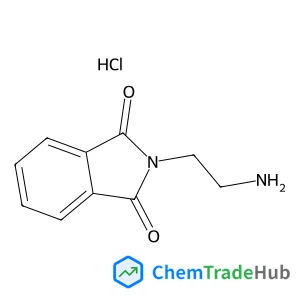
2-(2-Aminoethyl)-1H-isoindole-1,3(2H)-dione hydrochloride (1:1)
CAS Number:
30250-67-0
Molecular Formula:
C10H11ClN2O2
![N-[(5,6-Dichloro-1H-benzimidazol-2-yl)methyl]-9-(1-methyl-1H-pyrazol-4-yl)-2-(4-morpholinyl)-9H-purin-6-amine structure](https://static.chemtradehub.com/structs/238/2387704-62-1-25f4.webp "N-[(5,6-Dichloro-1H-benzimidazol-2-yl)methyl]-9-(1-methyl-1H-pyrazol-4-yl)-2-(4-morpholinyl)-9H-purin-6-amine structure")
N-[(5,6-Dichloro-1H-benzimidazol-2-yl)methyl]-9-(1-methyl-1H-pyrazol-4-yl)-2-(4-morpholinyl)-9H-purin-6-amine
CAS Number:
2387704-62-1
Molecular Formula:
C21H20Cl2N10O

Recommended Suppliers







Disclaimer
This page provides academic journal information for reference and research purposes only. We are not affiliated with any journal publishers and do not handle publication submissions. For publication-related inquiries, please contact the respective journal publishers directly.
If you notice any inaccuracies in the information displayed, please contact us at support@chemtradehub.com. We will promptly review and address your concerns.