












A complicated biocomputing system based on multi-responsive P(NIPAM-co-APBA) copolymer film electrodes and electrocatalysis of NADH
Literature Information
Publication Date
2017-07-25
DOI
10.1039/C7CP04030J
Impact Factor
3.676
Authors
Jiying Liang, Xue Yu, Tiangang Yang, Menglu Li, Li Shen, Yue Jin, Hongyun Liu
View Original
Abstract
In this paper, poly(N-isopropylacrylamide-co-3-aminophenylboronic acid) (P(NIPAM-co-APBA)) copolymer films were successfully electropolymerized on the Au electrode surface. The electroactive probe ferrocene carboxylic acid (FCA) in solution showed reversible thermal-, glucose- and pH-responsive on–off cyclic voltammetric (CV) behaviors at the film electrodes. The comparative experiments demonstrated that the thermo-responsive property of the film electrode was ascribed to the PNIPAM component of the films, whereas the glucose- and pH-sensitive behaviors came from the PAPBA constituent. The reduced form of nicotinamide adenine dinucleotide (NADH) could be electrocatalytically oxidized by FCA at the film electrodes, which would greatly amplify the multi-responsive CV signal difference between the on and off states. On the basis of these results, a binary 4-input/4-output logic circuit was fabricated with temperature, glucose, pH and NADH as inputs and the CV responses at 4 different levels as outputs. Moreover, a ternary CONSENSUS logic circuit was established on the same platform, which was the first report on the combination of ternary logic gate and bioelectrocatalysis without using enzymes. This work provided a novel idea for constructing complicated biocomputing systems by increasing the number of inputs/outputs with multi-sensitive interfaces and by designing new types of multi-valued logic gates on the basis of bioelectrocatalysis.
Related Literature
A free-radical-promoted stereospecific denitro silylation of β-nitroalkenes with silanes
Xi Zhang, Ming-Xia Liu, Tong-Lin Wang, Yong-Qing Wang, Xi-Cun Wang, Zheng-Jun Quan
2019-08-21
Research Article
DOI: 10.1039/C9QO00819E
Commiphorines A and B, unprecedented sesquiterpenoid dimers from Resina Commiphora with striking activities on anti-inflammation and lipogenesis inhibition
Da-Peng Qin, Qian-Qian Di, Ying Liu, Wei-Lin Chen, Shu-Mei Wang, Yong-Xian Cheng
2019-10-09
Research Article
DOI: 10.1039/C9QO01046G
Highly convergent modular access to poly-carbon substituted cyclopropanes via Cu(i)-catalyzed three-component cyclopropene carboallylation
Hexin Li, Mengru Zhang, Haroon Mehfooz, Dongxia Zhu, Jinbo Zhao
2019-08-19
Research Article
DOI: 10.1039/C9QO00902G
Synthesis of photolabile protecting group (PPG) protected uronic acid building blocks: applications in carbohydrate synthesis with the assistance of a continuous flow photoreactor
Varsha Tiwari, Adesh Kumar Singh, Priyanka Chaudhary, Peter H. Seeberger, Jeyakumar Kandasamy
2019-10-14
Research Article
DOI: 10.1039/C9QO01010F
More than a CO source: palladium-catalyzed carbonylative synthesis of butenolides from propargyl alcohols and TFBen
Zhengjie Le, Jun Ying
2019-07-19
Research Article
DOI: 10.1039/C9QO00779B
Asymmetric organocatalyzed reaction sequence of 2-hydroxy cinnamaldehydes and acyclic N-sulfonyl ketimines to construct diverse chiral bridged polycyclic aminals
Ying-Han Chen, Xue-Jiao Lv, Zhi-Hao You
2019-10-02
Research Article
DOI: 10.1039/C9QO01116A
Polyoxygenated meroterpenoids and a bioactive illudalane derivative from a co-culture of Armillaria sp. and Epicoccum sp.
Hong-Tao Li, Linhuan Tang, Tao Liu, Ruining Yang, Yabin Yang, Hao Zhou, Zhong-Tao Ding
2019-10-14
Research Article
DOI: 10.1039/C9QO01087D
Shape induced sorting via rim-to-rim complementarity in the formation of pillar[5, 6]arene-based supramolecular organogels
Dana Kaizerman-Kane, Maya Hadar, Eran Granot, Fernando Patolsky, Yoram Cohen
2019-08-08
Research Article
DOI: 10.1039/C9QO00717B
You might also like
Compound Q&A
Is 6-(3-Fluorophenyl)picolinic acid (CAS: 887982-40-3) safe?
6-(3-Fluorophenyl)picolinic acid is generally considered safe for laboratory use...
887982-40-36-(3-Fluorophenyl)pi...
Compound Q&A
What industries use (3R)-3-Pyrrolidinol (CAS: 2799-21-5)?
(3R)-3-Pyrrolidinol is used in the pharmaceutical industry as a precursor for dr...
2799-21-5(3R)-3-Pyrrolidinol
Compound Q&A
What precautions should be taken when handling (4R,5R)-4,5-Diethoxycarbonyl-2,2-dimethyldioxolane (CAS: 59779-75-8)?
When handling (4R,5R)-4,5-Diethoxycarbonyl-2,2-dimethyldioxolane (CAS: 59779-75-...
59779-75-8(4R,5R)-4,5-Diethoxy...
Compound Q&A
How is 1-(6-Chloroimidazo[1,2-b]pyridazin-3-yl)ethanone (CAS: 90734-71-7) typically synthesized?
1-(6-Chloroimidazo[1,2-b]pyridazin-3-yl)ethanone is often synthesized via a mult...
90734-71-71-(6-Chloroimidazo[1...
Compound Q&A
What is the market or research trend for N-Ethyl-3,4-dimethylbenzylamine (CAS: 39180-83-1)?
The market for N-Ethyl-3,4-dimethylbenzylamine (CAS: 39180-83-1) remains steady,...
39180-83-1N-Ethyl-3,4-dimethyl...
Compound Q&A
What is Tert-butyl 3-(pyrrolidin-1-yl)azetidine-1-carboxylate (CAS: 1019008-21-9)?
Tert-butyl 3-(pyrrolidin-1-yl)azetidine-1-carboxylate is a chemical compound wit...
1019008-21-9Tert-butyl 3-(pyrrol...
Compound Q&A
What regulatory guidelines apply to 1-Bromo-3-chloro-2,4-dimethoxybenzene (CAS: 1228956-93-1)?
1-Bromo-3-chloro-2,4-dimethoxybenzene (CAS: 1228956-93-1) falls under the classi...
1228956-93-11-Bromo-3-chloro-2,4...
Compound Q&A
Is 8-Bromo-2-methyl-3,4-dihydroisoquinolin-1(2H)-one (CAS: 1368622-07-4) safe?
The safety of 8-Bromo-2-methyl-3,4-dihydroisoquinolin-1(2H)-one (CAS: 1368622-07...
1368622-07-48-Bromo-2-methyl-3,4...
Compound Q&A
Is Benzyl [(3S)-2,6-dioxo-3-piperidinyl]carbamate (CAS: 22785-43-9) safe?
Benzyl [(3S)-2,6-dioxo-3-piperidinyl]carbamate is generally safe when handled wi...
22785-43-9Benzyl [(3S)-2,6-dio...
Compound Q&A
How should 1-{[4-(4,4,5,5-Tetramethyl-1,3,2-dioxaborolan-2-yl)phenyl]sulfonyl}pyrrolidine (CAS: 928657-21-0) be stored?
1-{[4-(4,4,5,5-Tetramethyl-1,3,2-dioxaborolan-2-yl)phenyl]sulfonyl}pyrrolidine s...
928657-21-01-{[4-(4,4,5,5-Tetra...
Source Journal
Physical Chemistry Chemical Physics

CiteScore:
5.5
Self-citation Rate:
10.3%
Articles per Year:
3036
Physical Chemistry Chemical Physics (PCCP) is an international journal co-owned by 19 physical chemistry and physics societies from around the world. This journal publishes original, cutting-edge research in physical chemistry, chemical physics and biophysical chemistry. To be suitable for publication in PCCP, articles must include significant innovation and/or insight into physical chemistry; this is the most important criterion that reviewers and Editors will judge against when evaluating submissions. The journal has a broad scope and welcomes contributions spanning experiment, theory, computation and data science. Topical coverage includes spectroscopy, dynamics, kinetics, statistical mechanics, thermodynamics, electrochemistry, catalysis, surface science, quantum mechanics, quantum computing and machine learning. Interdisciplinary research areas such as polymers and soft matter, materials, nanoscience, energy, surfaces/interfaces, and biophysical chemistry are welcomed if they demonstrate significant innovation and/or insight into physical chemistry. Joined experimental/theoretical studies are particularly appreciated when complementary and based on up-to-date approaches.
Recommended Compounds
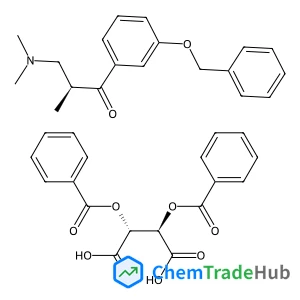
(S)-1-(3-(Benzyloxy)phenyl)-3-(dimethylamino)-2-methylpropan-1-one (2r,3r)-2,3-bis(benzoyloxy)succinate
CAS Number:
1004315-81-4
Molecular Formula:
C37H37NO10
![1-Benzyl-1,7-diazaspiro[4.4]nonane dihydrochloride structure](https://static.chemtradehub.com/structs/115/1159822-71-5-0320.webp "1-Benzyl-1,7-diazaspiro[4.4]nonane dihydrochloride structure")
1-Benzyl-1,7-diazaspiro[4.4]nonane dihydrochloride
CAS Number:
1159822-71-5
Molecular Formula:
C14H22Cl2N2
Recommended Suppliers






Disclaimer
This page provides academic journal information for reference and research purposes only. We are not affiliated with any journal publishers and do not handle publication submissions. For publication-related inquiries, please contact the respective journal publishers directly.
If you notice any inaccuracies in the information displayed, please contact us at support@chemtradehub.com. We will promptly review and address your concerns.