


![Methyl 2-[5-(3-Phenoxyphenyl)-2H-tetrazol-2-yl]acetate structure](https://static.chemtradehub.com/structs/130/1305320-60-8-84b4.webp "Methyl 2-[5-(3-Phenoxyphenyl)-2H-tetrazol-2-yl]acetate structure")
Methyl 2-[5-(3-Phenoxyphenyl)-2H-tetrazol-2-yl]acetate
CAS Number:
1305320-60-8
Molecular Formula:
C16H14N4O3
Debdutta Chakraborty, Ranjita Das, Pratim Kumar Chattaraj
The impact of functionalization as well as guest encapsulation on the optoelectronic properties of the ExBox+4 moiety has been investigated with the aid of density functional theory (DFT) based calculations. To this end, three functionalized variants of the ExBox+4 moiety have been modelled in silico, viz. NH2-ExBox+4-F, CN-ExBox+4-NH2 and NO2-ExBox+4-NH2, whereas coronene (Cor), B-doped coronene (BCor), N-doped coronene (NCor), tetrathiafulvalene (TTF), biphenyl (BiPh), tetracyanoethylene (TCNE) and tetracyanoquinodimethane (TCNQ) molecules have been employed as guests. The results indicate that as a result of functionalization, the ExBox+4 moiety can exhibit tangible non-linear optical (NLO) response properties as vindicated by the first static hyperpolarizability (β). As a result of guest encapsulation, significant variation in the optoelectronic properties of the chosen hosts takes place. BCor/TCNQ/NCor molecules enhance the NLO activity of the hosts while TTF/TCNE suppresses the same. In particular, NCor@host moieties demonstrate very high β values at the static field limit. Time dependent DFT results suggest that in general, the ability of the guest in tuning the transition energy associated with the pivotal electronic transitions of the host plays the dominant role in the observed variation in β. In addition, BCor/NCor@host moieties demonstrate broadband optical absorption capability thereby elucidating the possibility of deriving multi-purpose optoelectronic features such as NLO activity as well as utility in photovoltaic systems. Thermochemical results suggest that all the guest@host systems are stable at 298.15 K. Non-covalent and electrostatic binding forces stabilize the studied systems.

Helvetica Chimica Acta

Journal of Catalysis

Planta Medica

Russian Chemical Reviews

Journal of Medicinal Chemistry

Journal of Physics and Chemistry of Solids

Proceedings of the National Academy of Sciences of the United States of America

Journal of Organometallic Chemistry

Journal of Heterocyclic Chemistry

Israel Journal of Chemistry
Jiu-Jian Ji, Li-Jin Xiao, Dong Guo, Xiao Zhu, Juan Tang, Jun Wu, Zong-Bo Xie
DOI: 10.1039/C9QO00935C
Fei Wang, Pei Xu, Bei-Bei Liu, Shun-Yi Wang, Shun-Jun Ji
DOI: 10.1039/C9QO01122F
Jian Han, Xinbang Liu, Yu Li, Zihao Lou, Mingdong Yi, Huihui Kong, Jun Luo
DOI: 10.1039/C9QO00708C
Lin Wang, Pi Cheng, Xinhao Wang, Wei Wang, Jianguo Zeng, Yun Liang, Oliver Reiser
DOI: 10.1039/C9QO01119F
Zhengjie Le, Jun Ying
DOI: 10.1039/C9QO00779B
Jiao Yu, Jin-Hong Lin, Yu-Cai Cao, Ji-Chang Xiao
DOI: 10.1039/C9QO00919A
Meng-Ting Chen, Yang Zhang, Myroslav O. Vysotsky, Joachim O. Lindner, Meng-Hua Li, Mei-Jin Lin, Frank Würthner
DOI: 10.1039/C9QO01090D
Yingying Guo, Zhoulu Wang, Ying Zhu, Qiaochu Zhang, Donghui Wei, Xiang Liu, Zhenqian Fu
DOI: 10.1039/C9QO01093A
Yao Zhou, Yixian Lou, Ya Wang
DOI: 10.1039/C9QO00847K
6-(3-Fluorophenyl)picolinic acid is generally considered safe for laboratory use...
(3R)-3-Pyrrolidinol is used in the pharmaceutical industry as a precursor for dr...
When handling (4R,5R)-4,5-Diethoxycarbonyl-2,2-dimethyldioxolane (CAS: 59779-75-...
1-(6-Chloroimidazo[1,2-b]pyridazin-3-yl)ethanone is often synthesized via a mult...
The market for N-Ethyl-3,4-dimethylbenzylamine (CAS: 39180-83-1) remains steady,...
Tert-butyl 3-(pyrrolidin-1-yl)azetidine-1-carboxylate is a chemical compound wit...
1-Bromo-3-chloro-2,4-dimethoxybenzene (CAS: 1228956-93-1) falls under the classi...
The safety of 8-Bromo-2-methyl-3,4-dihydroisoquinolin-1(2H)-one (CAS: 1368622-07...
Benzyl [(3S)-2,6-dioxo-3-piperidinyl]carbamate is generally safe when handled wi...
1-{[4-(4,4,5,5-Tetramethyl-1,3,2-dioxaborolan-2-yl)phenyl]sulfonyl}pyrrolidine s...

Physical Chemistry Chemical Physics (PCCP) is an international journal co-owned by 19 physical chemistry and physics societies from around the world. This journal publishes original, cutting-edge research in physical chemistry, chemical physics and biophysical chemistry. To be suitable for publication in PCCP, articles must include significant innovation and/or insight into physical chemistry; this is the most important criterion that reviewers and Editors will judge against when evaluating submissions. The journal has a broad scope and welcomes contributions spanning experiment, theory, computation and data science. Topical coverage includes spectroscopy, dynamics, kinetics, statistical mechanics, thermodynamics, electrochemistry, catalysis, surface science, quantum mechanics, quantum computing and machine learning. Interdisciplinary research areas such as polymers and soft matter, materials, nanoscience, energy, surfaces/interfaces, and biophysical chemistry are welcomed if they demonstrate significant innovation and/or insight into physical chemistry. Joined experimental/theoretical studies are particularly appreciated when complementary and based on up-to-date approaches.

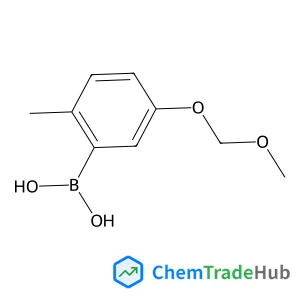
![5-Bromo-3-isopropyl-1H-pyrrolo[2,3-b]pyridine structure](https://static.chemtradehub.com/structs/125/1256819-54-1-8620.webp "5-Bromo-3-isopropyl-1H-pyrrolo[2,3-b]pyridine structure")
![trans-2-{[(Tert-butoxy)carbonyl]amino}cyclobutane-1-carboxylic acid structure](https://static.chemtradehub.com/structs/951/951173-25-4-27cd.webp "trans-2-{[(Tert-butoxy)carbonyl]amino}cyclobutane-1-carboxylic acid structure")





