












1,1′-Bi(2-naphthol-4,5-dicarboximide)s: blue emissive axially chiral scaffolds with aggregation-enhanced emission properties
Literature Information
Publication Date
2019-10-10
DOI
10.1039/C9QO01090D
Impact Factor
5.281
Authors
Meng-Ting Chen, Yang Zhang, Myroslav O. Vysotsky, Joachim O. Lindner, Meng-Hua Li, Mei-Jin Lin, Frank Würthner
View Original
Abstract
1,1′-Binaphthol (BINOL) is a versatile chiral reagent with widespread applications in asymmetric catalysis and fluorescent bio-sensing and imaging. However, unsubstituted BINOLs exhibit only weak and short-wavelength emission, limiting their scope for the latter applications. Herein, we report axially chiral 1,1′-bi(2-naphthol-4,5-dicarboximide)s which show two reversible reductions, bright blue light fluorescence with fluorescence quantum yields up to 0.67, and aggregation-enhanced emission characteristics. Single crystal X-ray analysis revealed an intriguing double helical supramolecular polymer motif formed by π–π stacking interactions between 2-naphthol-4,5-dicarboximide units. The enantiomers of racemic 1,1′-bi(2-naphthol-4,5-dicarboximide)s were resolved on chiral columns and studied by CD spectroscopy.
Recommended Journals
Related Literature
The binding mode of vilazodone in the human serotonin transporter elucidated by ligand docking and molecular dynamics simulations
Guoxun Zheng, Tingting Fu, Jiajun Hong, Fengcheng Li, Xiaojun Yao, Weiwei Xue
2020-01-23
Paper
DOI: 10.1039/C9CP05764A
Molecular dynamics investigations of oligosaccharides recognized by family 16 and 22 carbohydrate binding modules
Ruihan Wang
2019-09-05
Paper
DOI: 10.1039/C9CP04673A
Two-dimensional infrared spectroscopy from the gas to liquid phase: density dependent J-scrambling, vibrational relaxation, and the onset of liquid character
Aritra Mandal
2019-09-13
Paper
DOI: 10.1039/C9CP04101J
Gauging stability and reactivity of carbonyl O-oxide Criegee intermediates
J. Philipp Wagner
2019-09-13
Paper
DOI: 10.1039/C9CP03790J
Prediction of many-electron wavefunctions using atomic potentials: extended basis sets and molecular dissociation
2019-09-12
Paper
DOI: 10.1039/C9CP02450F
Quantitative analysis of the coupling between proton and electron transport in peptide/manganese oxide hybrid films
Misong Ju, Ouk Hyun Cho, Jaehun Lee, Mani Balamurugan, Ki Tae Nam
2020-03-10
Paper
DOI: 10.1039/C9CP05581A
Velocity map imaging study of the photodissociation dynamics of the allyl radical
Marta G. González, Luis Rubio-Lago
2020-02-18
Paper
DOI: 10.1039/C9CP04758A
Gradient heterostructure perovskite single crystals enable the improvement of radiative recombination for scintillator application
Wenyi Shao, Yang Li, Xiang Wang, Xiao Ouyang, Jiafa Cai, Chen Li, Zhengyun Wu, Qiang Xu
2020-02-25
Paper
DOI: 10.1039/C9CP06259A
Nitrogen doping in coexposed (001)–(101) anatase TiO2 surfaces: a DFT study
Giovanni Di Liberto, Sergio Tosoni, Gianfranco Pacchioni
2019-09-10
Paper
DOI: 10.1039/C9CP03930A
Raman shift, Néel temperature, and optical band gap of NiO nanoparticles
Bai Pan, Xianshang Meng, Yidong Xia, Haiming Lu, Hui Li
2020-02-20
Paper
DOI: 10.1039/C9CP06989E
You might also like
Compound Q&A
Is 6-(3-Fluorophenyl)picolinic acid (CAS: 887982-40-3) safe?
6-(3-Fluorophenyl)picolinic acid is generally considered safe for laboratory use...
887982-40-36-(3-Fluorophenyl)pi...
Compound Q&A
What industries use (3R)-3-Pyrrolidinol (CAS: 2799-21-5)?
(3R)-3-Pyrrolidinol is used in the pharmaceutical industry as a precursor for dr...
2799-21-5(3R)-3-Pyrrolidinol
Compound Q&A
What precautions should be taken when handling (4R,5R)-4,5-Diethoxycarbonyl-2,2-dimethyldioxolane (CAS: 59779-75-8)?
When handling (4R,5R)-4,5-Diethoxycarbonyl-2,2-dimethyldioxolane (CAS: 59779-75-...
59779-75-8(4R,5R)-4,5-Diethoxy...
Compound Q&A
How is 1-(6-Chloroimidazo[1,2-b]pyridazin-3-yl)ethanone (CAS: 90734-71-7) typically synthesized?
1-(6-Chloroimidazo[1,2-b]pyridazin-3-yl)ethanone is often synthesized via a mult...
90734-71-71-(6-Chloroimidazo[1...
Compound Q&A
What is the market or research trend for N-Ethyl-3,4-dimethylbenzylamine (CAS: 39180-83-1)?
The market for N-Ethyl-3,4-dimethylbenzylamine (CAS: 39180-83-1) remains steady,...
39180-83-1N-Ethyl-3,4-dimethyl...
Compound Q&A
What is Tert-butyl 3-(pyrrolidin-1-yl)azetidine-1-carboxylate (CAS: 1019008-21-9)?
Tert-butyl 3-(pyrrolidin-1-yl)azetidine-1-carboxylate is a chemical compound wit...
1019008-21-9Tert-butyl 3-(pyrrol...
Compound Q&A
What regulatory guidelines apply to 1-Bromo-3-chloro-2,4-dimethoxybenzene (CAS: 1228956-93-1)?
1-Bromo-3-chloro-2,4-dimethoxybenzene (CAS: 1228956-93-1) falls under the classi...
1228956-93-11-Bromo-3-chloro-2,4...
Compound Q&A
Is 8-Bromo-2-methyl-3,4-dihydroisoquinolin-1(2H)-one (CAS: 1368622-07-4) safe?
The safety of 8-Bromo-2-methyl-3,4-dihydroisoquinolin-1(2H)-one (CAS: 1368622-07...
1368622-07-48-Bromo-2-methyl-3,4...
Compound Q&A
Is Benzyl [(3S)-2,6-dioxo-3-piperidinyl]carbamate (CAS: 22785-43-9) safe?
Benzyl [(3S)-2,6-dioxo-3-piperidinyl]carbamate is generally safe when handled wi...
22785-43-9Benzyl [(3S)-2,6-dio...
Compound Q&A
How should 1-{[4-(4,4,5,5-Tetramethyl-1,3,2-dioxaborolan-2-yl)phenyl]sulfonyl}pyrrolidine (CAS: 928657-21-0) be stored?
1-{[4-(4,4,5,5-Tetramethyl-1,3,2-dioxaborolan-2-yl)phenyl]sulfonyl}pyrrolidine s...
928657-21-01-{[4-(4,4,5,5-Tetra...
Source Journal
Organic Chemistry Frontiers

CiteScore:
7.8
Self-citation Rate:
8.7%
Articles per Year:
724
Organic Chemistry Frontiers publishes high-quality research from across organic chemistry. Emphases are placed on studies that make significant contributions to the field of organic chemistry by reporting either new or significantly improved protocols or methodologies. Topics include, but are not limited to the following: Organic synthesis Development of synthetic methodologies Catalysis Natural products Functional organic materials Supramolecular and macromolecular chemistry Physical and computational organic chemistry
Recommended Compounds
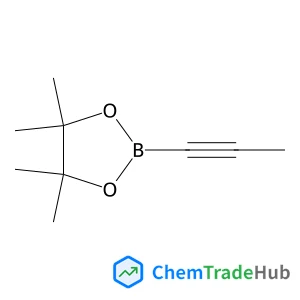
4,4,5,5-Tetramethyl-2-(1-propyn-1-YL)-1,3,2-dioxaborolane
CAS Number:
347389-75-7
Molecular Formula:
C9H15BO2
Recommended Suppliers






Disclaimer
This page provides academic journal information for reference and research purposes only. We are not affiliated with any journal publishers and do not handle publication submissions. For publication-related inquiries, please contact the respective journal publishers directly.
If you notice any inaccuracies in the information displayed, please contact us at support@chemtradehub.com. We will promptly review and address your concerns.