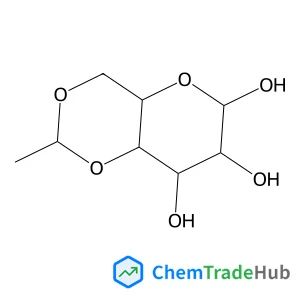
2,3,6-Tri-O-acetyl-4-O-(2,3,4,6-tetra-O-acetyl-beta-D-galactopyranosyl)-alpha-D-glucopyranosyl bromide
CAS Number:
4753-07-5
Molecular Formula:
C26H35BrO17
Xiansheng Liu, Baohe Yuan, Yongguang Cheng, Xianghong Ge, Erjun Liang, Weifeng Zhang
The hygroscopicity of Y2Mo3O12 has serious influences on its mechanic and negative thermal expansion (NTE) properties. The reported partial ion substitution for Y3+ in Y2Mo3O12 could reduce the hygroscopicity, however, the expected NTE properties disappear disappointedly. In this investigation, it is found that avoiding the invasion of crystal water and extending the NTE temperature range of Y2Mo3O12 to room temperature could be realized together by heating with CO(NH2)2. The X-ray diffraction patterns, infrared absorption spectra, scanning electron microscopy images and X-ray photoelectron spectra suggest the formation of small hydrophobic molecules (C3N4, C, etc.) coated on the surface, which could clog the microchannels in Y2Mo3O12 to avoid the invasion of crystal water. The investigation paves a way to improve the NTE properties by neglecting the influences of water molecules on the stretching vibrations of MoO4 tetrahedra and the transverse vibrations of bridge oxygen atoms.

Chinese Journal of Chemistry

Journal of Asian Natural Products Research

Colloid Journal

Journal of the Indian Institute of Science

Journal of Chemical Sciences

Bioorganic & Medicinal Chemistry

Biocatalysis and Biotransformation

Electroanalysis

Polycyclic Aromatic Compounds

Bioorganic & Medicinal Chemistry Letters
Chan Chen, Haisheng Ren, Weikang Tang, Mengqi Han, Qinfei Chen, Hong Zhou, Jiadong Chen, Yuyue Gao, Wenbin Liu
DOI: 10.1039/D3TB01082A
Marrium Saeed, Urooj Kamran, Amina Khan, Md Irfanul Haque Siddiqui, Hasan Jamal, Haq Nawaz Bhatti
DOI: 10.1039/D3NJ04133F
Xiaoqing Yi, Zhiwei Shang, Xianliang Nong, Fan Xia
DOI: 10.1039/D3TB02361C
Nikita Belko, Hanna Maltanava, Anatol Lugovski, Polina Shabunya, Sviatlana Fatykhava, Evgeny Bondarenko, Pavel Chulkin, Sergey Poznyak
DOI: 10.1039/D3NJ04711C
Qi Chen, Xiang Ke, Yusong Cai, Hao Wang, Zhiyun Dong, Xinlong Li, Jinlin Li, Xinyuan Xu, Jun Luo
DOI: 10.1039/D3TB02186F
Yi Yao, Xiaoxin Shi, Zihong Zhao, Afang Zhang, Wen Li
DOI: 10.1039/D3TB01803B
Nurul Hidayah Abu Bakar, Wan Norfazilah Wan Ismail, Hartina Mohd Yusop, Noreen Farzuhana Mohd Zulkifli
DOI: 10.1039/D3NJ03206J
Xiaoxue Dong, Zongwei Zhu, Qian Sun, Hongqian Zhang, Chuanxu Yang
DOI: 10.1039/D3TB02029K
Qiang Wang, Zhen Pei, Zhipeng He, Wei Guo, Lingna Han
DOI: 10.1039/D3TB01731A
6-(3-Fluorophenyl)picolinic acid is generally considered safe for laboratory use...
(3R)-3-Pyrrolidinol is used in the pharmaceutical industry as a precursor for dr...
When handling (4R,5R)-4,5-Diethoxycarbonyl-2,2-dimethyldioxolane (CAS: 59779-75-...
1-(6-Chloroimidazo[1,2-b]pyridazin-3-yl)ethanone is often synthesized via a mult...
The market for N-Ethyl-3,4-dimethylbenzylamine (CAS: 39180-83-1) remains steady,...
Tert-butyl 3-(pyrrolidin-1-yl)azetidine-1-carboxylate is a chemical compound wit...
1-Bromo-3-chloro-2,4-dimethoxybenzene (CAS: 1228956-93-1) falls under the classi...
The safety of 8-Bromo-2-methyl-3,4-dihydroisoquinolin-1(2H)-one (CAS: 1368622-07...
Benzyl [(3S)-2,6-dioxo-3-piperidinyl]carbamate is generally safe when handled wi...
1-{[4-(4,4,5,5-Tetramethyl-1,3,2-dioxaborolan-2-yl)phenyl]sulfonyl}pyrrolidine s...

Physical Chemistry Chemical Physics (PCCP) is an international journal co-owned by 19 physical chemistry and physics societies from around the world. This journal publishes original, cutting-edge research in physical chemistry, chemical physics and biophysical chemistry. To be suitable for publication in PCCP, articles must include significant innovation and/or insight into physical chemistry; this is the most important criterion that reviewers and Editors will judge against when evaluating submissions. The journal has a broad scope and welcomes contributions spanning experiment, theory, computation and data science. Topical coverage includes spectroscopy, dynamics, kinetics, statistical mechanics, thermodynamics, electrochemistry, catalysis, surface science, quantum mechanics, quantum computing and machine learning. Interdisciplinary research areas such as polymers and soft matter, materials, nanoscience, energy, surfaces/interfaces, and biophysical chemistry are welcomed if they demonstrate significant innovation and/or insight into physical chemistry. Joined experimental/theoretical studies are particularly appreciated when complementary and based on up-to-date approaches.
![5-Bromo-3-isopropyl-1H-pyrrolo[2,3-b]pyridine structure](https://static.chemtradehub.com/structs/125/1256819-54-1-8620.webp "5-Bromo-3-isopropyl-1H-pyrrolo[2,3-b]pyridine structure")