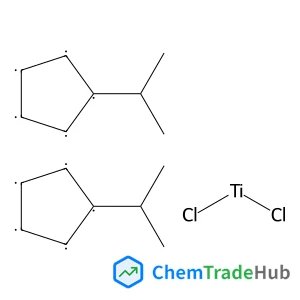
BIS(I-PROPYLCYCLOPENTADIENYL)TITANIUM DICHLORIDE
CAS Number:
12130-65-3
Molecular Formula:
C16H22Cl2Ti
Qi Chen, Xiang Ke, Yusong Cai, Hao Wang, Zhiyun Dong, Xinlong Li, Jinlin Li, Xinyuan Xu, Jun Luo
Polyacrylamide hydrogel is a promising matrix in biomedical applications due to its biocompatibility, transparency and flexibility. However, its implementation in skin-attachable applications is impeded by its inherent deficiency in surface-adaptive adhesion and inadequate mechanical conformity to skin tissues. Herein, tris, a biocompatible small molecule with a triple hydrogen bonding cluster in its molecule structure, is introduced for the first time into a polyacrylamide hydrogel. This incorporation is achieved via a facile one-pot strategy, resulting in a highly stretchable hydrogel with an impressive strain capacity (2574.75 ± 28.19%), a human dermis tissue-compatible Young's modulus (27.89 ± 2.05 kPa) and an intrinsically universal adhesion capacity (16.66 ± 0.32 N). These superior properties are attributed to the elevated hydrogen bonding density and the plasticizing effect induced by tris, without compromising the hydrogel's excellent transparency (>90% transmittance). Moreover, by incorporating calcium ions into the resulting soft adhesive hydrogel, we demonstrate its utility in skin-like sensors, leading to a substantial enhancement in strain sensitivity and electrical conductivity, in conjunction with the plasticizing influence exerted by tris. This work offers a facile and environmentally friendly solution to fabricate ultra-stretchable adhesive polyacrylamide hydrogel matrixes for dynamic surfaces, even under large deformation, which can broaden their potential applications in integrated bioelectronics.
Qun Zeng, Xianggui Xue, Zengming Zhang, Fude Nie, Chaoyang Zhang
DOI: 10.1039/C7CP04015F
S. Torgova, S. P. Sreenilayam, O. Francescangeli, F. Vita, J. K. Vij, E. Pozhidaev, M. Minchenko, C. Ferrero
DOI: 10.1039/C7CP03561F
Bin-Bin Wang, Yong-Chang Han, Wei Gao, Shu-Lin Cong
DOI: 10.1039/C7CP04310D
Charusheela Ramanan, Marco Ferretti, Henny van Roon, Vladimir I. Novoderezhkin, Rienk van Grondelle
DOI: 10.1039/C7CP03038J
M. Oujja, S. Psilodimitrakopoulos, E. Carrasco, M. Sanz, A. Philippidis, A. Selimis, P. Pouli, G. Filippidis, M. Castillejo
DOI: 10.1039/C7CP02509B
M. M. Maitani, K. Tanaka, Q. Shen, T. Toyoda, Y. Wada
DOI: 10.1039/C7CP03593D
E. Suturina, E. Reijerse, W. Lubitz
DOI: 10.1039/C7CP03680A
Johannes R. Klein, Mirko Scholz, Kawon Oum, Thomas Lenzer
DOI: 10.1039/C7CP01718A
C. Paduani, Andrew M. Rappe
DOI: 10.1039/C7CP02091K
6-(3-Fluorophenyl)picolinic acid is generally considered safe for laboratory use...
(3R)-3-Pyrrolidinol is used in the pharmaceutical industry as a precursor for dr...
When handling (4R,5R)-4,5-Diethoxycarbonyl-2,2-dimethyldioxolane (CAS: 59779-75-...
1-(6-Chloroimidazo[1,2-b]pyridazin-3-yl)ethanone is often synthesized via a mult...
The market for N-Ethyl-3,4-dimethylbenzylamine (CAS: 39180-83-1) remains steady,...
Tert-butyl 3-(pyrrolidin-1-yl)azetidine-1-carboxylate is a chemical compound wit...
1-Bromo-3-chloro-2,4-dimethoxybenzene (CAS: 1228956-93-1) falls under the classi...
The safety of 8-Bromo-2-methyl-3,4-dihydroisoquinolin-1(2H)-one (CAS: 1368622-07...
Benzyl [(3S)-2,6-dioxo-3-piperidinyl]carbamate is generally safe when handled wi...
1-{[4-(4,4,5,5-Tetramethyl-1,3,2-dioxaborolan-2-yl)phenyl]sulfonyl}pyrrolidine s...
Journal of Materials Chemistry A, B & C cover high quality studies across all fields of materials chemistry. The journals focus on those theoretical or experimental studies that report new understanding, applications, properties and synthesis of materials. The journals have a strong history of publishing quality reports of interest to interdisciplinary communities and providing an efficient and rigorous service through peer review and publication. The journals are led by an international team of Editors-in-Chief and Associate Editors who are all active researchers in their fields. Journal of Materials Chemistry A, B & C are separated by the intended application of the material studied. Broadly, applications in energy and sustainability are of interest to Journal of Materials Chemistry A, applications in biology and medicine are of interest to Journal of Materials Chemistry B, and applications in optical, magnetic and electronic devices are of interest to Journal of Materials Chemistry C. More than one Journal of Materials Chemistry journal may be suitable for certain fields and researchers are encouraged to submit their paper to the journal that they feel best fits for their particular article. Example topic areas within the scope of Journal of Materials Chemistry B are listed below. This list is neither exhaustive nor exclusive. Antifouling coatings Biocompatible materials Bioelectronics Bioimaging Biomimetics Biomineralisation Bionics Biosensors Diagnostics Drug delivery Gene delivery Immunobiology Nanomedicine Regenerative medicine & Tissue engineering Scaffolds Soft robotics Stem cells Therapeutic devices image block All articles published in Journal of Materials Chemistry B from 2019 onwards will be indexed in MEDLINE®. Articles that primarily focus on providing insight into the underlying science and performance of biomaterials within a biological environment are more suited to our companion journal, Biomaterials Science.