


Synthesis of a water-based TEOS–PDMS sol–gel coating for hydrophobic cotton and polyester fabrics
Literature Information
Publication Date
2023-12-15
DOI
10.1039/D3NJ03206J
Impact Factor
3.591
Authors
Nurul Hidayah Abu Bakar, Wan Norfazilah Wan Ismail, Hartina Mohd Yusop, Noreen Farzuhana Mohd Zulkifli
View Original
Abstract
Hydrophobic coatings inspired by the lotus effect have gained popularity for their ability to solve various problems. Achieving a hydrophobic surface requires nanoscale roughness and low surface energy materials. Traditional methods rely on harmful fluorinated chemicals, but the demand for water-based coatings has increased due to environmental concerns. To overcome challenges such as synthesizing stable low surface energy materials in water and finding suitable adhesives, the sol–gel process is explored. The sol–gel method, utilizing silica, alumina, and titania, is a versatile and commonly used approach. This study focuses on producing water-based hydrophobic coatings for cotton and polyester fabrics using a one-step sol–gel method. The coatings are evaluated for their hydrophobic properties, surface energy, morphology, elemental composition, strength, breathability, and durability. In this research study, a coating solution was synthesised by cross-linking tetraethyl orthosilicate (TEOS) and polydimethoxysilane (PDMS), then cotton and polyester fabrics were coated using a pad-dry-cure method. The coated fabrics exhibited improved hydrophobic properties, with water droplets remaining spherical and not penetrating the fabric surface. The highest water contact angle (WCA) was achieved at a TEOS to PDMS molar ratio of 1 : 0.25, indicating excellent hydrophobicity. FTIR analysis confirmed the formation of Si–O–Si bonds in the coating solution, while SEM-EDX analysis revealed successful adhesion of the coating to the fabric surfaces, particularly on cotton. The coated fabrics demonstrated altered surface morphologies and lower air permeability compared to uncoated fabrics. The air permeability of the cotton fabric was greatly reduced by 96.63%, while the reduction for coated polyester was only 55.43%. In tensile strength tests, both coated cotton and polyester fabric experience a reduction in breaking and load strength with cotton exhibiting less reduction in strength compared to polyester. The coated cotton and polyester fabrics maintain good hydrophobicity after exposure to prolonged moderate temperature. However, the hydrophobicity decreased with repeated washing cycles, indicating the need for improved stability and durability. On a positive note, the TEOS–PDMS coating demonstrated excellent resistance to abrasion, making it suitable for applications requiring durable and hydrophobic textile surfaces. These findings suggest that the TEOS–PDMS coating provides a promising approach for enhancing the hydrophobic and surface properties of cotton and polyester fabrics.
Recommended Journals

Planta Medica

Journal of Physics and Chemistry of Solids

Organic Preparations and Procedures International

Journal of Heterocyclic Chemistry

Helvetica Chimica Acta

Kinetics and Catalysis

Pure and Applied Chemistry

European Journal of Wood and Wood Products

Journal of Medicinal Chemistry

Journal of Organometallic Chemistry
Related Literature
Asymmetric synthesis of spiro-structural 2,3-dihydrobenzofurans via the bifunctional phosphonium salt-promoted [4 + 1] cyclization of ortho-quinone methides with α-bromoketones
Song Zhang, Jianke Pan, Hongsu Zhang, Tianli Wang
2019-10-08
Research Article
DOI: 10.1039/C9QO01096C
Recent advances in intramolecular C–O/C–N/C–S bond formation via C–H functionalization
Paran J. Borpatra, Bhaskar Deka, Mohit L. Deb, Pranjal K. Baruah
2019-09-10
Review Article
DOI: 10.1039/C9QO00863B
Oxidant-controlled divergent transformations of 3-aminoindazoles for the synthesis of pyrimido[1,2-b]-indazoles and aromatic nitrile-derived dithioacetals
Yao Zhou, Yixian Lou, Ya Wang
2019-08-09
Research Article
DOI: 10.1039/C9QO00847K
Photocatalytic decarboxylative [2 + 2 + 1] annulation of 1,6-enynes with N-hydroxyphthalimide esters for the synthesis of indene-containing polycyclic compounds
Meng-Jie Jiao, Dan Liu, Xiu-Qin Hu, Peng-Fei Xu
2019-10-16
Research Article
DOI: 10.1039/C9QO01166H
General approach to 2-fluoroalkyl 1,3-azoles via the tandem ring opening and defluorinative annulation of N-fluoroalkyl-1,2,3-triazoles
Vojtěch Košťál, Dominik Täffner, Petr Beier
2019-10-09
Research Article
DOI: 10.1039/C9QO01104H
Enantioselective rearrangement of indolyl carbonates catalyzed by chiral DMAP-N-oxides
Meng Shan, Tao Liang, Ye-Fei Zhang, Ming-Sheng Xie, Gui-Rong Qu, Hai-Ming Guo
2019-10-12
Research Article
DOI: 10.1039/C9QO01146C
Steric hindrance classified: treatment of isothiocyanatoallene with secondary amines bearing bulky substituents to generate 2-aminothiazoles‡
Klaus Banert, Jennifer Seifert
2019-05-17
Research Article
DOI: 10.1039/C9QO00312F
You might also like
Compound Q&A
Is 6-(3-Fluorophenyl)picolinic acid (CAS: 887982-40-3) safe?
6-(3-Fluorophenyl)picolinic acid is generally considered safe for laboratory use...
887982-40-36-(3-Fluorophenyl)pi...
Compound Q&A
What industries use (3R)-3-Pyrrolidinol (CAS: 2799-21-5)?
(3R)-3-Pyrrolidinol is used in the pharmaceutical industry as a precursor for dr...
2799-21-5(3R)-3-Pyrrolidinol
Compound Q&A
What precautions should be taken when handling (4R,5R)-4,5-Diethoxycarbonyl-2,2-dimethyldioxolane (CAS: 59779-75-8)?
When handling (4R,5R)-4,5-Diethoxycarbonyl-2,2-dimethyldioxolane (CAS: 59779-75-...
59779-75-8(4R,5R)-4,5-Diethoxy...
Compound Q&A
How is 1-(6-Chloroimidazo[1,2-b]pyridazin-3-yl)ethanone (CAS: 90734-71-7) typically synthesized?
1-(6-Chloroimidazo[1,2-b]pyridazin-3-yl)ethanone is often synthesized via a mult...
90734-71-71-(6-Chloroimidazo[1...
Compound Q&A
What is the market or research trend for N-Ethyl-3,4-dimethylbenzylamine (CAS: 39180-83-1)?
The market for N-Ethyl-3,4-dimethylbenzylamine (CAS: 39180-83-1) remains steady,...
39180-83-1N-Ethyl-3,4-dimethyl...
Compound Q&A
What is Tert-butyl 3-(pyrrolidin-1-yl)azetidine-1-carboxylate (CAS: 1019008-21-9)?
Tert-butyl 3-(pyrrolidin-1-yl)azetidine-1-carboxylate is a chemical compound wit...
1019008-21-9Tert-butyl 3-(pyrrol...
Compound Q&A
What regulatory guidelines apply to 1-Bromo-3-chloro-2,4-dimethoxybenzene (CAS: 1228956-93-1)?
1-Bromo-3-chloro-2,4-dimethoxybenzene (CAS: 1228956-93-1) falls under the classi...
1228956-93-11-Bromo-3-chloro-2,4...
Compound Q&A
Is 8-Bromo-2-methyl-3,4-dihydroisoquinolin-1(2H)-one (CAS: 1368622-07-4) safe?
The safety of 8-Bromo-2-methyl-3,4-dihydroisoquinolin-1(2H)-one (CAS: 1368622-07...
1368622-07-48-Bromo-2-methyl-3,4...
Compound Q&A
Is Benzyl [(3S)-2,6-dioxo-3-piperidinyl]carbamate (CAS: 22785-43-9) safe?
Benzyl [(3S)-2,6-dioxo-3-piperidinyl]carbamate is generally safe when handled wi...
22785-43-9Benzyl [(3S)-2,6-dio...
Compound Q&A
How should 1-{[4-(4,4,5,5-Tetramethyl-1,3,2-dioxaborolan-2-yl)phenyl]sulfonyl}pyrrolidine (CAS: 928657-21-0) be stored?
1-{[4-(4,4,5,5-Tetramethyl-1,3,2-dioxaborolan-2-yl)phenyl]sulfonyl}pyrrolidine s...
928657-21-01-{[4-(4,4,5,5-Tetra...
Source Journal
New Journal of Chemistry

CiteScore:
5.3
Self-citation Rate:
3.7%
Articles per Year:
2153
NJC (New Journal of Chemistry) is a broad-based primary journal encompassing all branches of chemistry and its sub-disciplines. It contains full research articles, communications, perspectives and focus articles. This well-established journal, owned by the Centre National de la Recherche Scientifique (CNRS) of France, has been co-published with the Royal Society of Chemistry since January 1998. NJC is the forum for the publication of high-quality, original and significant work that opens new directions in chemistry or other scientific disciplines. In addition to having a significant chemical component, work published in NJC must demonstrate that it will have an impact on areas of research other than that of the reported work.
Recommended Compounds
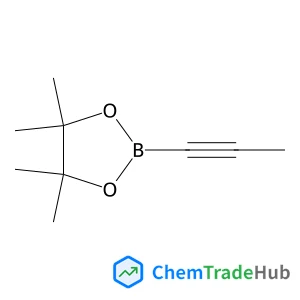
4,4,5,5-Tetramethyl-2-(1-propyn-1-YL)-1,3,2-dioxaborolane
CAS Number:
347389-75-7
Molecular Formula:
C9H15BO2
![Methyl 2-[5-(3-Phenoxyphenyl)-2H-tetrazol-2-yl]acetate structure](https://static.chemtradehub.com/structs/130/1305320-60-8-84b4.webp "Methyl 2-[5-(3-Phenoxyphenyl)-2H-tetrazol-2-yl]acetate structure")
Methyl 2-[5-(3-Phenoxyphenyl)-2H-tetrazol-2-yl]acetate
CAS Number:
1305320-60-8
Molecular Formula:
C16H14N4O3
Recommended Suppliers





Disclaimer
This page provides academic journal information for reference and research purposes only. We are not affiliated with any journal publishers and do not handle publication submissions. For publication-related inquiries, please contact the respective journal publishers directly.
If you notice any inaccuracies in the information displayed, please contact us at support@chemtradehub.com. We will promptly review and address your concerns.