












Non-aqueous electrochemistry of rhodamine B acylhydrazone
Literature Information
Publication Date
2023-12-15
DOI
10.1039/D3NJ04711C
Impact Factor
3.591
Authors
Nikita Belko, Hanna Maltanava, Anatol Lugovski, Polina Shabunya, Sviatlana Fatykhava, Evgeny Bondarenko, Pavel Chulkin, Sergey Poznyak
View Original
Abstract
Rhodamine B hydrazide and rhodamine B acylhydrazone are spirocyclic compounds that provide a versatile framework for developing chemical and electrochemical sensors with turn-on optical response. Herein, we explore how a simple conversion of rhodamine B hydrazide into rhodamine B acylhydrazone can change its electrochemical behavior. Non-aqueous electrochemistry of rhodamine B acylhydrazone is studied using cyclic voltammetry, in situ electron spin resonance spectroscopy, bulk electrolysis, spectrophotometry, and liquid chromatography/mass spectrometry. Cyclic voltammograms of the dye demonstrate two reversible electrooxidation waves peaked at 0.54 and 0.69 V (vs. Fc+/Fc). In situ electron spin resonance spectroscopy data suggest that the electrooxidation mechanism of rhodamine B acylhydrazone involves several free radical intermediates. Bulk electrolysis of rhodamine B acylhydrazone generates a variety of products in a potential-dependent manner. Although rhodamine B acylhydrazone and rhodamine B hydrazide have similar molecular structures, they exhibit differing electrochemical behavior. In particular, protection of the hydrazide moiety by the propan-2-ylidene substituent in rhodamine B acylhydrazone molecules drastically increases the reversibility of electrooxidation. The obtained results can be used for developing new sensors with desired electrochemical properties based on the derivatives of rhodamine B hydrazide.
Related Literature
Current–voltage characteristics of borophene and borophane sheets
Sahar Izadi Vishkayi, Meysam Bagheri Tagani
2017-07-20
Paper
DOI: 10.1039/C7CP03873A
Vibrational nonlinear optical properties of spatially confined weakly bound complexes
Robert Zaleśny, Marta Chołuj, Justyna Kozłowska, Wojciech Bartkowiak, Josep M. Luis
2017-08-14
Paper
DOI: 10.1039/C7CP04259K
A structural signature of the breakdown of the Stokes–Einstein relation in metallic liquids
Shi-Dong Feng, Jun-Wei Qiao, Wei-Min Wang, Jing-Yu Qin
2017-07-27
Paper
DOI: 10.1039/C7CP03475J
Solvent effects on the excited-state double proton transfer mechanism in the 7-azaindole dimer: a TDDFT study with the polarizable continuum model
Xue-fang Yu, Shohei Yamazaki, Tetsuya Taketsugu
2017-08-01
Paper
DOI: 10.1039/C7CP04942K
Redox titration of gold and platinum surface oxides at porous microelectrodes
Mareike Haensch, Luis Balboa, Alexander Dyck, Gunther Wittstock
2017-08-09
Paper
DOI: 10.1039/C7CP04589A
A soluble star-shaped silsesquioxane-cored polymer—towards novel stabilization of pH-dependent high internal phase emulsions
Jun Peng, Kai Xu, Mingcai Chen
2017-08-09
Paper
DOI: 10.1039/C7CP03325G
The role of phonon–phonon and electron–phonon scattering in thermal transport in PdCoO2
Long Cheng, Qing-Bo Yan
2017-07-18
Paper
DOI: 10.1039/C7CP03667A
Shaping nanofiltration channels in a carbonaceous membrane via controlling the pyrolysis atmosphere
Zheng Xing, Yeap Hung Ng, Siok-Wei Tay, Rachel Pek Har Oon, Liang Hong
2017-07-18
Paper
DOI: 10.1039/C7CP03973E
Mechanical properties and electronic structure of edge-doped graphene nanoribbons with F, O, and Cl atoms
Sebastián Piriz, Luciana Fernández-Werner, Helena Pardo, Ricardo Faccio, Álvaro W. Mombrú
2017-07-18
Paper
DOI: 10.1039/C7CP02948A
Analyzing the dependence of oxygen incorporation current density on overpotential and oxygen partial pressure in mixed conducting oxide electrodes
Zixuan Guan, Di Chen, William C. Chueh
2017-08-08
Paper
DOI: 10.1039/C7CP03654J
You might also like
Compound Q&A
Is 6-(3-Fluorophenyl)picolinic acid (CAS: 887982-40-3) safe?
6-(3-Fluorophenyl)picolinic acid is generally considered safe for laboratory use...
887982-40-36-(3-Fluorophenyl)pi...
Compound Q&A
What industries use (3R)-3-Pyrrolidinol (CAS: 2799-21-5)?
(3R)-3-Pyrrolidinol is used in the pharmaceutical industry as a precursor for dr...
2799-21-5(3R)-3-Pyrrolidinol
Compound Q&A
What precautions should be taken when handling (4R,5R)-4,5-Diethoxycarbonyl-2,2-dimethyldioxolane (CAS: 59779-75-8)?
When handling (4R,5R)-4,5-Diethoxycarbonyl-2,2-dimethyldioxolane (CAS: 59779-75-...
59779-75-8(4R,5R)-4,5-Diethoxy...
Compound Q&A
How is 1-(6-Chloroimidazo[1,2-b]pyridazin-3-yl)ethanone (CAS: 90734-71-7) typically synthesized?
1-(6-Chloroimidazo[1,2-b]pyridazin-3-yl)ethanone is often synthesized via a mult...
90734-71-71-(6-Chloroimidazo[1...
Compound Q&A
What is the market or research trend for N-Ethyl-3,4-dimethylbenzylamine (CAS: 39180-83-1)?
The market for N-Ethyl-3,4-dimethylbenzylamine (CAS: 39180-83-1) remains steady,...
39180-83-1N-Ethyl-3,4-dimethyl...
Compound Q&A
What is Tert-butyl 3-(pyrrolidin-1-yl)azetidine-1-carboxylate (CAS: 1019008-21-9)?
Tert-butyl 3-(pyrrolidin-1-yl)azetidine-1-carboxylate is a chemical compound wit...
1019008-21-9Tert-butyl 3-(pyrrol...
Compound Q&A
What regulatory guidelines apply to 1-Bromo-3-chloro-2,4-dimethoxybenzene (CAS: 1228956-93-1)?
1-Bromo-3-chloro-2,4-dimethoxybenzene (CAS: 1228956-93-1) falls under the classi...
1228956-93-11-Bromo-3-chloro-2,4...
Compound Q&A
Is 8-Bromo-2-methyl-3,4-dihydroisoquinolin-1(2H)-one (CAS: 1368622-07-4) safe?
The safety of 8-Bromo-2-methyl-3,4-dihydroisoquinolin-1(2H)-one (CAS: 1368622-07...
1368622-07-48-Bromo-2-methyl-3,4...
Compound Q&A
Is Benzyl [(3S)-2,6-dioxo-3-piperidinyl]carbamate (CAS: 22785-43-9) safe?
Benzyl [(3S)-2,6-dioxo-3-piperidinyl]carbamate is generally safe when handled wi...
22785-43-9Benzyl [(3S)-2,6-dio...
Compound Q&A
How should 1-{[4-(4,4,5,5-Tetramethyl-1,3,2-dioxaborolan-2-yl)phenyl]sulfonyl}pyrrolidine (CAS: 928657-21-0) be stored?
1-{[4-(4,4,5,5-Tetramethyl-1,3,2-dioxaborolan-2-yl)phenyl]sulfonyl}pyrrolidine s...
928657-21-01-{[4-(4,4,5,5-Tetra...
Source Journal
New Journal of Chemistry

CiteScore:
5.3
Self-citation Rate:
3.7%
Articles per Year:
2153
NJC (New Journal of Chemistry) is a broad-based primary journal encompassing all branches of chemistry and its sub-disciplines. It contains full research articles, communications, perspectives and focus articles. This well-established journal, owned by the Centre National de la Recherche Scientifique (CNRS) of France, has been co-published with the Royal Society of Chemistry since January 1998. NJC is the forum for the publication of high-quality, original and significant work that opens new directions in chemistry or other scientific disciplines. In addition to having a significant chemical component, work published in NJC must demonstrate that it will have an impact on areas of research other than that of the reported work.
Recommended Compounds
![1-Benzyl-1,7-diazaspiro[4.4]nonane dihydrochloride structure](https://static.chemtradehub.com/structs/115/1159822-71-5-0320.webp "1-Benzyl-1,7-diazaspiro[4.4]nonane dihydrochloride structure")
1-Benzyl-1,7-diazaspiro[4.4]nonane dihydrochloride
CAS Number:
1159822-71-5
Molecular Formula:
C14H22Cl2N2
![Methyl 2-[5-(3-Phenoxyphenyl)-2H-tetrazol-2-yl]acetate structure](https://static.chemtradehub.com/structs/130/1305320-60-8-84b4.webp "Methyl 2-[5-(3-Phenoxyphenyl)-2H-tetrazol-2-yl]acetate structure")
Methyl 2-[5-(3-Phenoxyphenyl)-2H-tetrazol-2-yl]acetate
CAS Number:
1305320-60-8
Molecular Formula:
C16H14N4O3
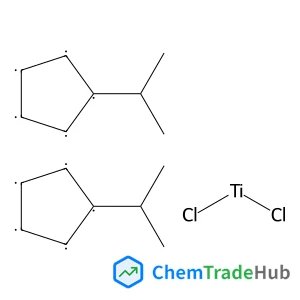
BIS(I-PROPYLCYCLOPENTADIENYL)TITANIUM DICHLORIDE
CAS Number:
12130-65-3
Molecular Formula:
C16H22Cl2Ti
Recommended Suppliers



Disclaimer
This page provides academic journal information for reference and research purposes only. We are not affiliated with any journal publishers and do not handle publication submissions. For publication-related inquiries, please contact the respective journal publishers directly.
If you notice any inaccuracies in the information displayed, please contact us at support@chemtradehub.com. We will promptly review and address your concerns.