
BIS(I-PROPYLCYCLOPENTADIENYL)TITANIUM DICHLORIDE
CAS Number:
12130-65-3
Molecular Formula:
C16H22Cl2Ti
Xiaoqing Yi, Zhiwei Shang, Xianliang Nong, Fan Xia
MicroRNAs (miRNAs) have been identified as promising disease diagnostic biomarkers. However, it is challenging to sensitively detect miRNAs, especially in complex biological environments, due to their low abundance and small size. Herein, we have developed a DNA-fueled molecular machine for sensitive detection of miRNA-22 (miR-22) in undiluted serum by combining poly-adenine-mediated spherical nucleic acids (polyA-SNAs) with a toehold mediated strand displacement reaction (TMSDR). The polyA-SNAs are constructed by the assembly of diblock DNA probes on a AuNP surface through the high binding affinity of polyA to AuNPs. The surface density of the diblock DNA probe can be controlled by tuning the length of the polyA block, and the orientation of the diblock DNA probe can adopt an upright conformation, which is beneficial to target hybridization and TMSDRs. TMSDR is an enzyme-free target recycling amplification approach. Taking advantage of polyA-mediated SNAs and TMSDR, the operation of the molecular machine based on two successive TMSDRs on polyA20-SNAs is rapid and efficient, which can significantly amplify the fluorescence response for detection of miR-22 in an undiluted complex matrix. The developed sensor can detect as low as 10 pM of target miRNA/DNA in undiluted fetal bovine serum within 30 min. The synergetic effect of polyA-mediated SNAs and TMSDR presents a potential alternative tool for the detection of biomarkers in real biological samples.
I. M. Jauris, A. J. G. Zarbin, C. S. Umpierres, C. Saucier, E. C. Lima, S. B. Fagan, I. Zanella, F. M. Machado
DOI: 10.1039/C7CP04272H
Pablo de Castro, Peter Sollich
DOI: 10.1039/C7CP04062H
Nasrin Sarmadian, Erik C. Neyts, Bart Partoens
DOI: 10.1039/C7CP03575F
Qun Zeng, Xianggui Xue, Zengming Zhang, Fude Nie, Chaoyang Zhang
DOI: 10.1039/C7CP04015F
Long Cheng, Qing-Bo Yan
DOI: 10.1039/C7CP03667A
Takeyoshi Goto, Krzysztof B. Beć, Yukihiro Ozaki
DOI: 10.1039/C7CP01766A
Q. Gao, X. M. Li, J. Z. Zhou, X. X. Ruan, Q. Liu, G. R. Qian
DOI: 10.1039/C7CP01541K
O. O. Taiwo, D. P. Finegan, J. M. Paz-Garcia, A. J. Bodey, C. Rau, S. A. Hall, D. J. L. Brett, P. R. Shearing
DOI: 10.1039/C7CP02872E
Katrin Peckelsen, Jonathan Martens, Lisa Czympiel, Giel Berden, Dirk Gründemann, Anthony J. H. M. Meijer, Mathias Schäfer
DOI: 10.1039/C7CP03843G
6-(3-Fluorophenyl)picolinic acid is generally considered safe for laboratory use...
(3R)-3-Pyrrolidinol is used in the pharmaceutical industry as a precursor for dr...
When handling (4R,5R)-4,5-Diethoxycarbonyl-2,2-dimethyldioxolane (CAS: 59779-75-...
1-(6-Chloroimidazo[1,2-b]pyridazin-3-yl)ethanone is often synthesized via a mult...
The market for N-Ethyl-3,4-dimethylbenzylamine (CAS: 39180-83-1) remains steady,...
Tert-butyl 3-(pyrrolidin-1-yl)azetidine-1-carboxylate is a chemical compound wit...
1-Bromo-3-chloro-2,4-dimethoxybenzene (CAS: 1228956-93-1) falls under the classi...
The safety of 8-Bromo-2-methyl-3,4-dihydroisoquinolin-1(2H)-one (CAS: 1368622-07...
Benzyl [(3S)-2,6-dioxo-3-piperidinyl]carbamate is generally safe when handled wi...
1-{[4-(4,4,5,5-Tetramethyl-1,3,2-dioxaborolan-2-yl)phenyl]sulfonyl}pyrrolidine s...
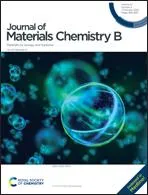
Journal of Materials Chemistry A, B & C cover high quality studies across all fields of materials chemistry. The journals focus on those theoretical or experimental studies that report new understanding, applications, properties and synthesis of materials. The journals have a strong history of publishing quality reports of interest to interdisciplinary communities and providing an efficient and rigorous service through peer review and publication. The journals are led by an international team of Editors-in-Chief and Associate Editors who are all active researchers in their fields. Journal of Materials Chemistry A, B & C are separated by the intended application of the material studied. Broadly, applications in energy and sustainability are of interest to Journal of Materials Chemistry A, applications in biology and medicine are of interest to Journal of Materials Chemistry B, and applications in optical, magnetic and electronic devices are of interest to Journal of Materials Chemistry C. More than one Journal of Materials Chemistry journal may be suitable for certain fields and researchers are encouraged to submit their paper to the journal that they feel best fits for their particular article. Example topic areas within the scope of Journal of Materials Chemistry B are listed below. This list is neither exhaustive nor exclusive. Antifouling coatings Biocompatible materials Bioelectronics Bioimaging Biomimetics Biomineralisation Bionics Biosensors Diagnostics Drug delivery Gene delivery Immunobiology Nanomedicine Regenerative medicine & Tissue engineering Scaffolds Soft robotics Stem cells Therapeutic devices image block All articles published in Journal of Materials Chemistry B from 2019 onwards will be indexed in MEDLINE®. Articles that primarily focus on providing insight into the underlying science and performance of biomaterials within a biological environment are more suited to our companion journal, Biomaterials Science.
![Methyl 2-[5-(3-Phenoxyphenyl)-2H-tetrazol-2-yl]acetate structure](https://static.chemtradehub.com/structs/130/1305320-60-8-84b4.webp "Methyl 2-[5-(3-Phenoxyphenyl)-2H-tetrazol-2-yl]acetate structure")