












O vacancy formation in (Pr/Gd)BaCo2O5.5 and the role of antisite defects
Literature Information
Publication Date
2017-04-20
DOI
10.1039/C7CP01942D
Impact Factor
3.676
Authors
Salawu Omotayo Akande, Udo Schwingenschlögl
View Original
Abstract
In search for materials for intermediate temperature solid oxide fuel cells, (Pr/Gd)BaCo2O5.5 is investigated by first principles calculations. Antisite defects are considered as they may modify the electronic and O diffusion properties but are rarely studied in double perovskite oxides. Octahedrally coordinated Co atoms are shown to realize intermediate and high spin states for PrBaCo2O5.5 and GdBaCo2O5.5, respectively, while pyramidally coordinated Co atoms always have high spin. It turns out that O vacancy formation is significantly easier in PrBaCo2O5.5 than in GdBaCo2O5.5, the difference in formation energy being hardly modified by antisite defects. While pyramidally coordinated Co atoms are not affected, we show that the presence of antisite defects causes parts of the octahedrally coordinated Co atoms to switch from intermediate to high spin.
Related Literature
A facile method to construct a 2,4,9-triazaadamantane skeleton and synthesize nitramine derivatives
Tianjiao Hou, Jian Zhang, Chenjiao Wang, Jun Luo
2017-06-13
Research Article
DOI: 10.1039/C7QO00357A
[Ag(bpy)(PPhtBu2)(OCF3)]: a stable nucleophilic reagent for chemoselective and stereospecific trifluoromethoxylation of secondary alkyl nosylates
Daoqian Chen, Long Lu, Qilong Shen
2019-04-11
Research Article
DOI: 10.1039/C9QO00278B
Photoredox-catalyzed sulfonylation of alkenylcyclobutanols with the insertion of sulfur dioxide through semipinacol rearrangement
Fu-Sheng He, Youqian Wu, Xiaofang Li, Hongguang Xia
2019-04-11
Research Article
DOI: 10.1039/C9QO00300B
Diffusion NMR for the characterization, in solution, of supramolecular systems based on calixarenes, resorcinarenes, and other macrocyclic arenes
Yoram Cohen, Sarit Slovak
2019-04-17
Review Article
DOI: 10.1039/C9QO00329K
Carboxylate phosphabetaine as a bifunctional organocatalyst for the intramolecular ring opening of oxetane
Dongyang Xu, Hongbo Wei, Yanxia Zhen, Yu-Qi Gao, Ruoxin Li, Xingzhou Li, Yupeng He, Zhong Zhang
2019-04-02
Research Article
DOI: 10.1039/C9QO00304E
Catalyst-controlled selective mono-/dialkylation of 2-aryl-4(3H)-quinazolinones
Yi Luo, Hua He, Jianglian Li, Xinling Yu, Mei Guan, Yong Wu
2019-05-08
Research Article
DOI: 10.1039/C9QO00496C
Highly soluble C2v-symmetrical fullerene derivatives: efficient synthesis, characterization, and electrochemical study
Kouya Uchiyama, Hiroshi Ueno, Hiroshi Okada, Hiroshi Moriyama
2019-02-05
Research Article
DOI: 10.1039/C9QO00056A
Photocatalytic borylcyclopropanation of α-boryl styrenes
Tsuyoshi Ohtani, Yuto Tsuchiya, Daisuke Uraguchi
2019-03-20
Research Article
DOI: 10.1039/C9QO00197B
The solvent effect on the excited-state intramolecular proton transfer of cyanine derivative molecules
Wei Shi, Yunfan Yang, Yu Zhao, Yongqing Li
2019-04-02
Research Article
DOI: 10.1039/C9QO00230H
Density functional theoretical investigation of intramolecular proton transfer mechanisms in the derivatives of 3-hydroxychromone
Jin-Dou Huang, Jianbin Zhang, Dengyi Chen, Huipeng Ma
2017-06-13
Research Article
DOI: 10.1039/C7QO00367F
You might also like
Compound Q&A
Are there alternatives to 1-(4-Chlorophenyl)-N-hydroxymethanimine (CAS: 3848-36-0) in synthesis?
When considering alternatives to 1-(4-Chlorophenyl)-N-hydroxymethanimine (CAS: 3...
3848-36-01-(4-Chlorophenyl)-N...
Compound Q&A
How should (1R,9S,10S,12S,14E,16S,19R,20R,21S,22R)-3,9,21-Trihydroxy-5,10,12,14,16,20,22-heptamethyl-23,24-dioxatetracyclo[17.3.1.1~6,9~.0~2,7~]tetracosa-2,5,7,14-tetraen-4-one (CAS: 183202-73-5) be stored?
This compound should be stored in a cool, dry place away from direct sunlight. I...
183202-73-5(1R,9S,10S,12S,14E,1...
Compound Q&A
How is 3-(4-Bromophenyl)-5-(2-fluorophenyl)-1,2,4-oxadiazole (CAS: 419553-16-5) typically synthesized?
3-(4-Bromophenyl)-5-(2-fluorophenyl)-1,2,4-oxadiazole is synthesized through a m...
419553-16-53-(4-Bromophenyl)-5-...
Compound Q&A
How is 5-Chloro-2-(4-chlorophenyl)-4-methyl-6-[3-(1-piperidinyl)propoxy]pyrimidine (CAS: 1639220-19-1) typically synthesized?
5-Chloro-2-(4-chlorophenyl)-4-methyl-6-[3-(1-piperidinyl)propoxy]pyrimidine (CAS...
1639220-19-15-Chloro-2-(4-chloro...
Compound Q&A
What industries use 2-Chloro-4-(difluoromethoxy)pyridine (CAS: 1206978-15-5)?
2-Chloro-4-(difluoromethoxy)pyridine is used in the pharmaceutical industry for ...
1206978-15-52-Chloro-4-(difluoro...
Compound Q&A
What regulatory guidelines apply to 3-Chloro-6-methylpyridazine (CAS: 1121-79-5)?
3-Chloro-6-methylpyridazine (CAS: 1121-79-5) is classified under the Globally Ha...
1121-79-53-Chloro-6-methylpyr...
Compound Q&A
Are there alternatives to Methyl 4,5-dimethyl-2-nitrobenzoate in synthesis?
Several alternatives can be used in the synthesis of Methyl 4,5-dimethyl-2-nitro...
90922-74-0Methyl 4,5-dimethyl-...
Compound Q&A
Are there alternatives to (2E,2'E)-3,3'-(1,4-Phenylene)bisacrylaldehyde in synthesis?
Alternatives to (2E,2'E)-3,3'-(1,4-Phenylene)bisacrylaldehyde include other acry...
63405-68-5(2E,2'E)-3,3'-(1,4-P...
Compound Q&A
What is 3-Amino-5-chloropyridin-2-ol hydrochloride (CAS: 1261906-29-9)?
3-Amino-5-chloropyridin-2-ol hydrochloride is an organic compound with the CAS n...
1261906-29-93-Amino-5-chloropyri...
Compound Q&A
What precautions should be taken when handling 6,7-Difluoro-2,3-dihydro-4H-chromen-4-one (CAS: 1092349-93-3)?
When handling 6,7-Difluoro-2,3-dihydro-4H-chromen-4-one, it is essential to wear...
1092349-93-36,7-Difluoro-2,3-dih...
Source Journal
Physical Chemistry Chemical Physics

CiteScore:
5.5
Self-citation Rate:
10.3%
Articles per Year:
3036
Physical Chemistry Chemical Physics (PCCP) is an international journal co-owned by 19 physical chemistry and physics societies from around the world. This journal publishes original, cutting-edge research in physical chemistry, chemical physics and biophysical chemistry. To be suitable for publication in PCCP, articles must include significant innovation and/or insight into physical chemistry; this is the most important criterion that reviewers and Editors will judge against when evaluating submissions. The journal has a broad scope and welcomes contributions spanning experiment, theory, computation and data science. Topical coverage includes spectroscopy, dynamics, kinetics, statistical mechanics, thermodynamics, electrochemistry, catalysis, surface science, quantum mechanics, quantum computing and machine learning. Interdisciplinary research areas such as polymers and soft matter, materials, nanoscience, energy, surfaces/interfaces, and biophysical chemistry are welcomed if they demonstrate significant innovation and/or insight into physical chemistry. Joined experimental/theoretical studies are particularly appreciated when complementary and based on up-to-date approaches.
Recommended Compounds
![2-{[(1R,2S)-2-Aminocyclohexyl]amino}-4-{[3-(2H-1,2,3-triazol-2-yl)phenyl]amino}-5-pyrimidinecarboxamide structure](https://static.chemtradehub.com/structs/137/1370261-96-3-40df.webp "2-{[(1R,2S)-2-Aminocyclohexyl]amino}-4-{[3-(2H-1,2,3-triazol-2-yl)phenyl]amino}-5-pyrimidinecarboxamide structure")
2-{[(1R,2S)-2-Aminocyclohexyl]amino}-4-{[3-(2H-1,2,3-triazol-2-yl)phenyl]amino}-5-pyrimidinecarboxamide
CAS Number:
1370261-96-3
Molecular Formula:
C19H23N9O
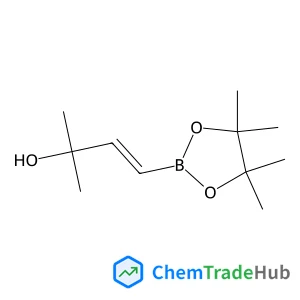
(E)-2-methyl-4-(4,4,5,5-tetramethyl-1,3,2-dioxaborolan-2-yl)but-3-en-2-ol
CAS Number:
581802-26-8
Molecular Formula:
C11H21BO3
Recommended Suppliers






Disclaimer
This page provides academic journal information for reference and research purposes only. We are not affiliated with any journal publishers and do not handle publication submissions. For publication-related inquiries, please contact the respective journal publishers directly.
If you notice any inaccuracies in the information displayed, please contact us at support@chemtradehub.com. We will promptly review and address your concerns.