












The solvent effect on the excited-state intramolecular proton transfer of cyanine derivative molecules
Literature Information
Publication Date
2019-04-02
DOI
10.1039/C9QO00230H
Impact Factor
5.281
Authors
Wei Shi, Yunfan Yang, Yu Zhao, Yongqing Li
View Original
Abstract
Lysosome organelles which contain many digestive and degradative enzymes play a crucial role in metabolizing some residual proteins and nucleic acids in biological cells. In view of this, a typical ESIPT chromophore for detecting the lysosomes was synthesized in an experiment [D. Dahal, et al., Chem. Commun., 2017, 53, 3697–3700]. Unusually large Stokes shifts are observed in different solvents and are supposed to be related to the ESIPT process. However, the mechanism of the ESIPT reaction cannot be simply analyzed by spectrum experiments. In our research, we perform the state-of-the-art ab initio excited-state computation for this chromophore. The calculated electronic spectral values are well matched with the observed spectral values in the experiment, confirming that the abnormal large Stokes shifts of fluorescence are generated by ESIPT reactions. The analyses of frontier molecular orbitals give molecular-level insight into the photophysical properties. The calculated hydrogen-bond parameters and vibrational frequencies indicate a decreasing order of excited-state hydrogen bonding (ESHB) strength from MeCN to MeOH, CH2Cl2 and THF. What's more, the calculated Mulliken charges reveal that the sequence of ESHB strengths depends on the influences of electronegativity of a proton donor and acceptor. Based on the constructed reactive potential energy curves, we systemically investigate the effect of solvation on the ESIPT mechanism of a cyanine derivative. Finally, the calculated reactive energy barriers quantitatively illuminate that ESIPT reactions are easier to occur from MeCN to MeOH, CH2Cl2 and THF.
Related Literature
Metal-free click polymerization of propiolates and azides: facile synthesis of functional poly(aroxycarbonyltriazole)s
Hongkun Li, Jian Wang, Jing Zhi Sun, Rongrong Hu, Anjun Qin
2012-02-17
Paper
DOI: 10.1039/C2PY00586G
Separation and quantification of dead species in styreneRAFT polymerization by gradient polymerelution chromatography
Ruiwei Guo, Zhipeng Shi, Xingxing Wang, Anjie Dong
2012-03-23
Paper
DOI: 10.1039/C2PY20102J
A new polyfluorene bearing pyridine moieties: a sensitive fluorescent chemosensor for metal ions and cyanide
Xiaoding Lou, Yi Zhang, Shuang Li, Daxin Ou, Zhaomin Wan, Jingui Qin, Zhen Li
2012-04-03
Paper
DOI: 10.1039/C2PY20022H
Polymeric vesicles mimicking glycocalyx (PV-Gx) for studying carbohydrate–protein interactions in solution
Lu Su, Yu Zhao, Guosong Chen, Ming Jiang
2012-04-13
Paper
DOI: 10.1039/C2PY20110K
Amphiphilic diblock copolymers based on ethylene oxide and epoxides bearing aliphatic side chains
Stergios Pispas
2012-04-24
Paper
DOI: 10.1039/C2PY20189E
A robust and high-throughput measurement platform for monomer reactivity ratios from surface-initiated polymerization
Derek L. Patton, Kirt A. Page, Emily A. Hoff, Michael J. Fasolka, Kathryn L. Beers
2012-02-23
Paper
DOI: 10.1039/C2PY20023F
PEGylated conjugated polyelectrolytes containing 2,1,3-benzoxadiazole units for targeted cell imaging
Jie Liu, Dan Ding, Junlong Geng, Bin Liu
2012-04-13
Paper
DOI: 10.1039/C2PY20113E
Double click reaction strategies for polymer conjugation and post-functionalization of polymers
Hakan Durmaz, Amitav Sanyal, Gurkan Hizal, Umit Tunca
2011-12-02
Review Article
DOI: 10.1039/C1PY00471A
Heteronucleobase-functionalized benzoxazine: synthesis, thermal properties, and self-assembled structure formed through multiple hydrogen bonding interactions
Wei-Hsun Hu, Kai-Wei Huang, Shiao-Wei Kuo
2012-04-13
Paper
DOI: 10.1039/C2PY20090B
You might also like
Compound Q&A
Are there alternatives to 1-(4-Chlorophenyl)-N-hydroxymethanimine (CAS: 3848-36-0) in synthesis?
When considering alternatives to 1-(4-Chlorophenyl)-N-hydroxymethanimine (CAS: 3...
3848-36-01-(4-Chlorophenyl)-N...
Compound Q&A
How should (1R,9S,10S,12S,14E,16S,19R,20R,21S,22R)-3,9,21-Trihydroxy-5,10,12,14,16,20,22-heptamethyl-23,24-dioxatetracyclo[17.3.1.1~6,9~.0~2,7~]tetracosa-2,5,7,14-tetraen-4-one (CAS: 183202-73-5) be stored?
This compound should be stored in a cool, dry place away from direct sunlight. I...
183202-73-5(1R,9S,10S,12S,14E,1...
Compound Q&A
How is 3-(4-Bromophenyl)-5-(2-fluorophenyl)-1,2,4-oxadiazole (CAS: 419553-16-5) typically synthesized?
3-(4-Bromophenyl)-5-(2-fluorophenyl)-1,2,4-oxadiazole is synthesized through a m...
419553-16-53-(4-Bromophenyl)-5-...
Compound Q&A
How is 5-Chloro-2-(4-chlorophenyl)-4-methyl-6-[3-(1-piperidinyl)propoxy]pyrimidine (CAS: 1639220-19-1) typically synthesized?
5-Chloro-2-(4-chlorophenyl)-4-methyl-6-[3-(1-piperidinyl)propoxy]pyrimidine (CAS...
1639220-19-15-Chloro-2-(4-chloro...
Compound Q&A
What industries use 2-Chloro-4-(difluoromethoxy)pyridine (CAS: 1206978-15-5)?
2-Chloro-4-(difluoromethoxy)pyridine is used in the pharmaceutical industry for ...
1206978-15-52-Chloro-4-(difluoro...
Compound Q&A
What regulatory guidelines apply to 3-Chloro-6-methylpyridazine (CAS: 1121-79-5)?
3-Chloro-6-methylpyridazine (CAS: 1121-79-5) is classified under the Globally Ha...
1121-79-53-Chloro-6-methylpyr...
Compound Q&A
Are there alternatives to Methyl 4,5-dimethyl-2-nitrobenzoate in synthesis?
Several alternatives can be used in the synthesis of Methyl 4,5-dimethyl-2-nitro...
90922-74-0Methyl 4,5-dimethyl-...
Compound Q&A
Are there alternatives to (2E,2'E)-3,3'-(1,4-Phenylene)bisacrylaldehyde in synthesis?
Alternatives to (2E,2'E)-3,3'-(1,4-Phenylene)bisacrylaldehyde include other acry...
63405-68-5(2E,2'E)-3,3'-(1,4-P...
Compound Q&A
What is 3-Amino-5-chloropyridin-2-ol hydrochloride (CAS: 1261906-29-9)?
3-Amino-5-chloropyridin-2-ol hydrochloride is an organic compound with the CAS n...
1261906-29-93-Amino-5-chloropyri...
Compound Q&A
What precautions should be taken when handling 6,7-Difluoro-2,3-dihydro-4H-chromen-4-one (CAS: 1092349-93-3)?
When handling 6,7-Difluoro-2,3-dihydro-4H-chromen-4-one, it is essential to wear...
1092349-93-36,7-Difluoro-2,3-dih...
Source Journal
Organic Chemistry Frontiers

CiteScore:
7.8
Self-citation Rate:
8.7%
Articles per Year:
724
Organic Chemistry Frontiers publishes high-quality research from across organic chemistry. Emphases are placed on studies that make significant contributions to the field of organic chemistry by reporting either new or significantly improved protocols or methodologies. Topics include, but are not limited to the following: Organic synthesis Development of synthetic methodologies Catalysis Natural products Functional organic materials Supramolecular and macromolecular chemistry Physical and computational organic chemistry
Recommended Compounds
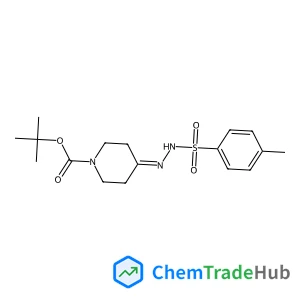
tert-Butyl 4-(2-(p-Tolylsulfonyl)hydrazono)piperidine-1-carboxylate
CAS Number:
1046478-89-0
Molecular Formula:
C17H25N3O4S
Recommended Suppliers






Disclaimer
This page provides academic journal information for reference and research purposes only. We are not affiliated with any journal publishers and do not handle publication submissions. For publication-related inquiries, please contact the respective journal publishers directly.
If you notice any inaccuracies in the information displayed, please contact us at support@chemtradehub.com. We will promptly review and address your concerns.