












Density functional theoretical investigation of intramolecular proton transfer mechanisms in the derivatives of 3-hydroxychromone
Literature Information
Publication Date
2017-06-13
DOI
10.1039/C7QO00367F
Impact Factor
5.281
Authors
Jin-Dou Huang, Jianbin Zhang, Dengyi Chen, Huipeng Ma
View Original
Abstract
In this work, the intramolecular proton transfer (IPT) mechanisms of 5-(3-hydroxy-4-oxo-4H-chromen-2-yl)thiophene-2-carbaldehyde (3-HTCA) and 2-((5-(3-hydroxy-4-oxo-4H-chromen-2-yl)thiophen-2-yl)methylene)malononitrile (3-HTC-DiCN) have been systematically investigated. The constructed potential energy curves (PECs) of 3-HTCA and 3-HTC-DiCN in the ground state (S0) and first-excited singlet electronic state (S1) indicate that the ground state intramolecular proton transfer process is difficult to take place due to the high potential barriers (13.72 kcal mol−1 and 13.25 kcal mol−1 respectively); in comparison, the intramolecular proton transfer reaction occurs more readily with the H atom removing from the O atom of the O–H moiety to the O atom of the CO moiety after photo-excitation. The relative size of the reaction barriers of 3-HTCA (4.24 kcal mol−1) and 3-HTC-DiCN (6.43 kcal mol−1) in the S1 state well explains the difference in their experimental fluorescence spectra. Based on the stable structures on PECs, the electronic spectra were simulated by the time-dependent density functional theory (TDDFT) method. The experimental absorption spectrum and fluorescence spectrum were well reproduced by calculating the vertical excitation energies of 3-HTCA and 3-HTC-DiCN. Moreover, the charge redistribution and charge-transfer character during photo-excitation were discussed in detail through the frontier molecular orbitals (FMOs) and natural bond orbital (NBO) analysis, which rationalizes the changes in the hydrogen bond strength and the ESIPT process of 3-HTCA and 3-HTC-DiCN.
Related Literature
Poly(vinylidene fluoride)-functionalized single-walled carbon nanotubes for the preparation of composites with improved conductivity
Radovan Vukićević, Ivana Vukovic, Hristiyan Stoyanov, Andreas Korwitz, Doris Pospiech, Guggi Kofod, Katja Loos, Gerrit ten Brinke, Sabine Beuermann
2012-05-16
Paper
DOI: 10.1039/C2PY20166F
Spectroscopic study of side-chain melting and crystallization of regioregular poly(3-dodecylthiophene)
Yan Guo, Ying Jin, Zhaohui Su
2012-02-03
Communication
DOI: 10.1039/C2PY00582D
Flexible polybenzoxazine thermosets with high glass transition temperatures and low surface free energies
Ching Hsuan Lin, Sheng Lung Chang, Ting Yi Shen, Yu Sin Shih, Hong Tze Lin, Chih Feng Wang
2012-01-30
Paper
DOI: 10.1039/C2PY00449F
One-step RAFT synthesis of well-defined amphiphilic star polymers and their self-assembly in aqueous solution
Christoph Herfurth, Paula Malo de Molina, Christoph Wieland, Sarah Rogers, Michael Gradzielski
2012-04-26
Paper
DOI: 10.1039/C2PY20126G
Developments of highly proton-conductive sulfonated polymers for proton exchange membrane fuel cells
Ying-Ling Liu
2012-04-19
Review Article
DOI: 10.1039/C2PY20106B
Recent advances in (reactive) melt processing of cellulose acetate and related biodegradable bio-compositions
Robert Quintana, Olivier Persenaire, Leila Bonnaud, Philippe Dubois
2011-11-28
Minireview
DOI: 10.1039/C1PY00421B
Benzoxazine-based phosphinated bisphenols and their application in preparing flame-retardant, low dielectric cyanate ester thermosets
Hou Chien Chang, Hung Tse Lin, Ching Hsuan Lin
2012-02-01
Paper
DOI: 10.1039/C2PY00528J
You might also like
Compound Q&A
Are there alternatives to 1-(4-Chlorophenyl)-N-hydroxymethanimine (CAS: 3848-36-0) in synthesis?
When considering alternatives to 1-(4-Chlorophenyl)-N-hydroxymethanimine (CAS: 3...
3848-36-01-(4-Chlorophenyl)-N...
Compound Q&A
How should (1R,9S,10S,12S,14E,16S,19R,20R,21S,22R)-3,9,21-Trihydroxy-5,10,12,14,16,20,22-heptamethyl-23,24-dioxatetracyclo[17.3.1.1~6,9~.0~2,7~]tetracosa-2,5,7,14-tetraen-4-one (CAS: 183202-73-5) be stored?
This compound should be stored in a cool, dry place away from direct sunlight. I...
183202-73-5(1R,9S,10S,12S,14E,1...
Compound Q&A
How is 3-(4-Bromophenyl)-5-(2-fluorophenyl)-1,2,4-oxadiazole (CAS: 419553-16-5) typically synthesized?
3-(4-Bromophenyl)-5-(2-fluorophenyl)-1,2,4-oxadiazole is synthesized through a m...
419553-16-53-(4-Bromophenyl)-5-...
Compound Q&A
How is 5-Chloro-2-(4-chlorophenyl)-4-methyl-6-[3-(1-piperidinyl)propoxy]pyrimidine (CAS: 1639220-19-1) typically synthesized?
5-Chloro-2-(4-chlorophenyl)-4-methyl-6-[3-(1-piperidinyl)propoxy]pyrimidine (CAS...
1639220-19-15-Chloro-2-(4-chloro...
Compound Q&A
What industries use 2-Chloro-4-(difluoromethoxy)pyridine (CAS: 1206978-15-5)?
2-Chloro-4-(difluoromethoxy)pyridine is used in the pharmaceutical industry for ...
1206978-15-52-Chloro-4-(difluoro...
Compound Q&A
What regulatory guidelines apply to 3-Chloro-6-methylpyridazine (CAS: 1121-79-5)?
3-Chloro-6-methylpyridazine (CAS: 1121-79-5) is classified under the Globally Ha...
1121-79-53-Chloro-6-methylpyr...
Compound Q&A
Are there alternatives to Methyl 4,5-dimethyl-2-nitrobenzoate in synthesis?
Several alternatives can be used in the synthesis of Methyl 4,5-dimethyl-2-nitro...
90922-74-0Methyl 4,5-dimethyl-...
Compound Q&A
Are there alternatives to (2E,2'E)-3,3'-(1,4-Phenylene)bisacrylaldehyde in synthesis?
Alternatives to (2E,2'E)-3,3'-(1,4-Phenylene)bisacrylaldehyde include other acry...
63405-68-5(2E,2'E)-3,3'-(1,4-P...
Compound Q&A
What is 3-Amino-5-chloropyridin-2-ol hydrochloride (CAS: 1261906-29-9)?
3-Amino-5-chloropyridin-2-ol hydrochloride is an organic compound with the CAS n...
1261906-29-93-Amino-5-chloropyri...
Compound Q&A
What precautions should be taken when handling 6,7-Difluoro-2,3-dihydro-4H-chromen-4-one (CAS: 1092349-93-3)?
When handling 6,7-Difluoro-2,3-dihydro-4H-chromen-4-one, it is essential to wear...
1092349-93-36,7-Difluoro-2,3-dih...
Source Journal
Organic Chemistry Frontiers

CiteScore:
7.8
Self-citation Rate:
8.7%
Articles per Year:
724
Organic Chemistry Frontiers publishes high-quality research from across organic chemistry. Emphases are placed on studies that make significant contributions to the field of organic chemistry by reporting either new or significantly improved protocols or methodologies. Topics include, but are not limited to the following: Organic synthesis Development of synthetic methodologies Catalysis Natural products Functional organic materials Supramolecular and macromolecular chemistry Physical and computational organic chemistry
Recommended Compounds
![4-[(3-Chloro-2-fluorophenyl)amino]-7-methoxy-6-quinazolinyl acetate structure](https://static.chemtradehub.com/structs/740/740081-22-5-f58f.webp "4-[(3-Chloro-2-fluorophenyl)amino]-7-methoxy-6-quinazolinyl acetate structure")
4-[(3-Chloro-2-fluorophenyl)amino]-7-methoxy-6-quinazolinyl acetate
CAS Number:
740081-22-5
Molecular Formula:
C17H13ClFN3O3
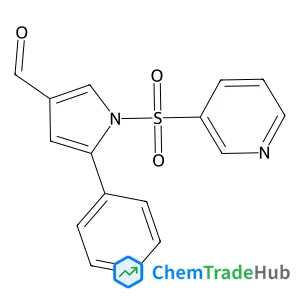
5-Phenyl-1-(pyridin-3-ylsulfonyl)-1H-pyrrole-3-carbaldehyde
CAS Number:
881676-90-0
Molecular Formula:
C16H12N2O3S
Recommended Suppliers





Disclaimer
This page provides academic journal information for reference and research purposes only. We are not affiliated with any journal publishers and do not handle publication submissions. For publication-related inquiries, please contact the respective journal publishers directly.
If you notice any inaccuracies in the information displayed, please contact us at support@chemtradehub.com. We will promptly review and address your concerns.