












![[4-(Isobutyrylamino)phenyl]boronic acid structure](https://static.chemtradehub.com/structs/874/874219-50-8-6ab5.webp "[4-(Isobutyrylamino)phenyl]boronic acid structure")
Modeling the absorption spectrum of the permanganate ion in vacuum and in aqueous solution
Literature Information
Publication Date
2017-05-31
DOI
10.1039/C7CP01194F
Impact Factor
3.676
Authors
Jógvan Magnus Haugaard Olsen, Erik Donovan Hedegård
View Original
Abstract
The absorption spectrum of the MnO4− ion has been a test-bed for quantum-chemical methods over the last decades. Its correct description requires highly-correlated multiconfigurational methods, which are incompatible with the inclusion of finite-temperature and solvent effects due to their high computational demands. Therefore, implicit solvent models are usually employed. Here we show that implicit solvent models are not sufficiently accurate to model the solvent shift of MnO4−, and we analyze the origins of their failure. We obtain the correct solvent shift for MnO4− in aqueous solution by employing the polarizable embedding (PE) model combined with a range-separated complete active space short-range density functional theory method (CAS-srDFT). Finite-temperature effects are taken into account by averaging over structures obtained from ab initio molecular dynamics simulations. The explicit treatment of finite-temperature and solvent effects facilitates the interpretation of the bands in the low-energy region of the MnO4− absorption spectrum, whose assignment has been elusive.
Recommended Journals
Related Literature
Common processes drive the thermochemical pretreatment of lignocellulosic biomass
Marcus Foston, Yoshiharu Nishiyama, B. Leif Hanson, Shane Harton, William T. Heller, Barbara R. Evans, S. Gnanakaran, Arthur J. Ragauskas, Brian H. Davison
2013-10-29
Communication
DOI: 10.1039/C3GC41962B
Reversible encapsulations and stimuli-responsive biological delivery from a dynamically assembled cucurbit[7]uril host and nanoparticle guest scaffold
Santu Sinha, Ranjan Sasmal, Divyesh Joshi
2018-09-25
Paper
DOI: 10.1039/C8TB01596A
Kinetics of α hydrogen abstractions from thiols, sulfides and thiocarbonyl compounds
Aäron G. Vandeputte, Maarten K. Sabbe, Marie-Françoise Reyniers, Guy B. Marin
2012-06-29
Paper
DOI: 10.1039/C2CP41114H
Dual antibacterial behavior of a curcumin–upconversion photodynamic nanosystem for efficient eradication of drug-resistant bacteria in a deep joint infection
Jiangjun Liu, Meng Yu, Guobo Zeng, Jie Cao, Yuanhe Wang, Tao Ding, Xu Yang, Kang Sun, Javad Parvizi, Shaoqi Tian
2018-10-29
Paper
DOI: 10.1039/C8TB02493F
Glyoxylamide-based self-assembly hydrogels for sustained ciprofloxacin delivery
Vina R. Aldilla, Shashidhar Nizalapur, Christopher E. Marjo, Anne M. Rich, Kitty K. K. Ho, David StC. Black
2018-08-28
Paper
DOI: 10.1039/C8TB01290C
Rapid Wolff–Kishner reductions in a silicon carbide microreactor
Stephen G. Newman, Lei Gu, Christoph Lesniak, Georg Victor, Frank Meschke, Lahbib Abahmane, Klavs F. Jensen
2013-11-12
Paper
DOI: 10.1039/C3GC41942H
Retrieval of the complex refractive index of aerosol droplets from optical tweezers measurements
Rachael E. H. Miles, Jim S. Walker, Daniel R. Burnham, Jonathan P. Reid
2012-01-11
Paper
DOI: 10.1039/C2CP23999J
The structure of chromophore-grafted amyloid-β12–28 dimers in the gas-phase: FRET-experiment guided modelling
2016-02-19
Paper
DOI: 10.1039/C6CP00263C
You might also like
Compound Q&A
Are there alternatives to 1-(4-Chlorophenyl)-N-hydroxymethanimine (CAS: 3848-36-0) in synthesis?
When considering alternatives to 1-(4-Chlorophenyl)-N-hydroxymethanimine (CAS: 3...
3848-36-01-(4-Chlorophenyl)-N...
Compound Q&A
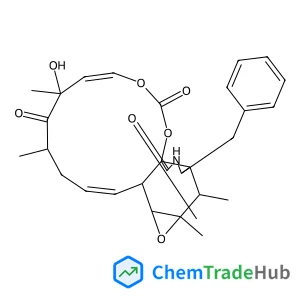
How should (1R,9S,10S,12S,14E,16S,19R,20R,21S,22R)-3,9,21-Trihydroxy-5,10,12,14,16,20,22-heptamethyl-23,24-dioxatetracyclo[17.3.1.1~6,9~.0~2,7~]tetracosa-2,5,7,14-tetraen-4-one (CAS: 183202-73-5) be stored?
This compound should be stored in a cool, dry place away from direct sunlight. I...
183202-73-5(1R,9S,10S,12S,14E,1...
Compound Q&A
How is 3-(4-Bromophenyl)-5-(2-fluorophenyl)-1,2,4-oxadiazole (CAS: 419553-16-5) typically synthesized?
3-(4-Bromophenyl)-5-(2-fluorophenyl)-1,2,4-oxadiazole is synthesized through a m...
419553-16-53-(4-Bromophenyl)-5-...
Compound Q&A
How is 5-Chloro-2-(4-chlorophenyl)-4-methyl-6-[3-(1-piperidinyl)propoxy]pyrimidine (CAS: 1639220-19-1) typically synthesized?
5-Chloro-2-(4-chlorophenyl)-4-methyl-6-[3-(1-piperidinyl)propoxy]pyrimidine (CAS...
1639220-19-15-Chloro-2-(4-chloro...
Compound Q&A
What industries use 2-Chloro-4-(difluoromethoxy)pyridine (CAS: 1206978-15-5)?
2-Chloro-4-(difluoromethoxy)pyridine is used in the pharmaceutical industry for ...
1206978-15-52-Chloro-4-(difluoro...
Compound Q&A
What regulatory guidelines apply to 3-Chloro-6-methylpyridazine (CAS: 1121-79-5)?
3-Chloro-6-methylpyridazine (CAS: 1121-79-5) is classified under the Globally Ha...
1121-79-53-Chloro-6-methylpyr...
Compound Q&A
Are there alternatives to Methyl 4,5-dimethyl-2-nitrobenzoate in synthesis?
Several alternatives can be used in the synthesis of Methyl 4,5-dimethyl-2-nitro...
90922-74-0Methyl 4,5-dimethyl-...
Compound Q&A
Are there alternatives to (2E,2'E)-3,3'-(1,4-Phenylene)bisacrylaldehyde in synthesis?
Alternatives to (2E,2'E)-3,3'-(1,4-Phenylene)bisacrylaldehyde include other acry...
63405-68-5(2E,2'E)-3,3'-(1,4-P...
Compound Q&A
What is 3-Amino-5-chloropyridin-2-ol hydrochloride (CAS: 1261906-29-9)?
3-Amino-5-chloropyridin-2-ol hydrochloride is an organic compound with the CAS n...
1261906-29-93-Amino-5-chloropyri...
Compound Q&A
What precautions should be taken when handling 6,7-Difluoro-2,3-dihydro-4H-chromen-4-one (CAS: 1092349-93-3)?
When handling 6,7-Difluoro-2,3-dihydro-4H-chromen-4-one, it is essential to wear...
1092349-93-36,7-Difluoro-2,3-dih...
Source Journal
Physical Chemistry Chemical Physics

CiteScore:
5.5
Self-citation Rate:
10.3%
Articles per Year:
3036
Physical Chemistry Chemical Physics (PCCP) is an international journal co-owned by 19 physical chemistry and physics societies from around the world. This journal publishes original, cutting-edge research in physical chemistry, chemical physics and biophysical chemistry. To be suitable for publication in PCCP, articles must include significant innovation and/or insight into physical chemistry; this is the most important criterion that reviewers and Editors will judge against when evaluating submissions. The journal has a broad scope and welcomes contributions spanning experiment, theory, computation and data science. Topical coverage includes spectroscopy, dynamics, kinetics, statistical mechanics, thermodynamics, electrochemistry, catalysis, surface science, quantum mechanics, quantum computing and machine learning. Interdisciplinary research areas such as polymers and soft matter, materials, nanoscience, energy, surfaces/interfaces, and biophysical chemistry are welcomed if they demonstrate significant innovation and/or insight into physical chemistry. Joined experimental/theoretical studies are particularly appreciated when complementary and based on up-to-date approaches.
Recommended Compounds
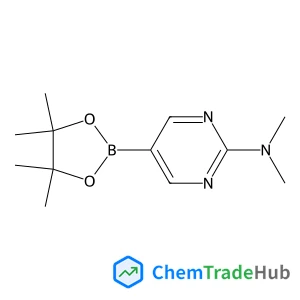
N,N-Dimethyl-5-(4,4,5,5-tetramethyl-1,3,2-dioxaborolan-2-yl)-2-pyrimidinamine
CAS Number:
1032759-30-0
Molecular Formula:
C12H20BN3O2
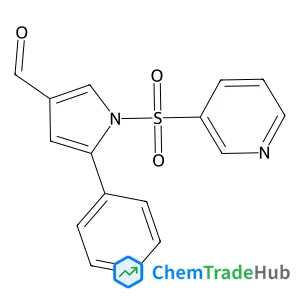
5-Phenyl-1-(pyridin-3-ylsulfonyl)-1H-pyrrole-3-carbaldehyde
CAS Number:
881676-90-0
Molecular Formula:
C16H12N2O3S
Recommended Suppliers






Disclaimer
This page provides academic journal information for reference and research purposes only. We are not affiliated with any journal publishers and do not handle publication submissions. For publication-related inquiries, please contact the respective journal publishers directly.
If you notice any inaccuracies in the information displayed, please contact us at support@chemtradehub.com. We will promptly review and address your concerns.