












Rapid Wolff–Kishner reductions in a silicon carbide microreactor
Literature Information
Publication Date
2013-11-12
DOI
10.1039/C3GC41942H
Impact Factor
10.182
Authors
Stephen G. Newman, Lei Gu, Christoph Lesniak, Georg Victor, Frank Meschke, Lahbib Abahmane, Klavs F. Jensen
View Original
Abstract
Wolff–Kishner reductions are performed in a novel silicon carbide microreactor. Greatly reduced reaction times and safer operation are achieved, giving high yields without requiring a large excess of hydrazine. The corrosion resistance of silicon carbide avoids the problematic reactor compatibility issues that arise when Wolff–Kishner reductions are done in glass or stainless steel reactors. With only nitrogen gas and water as by-products, this opens the possibility of performing selective, large scale ketone reductions without the generation of hazardous waste streams.
Recommended Journals
Related Literature
Synthetic and mechanistic inputs of photochemistry into the bis-acetylacetonatocobalt-mediated radical polymerization of n-butyl acrylate and vinyl acetate
Christophe Detrembleur, Yasmine Piette, Marie Hurtgen, Christine Jérôme, Jacques Lalevée, Antoine Debuigne
2011-11-28
Paper
DOI: 10.1039/C1PY00443C
Copper mediated controlled radical polymerization of methyl acrylate in the presence of ascorbic acid in a continuous tubular reactor
Nicky Chan, Michael F. Cunningham, Robin A. Hutchinson
2012-03-23
Paper
DOI: 10.1039/C2PY20065A
A facile synthesis of a novel triptycene-containing A–B monomer: precursor to polymers of intrinsic microporosity
Bader S. Ghanem
2011-10-26
Communication
DOI: 10.1039/C1PY00423A
A new polyfluorene bearing pyridine moieties: a sensitive fluorescent chemosensor for metal ions and cyanide
Xiaoding Lou, Yi Zhang, Shuang Li, Daxin Ou, Zhaomin Wan, Jingui Qin, Zhen Li
2012-04-03
Paper
DOI: 10.1039/C2PY20022H
Emulsifier-free, organotellurium-mediated living radical emulsion polymerization (emulsion TERP) of methyl methacrylate with dimethyl ditelluride as the catalyst
Yukiya Kitayama, Hirotaka Moribe, Kazuya Kishida
2012-03-30
Paper
DOI: 10.1039/C2PY20105D
Synthesis of cyclic amphiphilic homopolymers and their potential application as polymeric micelles
Boyd A. Laurent, Scott M. Grayson
2011-10-19
Paper
DOI: 10.1039/C1PY00378J
Controlled grafting of cellulose fibres – an outlook beyond paper and cardboard
Eva Malmström, Anna Carlmark
2011-11-08
Review Article
DOI: 10.1039/C1PY00445J
Carboxylic acids as latent initiators of radical polymerization carried out in the presence of hypervalent iodine compounds: synthesis of branched and transiently crosslinked polymers
Hongzhang Han, Nicolay V. Tsarevsky
2011-12-13
Paper
DOI: 10.1039/C1PY00495F
Functional conjugated microporous polymers: from 1,3,5-benzene to 1,3,5-triazine
Shijie Ren, Robert Dawson, Andrea Laybourn, Jia-xing Jiang, Yaroslav Khimyak, Dave J. Adams, Andrew I. Cooper
2012-01-30
Paper
DOI: 10.1039/C2PY00585A
You might also like
Compound Q&A
Are there alternatives to 1-(4-Chlorophenyl)-N-hydroxymethanimine (CAS: 3848-36-0) in synthesis?
When considering alternatives to 1-(4-Chlorophenyl)-N-hydroxymethanimine (CAS: 3...
3848-36-01-(4-Chlorophenyl)-N...
Compound Q&A
How should (1R,9S,10S,12S,14E,16S,19R,20R,21S,22R)-3,9,21-Trihydroxy-5,10,12,14,16,20,22-heptamethyl-23,24-dioxatetracyclo[17.3.1.1~6,9~.0~2,7~]tetracosa-2,5,7,14-tetraen-4-one (CAS: 183202-73-5) be stored?
This compound should be stored in a cool, dry place away from direct sunlight. I...
183202-73-5(1R,9S,10S,12S,14E,1...
Compound Q&A
How is 3-(4-Bromophenyl)-5-(2-fluorophenyl)-1,2,4-oxadiazole (CAS: 419553-16-5) typically synthesized?
3-(4-Bromophenyl)-5-(2-fluorophenyl)-1,2,4-oxadiazole is synthesized through a m...
419553-16-53-(4-Bromophenyl)-5-...
Compound Q&A
How is 5-Chloro-2-(4-chlorophenyl)-4-methyl-6-[3-(1-piperidinyl)propoxy]pyrimidine (CAS: 1639220-19-1) typically synthesized?
5-Chloro-2-(4-chlorophenyl)-4-methyl-6-[3-(1-piperidinyl)propoxy]pyrimidine (CAS...
1639220-19-15-Chloro-2-(4-chloro...
Compound Q&A
What industries use 2-Chloro-4-(difluoromethoxy)pyridine (CAS: 1206978-15-5)?
2-Chloro-4-(difluoromethoxy)pyridine is used in the pharmaceutical industry for ...
1206978-15-52-Chloro-4-(difluoro...
Compound Q&A
What regulatory guidelines apply to 3-Chloro-6-methylpyridazine (CAS: 1121-79-5)?
3-Chloro-6-methylpyridazine (CAS: 1121-79-5) is classified under the Globally Ha...
1121-79-53-Chloro-6-methylpyr...
Compound Q&A
Are there alternatives to Methyl 4,5-dimethyl-2-nitrobenzoate in synthesis?
Several alternatives can be used in the synthesis of Methyl 4,5-dimethyl-2-nitro...
90922-74-0Methyl 4,5-dimethyl-...
Compound Q&A
Are there alternatives to (2E,2'E)-3,3'-(1,4-Phenylene)bisacrylaldehyde in synthesis?
Alternatives to (2E,2'E)-3,3'-(1,4-Phenylene)bisacrylaldehyde include other acry...
63405-68-5(2E,2'E)-3,3'-(1,4-P...
Compound Q&A
What is 3-Amino-5-chloropyridin-2-ol hydrochloride (CAS: 1261906-29-9)?
3-Amino-5-chloropyridin-2-ol hydrochloride is an organic compound with the CAS n...
1261906-29-93-Amino-5-chloropyri...
Compound Q&A
What precautions should be taken when handling 6,7-Difluoro-2,3-dihydro-4H-chromen-4-one (CAS: 1092349-93-3)?
When handling 6,7-Difluoro-2,3-dihydro-4H-chromen-4-one, it is essential to wear...
1092349-93-36,7-Difluoro-2,3-dih...
Source Journal
Green Chemistry

CiteScore:
16.1
Self-citation Rate:
7.5%
Articles per Year:
944
Green Chemistry provides a unique forum for the publication of innovative research on the development of alternative green and sustainable technologies. The scope of Green Chemistry is based on, but not limited to, the definition proposed by Anastas and Warner (Green Chemistry: Theory and Practice, P T Anastas and J C Warner, Oxford University Press, Oxford, 1998). Green chemistry is the utilisation of a set of principles that reduces or eliminates the use or generation of hazardous substances in the design, manufacture and application of chemical products. Green Chemistry is at the frontiers of this continuously-evolving interdisciplinary science and publishes research that attempts to reduce the environmental impact of the chemical enterprise by developing a technology base that is inherently non-toxic to living things and the environment. Submissions on all aspects of research relating to the endeavour are welcome. The journal publishes original and significant cutting-edge research that is likely to be of wide general appeal. To be published, work must present a significant advance in green chemistry. Papers must contain a comparison with existing methods and demonstrate advantages over those methods before publication can be considered. For more information please see this Editorial. Coverage includes the following, but is not limited to: Design (e.g. biomimicry, design for degradation/recycling/reduced toxicity…) Reagents & Feedstocks (e.g. renewables, CO2, solvents, auxiliary agents, waste utilization…) Synthesis (e.g. organic, inorganic, synthetic biology…) Catalysis (e.g. homogeneous, heterogeneous, enzyme, whole cell…) Process (e.g. process design, intensification, separations, recycling, efficiency…) Energy (e.g. renewable energy, fuels, photovoltaics, fuel cells, energy storage, energy carriers…) Applications (e.g. electronics, dyes, consumer products, coatings, pharmaceuticals, preservatives, building materials, chemicals for industry/agriculture/mining…) Impact (e.g. safety, metrics, LCA, sustainability, (eco)toxicology…) Green chemistry is, by definition, a continuously-evolving frontier. Therefore, the inclusion of a particular material or technology does not, of itself, guarantee that a paper is suitable for the journal. To be suitable, the novel advance should have the potential for reduced environmental impact relative to the state of the art. Green Chemistry does not normally deal with research associated with 'end-of-pipe' or remediation issues.
Recommended Compounds
![(2S)-2-{[(9H-Fluoren-9-ylmethoxy)carbonyl]amino}-4-(methylselanyl)butanoic acid structure](https://static.chemtradehub.com/structs/121/1217852-49-7-f252.webp "(2S)-2-{[(9H-Fluoren-9-ylmethoxy)carbonyl]amino}-4-(methylselanyl)butanoic acid structure")
(2S)-2-{[(9H-Fluoren-9-ylmethoxy)carbonyl]amino}-4-(methylselanyl)butanoic acid
CAS Number:
1217852-49-7
Molecular Formula:
C20H21NO4Se
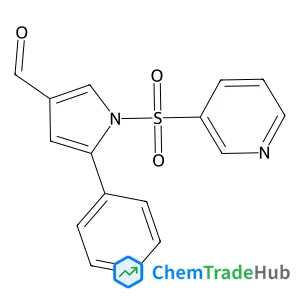
5-Phenyl-1-(pyridin-3-ylsulfonyl)-1H-pyrrole-3-carbaldehyde
CAS Number:
881676-90-0
Molecular Formula:
C16H12N2O3S
Recommended Suppliers





Disclaimer
This page provides academic journal information for reference and research purposes only. We are not affiliated with any journal publishers and do not handle publication submissions. For publication-related inquiries, please contact the respective journal publishers directly.
If you notice any inaccuracies in the information displayed, please contact us at support@chemtradehub.com. We will promptly review and address your concerns.