












Robust normal modes in vibrational circular dichroismspectra
Literature Information
Publication Date
2009-05-27
DOI
10.1039/B823558A
Impact Factor
3.676
Authors
View Original
Abstract
The use of calculations of the rotational strengths of normal modes in order to determine the absolute configuration (AC) of a molecule, by comparing a calculated vibrational circular dichroism (VCD) spectrum to an experimental one, can be made much more reliable when the vibrational modes are classified as either robust or non-robust. The robust modes are the ones with a robust sign of the rotational strength in the sense that it will not change by small perturbations in either experiment or calculation. The signs of non-robust modes may change. Clearly only robust modes should be used to establish the AC. We recommend that programs which calculate VCD spectra should provide, per normal mode, information that indicates the robustness of a mode, and therefore its usefulness for the AC determination. Such information consists of the angle ξ between the electric and magnetic dipole transition moments, and the magnitudes of these dipole transition moments.
Related Literature
Interaction energy and polymer density profile in nanocomposites: a coarse grain simulation based on interaction stress
Meysam Rahmat, Hossein Ghiasi, Pascal Hubert
2012-02-21
Paper
DOI: 10.1039/C2PY00532H
A ‘smart’ approach towards the formation of multifunctional nano-assemblies by simple mixing of block copolymers having a common temperature sensitive segment
Mitsuhiro Ebara, Naokazu Idota, Ravin Narain
2012-02-15
Paper
DOI: 10.1039/C2PY00589A
Flexible polybenzoxazine thermosets with high glass transition temperatures and low surface free energies
Ching Hsuan Lin, Sheng Lung Chang, Ting Yi Shen, Yu Sin Shih, Hong Tze Lin, Chih Feng Wang
2012-01-30
Paper
DOI: 10.1039/C2PY00449F
Formation of spherical nanoparticles in poly(amic acid) films
Tomohito Ogura, Yuta Saito, Tomoya Higashihara, Mitsuru Ueda
2012-05-25
Paper
DOI: 10.1039/C2PY20093G
Polymeric vesicles mimicking glycocalyx (PV-Gx) for studying carbohydrate–protein interactions in solution
Lu Su, Yu Zhao, Guosong Chen, Ming Jiang
2012-04-13
Paper
DOI: 10.1039/C2PY20110K
Synthesis by nitroxide-mediated aqueous dispersion polymerization, characterization, and physical core-crosslinking of pH- and thermoresponsive dynamic diblock copolymer micelles
Guillaume Delaittre, Maud Save, Marianne Gaborieau, Patrice Castignolles, Jutta Rieger, Bernadette Charleux
2012-04-17
Paper
DOI: 10.1039/C2PY20084H
Synthesis and charge-transporting properties of electron-deficient CN2–fluorene based D–A copolymers
Yan Zhao, Xunlei Ding, Hui Jia, Bo Jiang, Zhiguo Zhang, Chuanlang Zhan, Shenggui He, Qibing Pei, Yongfang Li, Yunqi Liu, Jiannian Yao
2012-04-30
Paper
DOI: 10.1039/C2PY20184D
Synthesis and water sorption of standard and end-capped polylactides: the effect of morphology
Donghun Koo, An Du, Giuseppe R. Palmese, Richard A. Cairncross
2012-01-04
Paper
DOI: 10.1039/C2PY00549B
You might also like
Compound Q&A
Are there alternatives to 1-(4-Chlorophenyl)-N-hydroxymethanimine (CAS: 3848-36-0) in synthesis?
When considering alternatives to 1-(4-Chlorophenyl)-N-hydroxymethanimine (CAS: 3...
3848-36-01-(4-Chlorophenyl)-N...
Compound Q&A
How should (1R,9S,10S,12S,14E,16S,19R,20R,21S,22R)-3,9,21-Trihydroxy-5,10,12,14,16,20,22-heptamethyl-23,24-dioxatetracyclo[17.3.1.1~6,9~.0~2,7~]tetracosa-2,5,7,14-tetraen-4-one (CAS: 183202-73-5) be stored?
This compound should be stored in a cool, dry place away from direct sunlight. I...
183202-73-5(1R,9S,10S,12S,14E,1...
Compound Q&A
How is 3-(4-Bromophenyl)-5-(2-fluorophenyl)-1,2,4-oxadiazole (CAS: 419553-16-5) typically synthesized?
3-(4-Bromophenyl)-5-(2-fluorophenyl)-1,2,4-oxadiazole is synthesized through a m...
419553-16-53-(4-Bromophenyl)-5-...
Compound Q&A
How is 5-Chloro-2-(4-chlorophenyl)-4-methyl-6-[3-(1-piperidinyl)propoxy]pyrimidine (CAS: 1639220-19-1) typically synthesized?
5-Chloro-2-(4-chlorophenyl)-4-methyl-6-[3-(1-piperidinyl)propoxy]pyrimidine (CAS...
1639220-19-15-Chloro-2-(4-chloro...
Compound Q&A
What industries use 2-Chloro-4-(difluoromethoxy)pyridine (CAS: 1206978-15-5)?
2-Chloro-4-(difluoromethoxy)pyridine is used in the pharmaceutical industry for ...
1206978-15-52-Chloro-4-(difluoro...
Compound Q&A
What regulatory guidelines apply to 3-Chloro-6-methylpyridazine (CAS: 1121-79-5)?
3-Chloro-6-methylpyridazine (CAS: 1121-79-5) is classified under the Globally Ha...
1121-79-53-Chloro-6-methylpyr...
Compound Q&A
Are there alternatives to Methyl 4,5-dimethyl-2-nitrobenzoate in synthesis?
Several alternatives can be used in the synthesis of Methyl 4,5-dimethyl-2-nitro...
90922-74-0Methyl 4,5-dimethyl-...
Compound Q&A
Are there alternatives to (2E,2'E)-3,3'-(1,4-Phenylene)bisacrylaldehyde in synthesis?
Alternatives to (2E,2'E)-3,3'-(1,4-Phenylene)bisacrylaldehyde include other acry...
63405-68-5(2E,2'E)-3,3'-(1,4-P...
Compound Q&A
What is 3-Amino-5-chloropyridin-2-ol hydrochloride (CAS: 1261906-29-9)?
3-Amino-5-chloropyridin-2-ol hydrochloride is an organic compound with the CAS n...
1261906-29-93-Amino-5-chloropyri...
Compound Q&A
What precautions should be taken when handling 6,7-Difluoro-2,3-dihydro-4H-chromen-4-one (CAS: 1092349-93-3)?
When handling 6,7-Difluoro-2,3-dihydro-4H-chromen-4-one, it is essential to wear...
1092349-93-36,7-Difluoro-2,3-dih...
Source Journal
Physical Chemistry Chemical Physics

CiteScore:
5.5
Self-citation Rate:
10.3%
Articles per Year:
3036
Physical Chemistry Chemical Physics (PCCP) is an international journal co-owned by 19 physical chemistry and physics societies from around the world. This journal publishes original, cutting-edge research in physical chemistry, chemical physics and biophysical chemistry. To be suitable for publication in PCCP, articles must include significant innovation and/or insight into physical chemistry; this is the most important criterion that reviewers and Editors will judge against when evaluating submissions. The journal has a broad scope and welcomes contributions spanning experiment, theory, computation and data science. Topical coverage includes spectroscopy, dynamics, kinetics, statistical mechanics, thermodynamics, electrochemistry, catalysis, surface science, quantum mechanics, quantum computing and machine learning. Interdisciplinary research areas such as polymers and soft matter, materials, nanoscience, energy, surfaces/interfaces, and biophysical chemistry are welcomed if they demonstrate significant innovation and/or insight into physical chemistry. Joined experimental/theoretical studies are particularly appreciated when complementary and based on up-to-date approaches.
Recommended Compounds
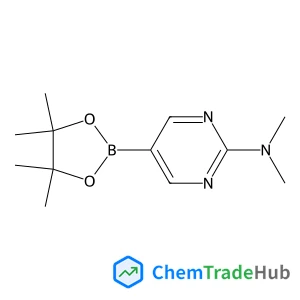
N,N-Dimethyl-5-(4,4,5,5-tetramethyl-1,3,2-dioxaborolan-2-yl)-2-pyrimidinamine
CAS Number:
1032759-30-0
Molecular Formula:
C12H20BN3O2
Recommended Suppliers






Disclaimer
This page provides academic journal information for reference and research purposes only. We are not affiliated with any journal publishers and do not handle publication submissions. For publication-related inquiries, please contact the respective journal publishers directly.
If you notice any inaccuracies in the information displayed, please contact us at support@chemtradehub.com. We will promptly review and address your concerns.