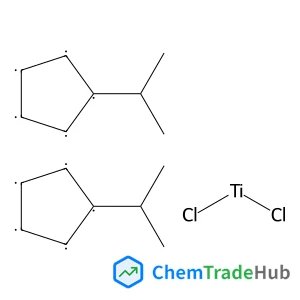
BIS(I-PROPYLCYCLOPENTADIENYL)TITANIUM DICHLORIDE
CAS Number:
12130-65-3
Molecular Formula:
C16H22Cl2Ti
Lei Huang, Qiulong Wei, Xiaoming Xu, Changwei Shi, Xue Liu, Liang Zhou
Sodium ion batteries (SIBs) possess the potential to realize low-cost and large-scale energy storage due to the abundance of sodium. However, the large ionic radius of sodium often leads to sluggish kinetics and large volume change, limiting the further development of SIBs. Layered MoS2, with a large interlayer distance, is a promising intercalation anode material for SIBs. In this work, we report the synthesis of methyl-functionalized MoS2 (M-MoS2) nanosheets through a facile second solvothermal method. During the second solvothermal treatment, the pristine MoS2 is mostly converted from the 2H to 1T phase and the interlayer distance is expanded from 0.65 to 0.80 nm. When evaluated as the anode for SIBs, the M-MoS2 exhibits superior cycling stability and rate capability. Kinetic analysis shows that the capacity is mainly contributed from a pseudocapacitive process. Ex situ XRD shows that the M-MoS2 exhibits inhibited lattice breathing and thus reduced volume change during cycling. This work demonstrates that the M-MoS2 is a promising candidate for pseudocapacitive sodium storage.

Medicinal Chemistry Research

Acta Metallurgica Sinica-English Letters

Main Group Chemistry

Biocatalysis and Biotransformation

NDT & E International

Chinese Journal of Chemistry

Critical Reviews in Solid State and Materials Sciences

Journal of the Indian Institute of Science

Bioorganic & Medicinal Chemistry Letters

Bioorganic & Medicinal Chemistry
Zihan Ma, Lishuang Wang, Tingting Chen, Guangning Wang
DOI: 10.1039/D3NJ04883G
Wei Cao, Zezhi Lin, Daoyi Zheng, Jianjun Zhang, Weili Heng, Yuanfeng Wei, Yuan Gao, Shuai Qian
DOI: 10.1039/D3TB01612A
DOI: 10.1039/D3TB90200E
Zheng Li, Jia Wan, Wanbo Zhu, Yingjie Wang, Yuan Chen, Baoliang Lu, Junchen Zhu, Chen Zhu, Xianzuo Zhang
DOI: 10.1039/D3TB01830J
Jammu Ravi, N. R. Jawahar
DOI: 10.1039/D3NJ02840B
Kommera Sai Pradyuth, Shubham A. Salunkhe, Arihant Kumar Singh, Deepak Chitkara, Anupama Mittal
DOI: 10.1039/D3TB01317K
Chen Zhang, Kaiyue Liu, Yuanmeng He, Rong Chang, Fangxia Guan, Minghao Yao
DOI: 10.1039/D3TB01384G
DOI: 10.1039/D3NJ04311H
Muhammad Asim Farid, Ahmad Raza Ashraf, Rida Sarfaraz, Sadaf ul Hassan, Nimra Naeem, Hamza Naeem
DOI: 10.1039/D3NJ05085H
6-(3-Fluorophenyl)picolinic acid is generally considered safe for laboratory use...
(3R)-3-Pyrrolidinol is used in the pharmaceutical industry as a precursor for dr...
When handling (4R,5R)-4,5-Diethoxycarbonyl-2,2-dimethyldioxolane (CAS: 59779-75-...
1-(6-Chloroimidazo[1,2-b]pyridazin-3-yl)ethanone is often synthesized via a mult...
The market for N-Ethyl-3,4-dimethylbenzylamine (CAS: 39180-83-1) remains steady,...
Tert-butyl 3-(pyrrolidin-1-yl)azetidine-1-carboxylate is a chemical compound wit...
1-Bromo-3-chloro-2,4-dimethoxybenzene (CAS: 1228956-93-1) falls under the classi...
The safety of 8-Bromo-2-methyl-3,4-dihydroisoquinolin-1(2H)-one (CAS: 1368622-07...
Benzyl [(3S)-2,6-dioxo-3-piperidinyl]carbamate is generally safe when handled wi...
1-{[4-(4,4,5,5-Tetramethyl-1,3,2-dioxaborolan-2-yl)phenyl]sulfonyl}pyrrolidine s...

Physical Chemistry Chemical Physics (PCCP) is an international journal co-owned by 19 physical chemistry and physics societies from around the world. This journal publishes original, cutting-edge research in physical chemistry, chemical physics and biophysical chemistry. To be suitable for publication in PCCP, articles must include significant innovation and/or insight into physical chemistry; this is the most important criterion that reviewers and Editors will judge against when evaluating submissions. The journal has a broad scope and welcomes contributions spanning experiment, theory, computation and data science. Topical coverage includes spectroscopy, dynamics, kinetics, statistical mechanics, thermodynamics, electrochemistry, catalysis, surface science, quantum mechanics, quantum computing and machine learning. Interdisciplinary research areas such as polymers and soft matter, materials, nanoscience, energy, surfaces/interfaces, and biophysical chemistry are welcomed if they demonstrate significant innovation and/or insight into physical chemistry. Joined experimental/theoretical studies are particularly appreciated when complementary and based on up-to-date approaches.
![1H-Imidazo[4,5-c]pyridine-7-carboxylic acid structure](https://static.chemtradehub.com/structs/123/1234616-39-7-1344.webp "1H-Imidazo[4,5-c]pyridine-7-carboxylic acid structure")