












A multifunctional hydrogel dressing with high tensile and adhesive strength for infected skin wound healing in joint regions
Literature Information
Publication Date
2023-11-04
DOI
10.1039/D3TB01384G
Impact Factor
6.331
Authors
Chen Zhang, Kaiyue Liu, Yuanmeng He, Rong Chang, Fangxia Guan, Minghao Yao
View Original
Abstract
Most hydrogel dressings are designed for skin wounds in flat areas, and few are focused on the joint skin regions which undergo frequent movement. The mismatch of mechanical properties and poor fit between a hydrogel dressing and a wound in joint skin results in hydrogel shedding, bacterial infection and delayed healing. Therefore, it is of great significance to design and prepare a multifunctional hydrogel with high tensile and tissue-adhesive strength as well as other therapeutic effects for the treatment of joint skin wounds. In this work, a multifunctional hydrogel was reasonably prepared by simply mixing polyvinyl alcohol (PVA), borax, tannic acid (TA) and iron(III) chloride in certain proportions, which was further used to treat the skin wounds at the joint of the hind limb. Acting as the physical crosslinkers, borax and TA dynamically bond with PVA and provide the resulting hydrogel with strong tensile, fast shape-adaptive and self-healing properties. The photothermal bacteriostatic activity of the hydrogel is attributed to the formation of a metallic polyphenol network (MPN) between ferric ions and TA. In addition, the hydrogel exhibits high levels of adhesion, hemostatic performance, antioxidant abilities, and biocompatibility, and shows great potential to promote joint skin wound healing.
Recommended Journals
Related Literature
Commiphorines A and B, unprecedented sesquiterpenoid dimers from Resina Commiphora with striking activities on anti-inflammation and lipogenesis inhibition
Da-Peng Qin, Qian-Qian Di, Ying Liu, Wei-Lin Chen, Shu-Mei Wang, Yong-Xian Cheng
2019-10-09
Research Article
DOI: 10.1039/C9QO01046G
Solvent-controlled chemoselective N-dealkylation-N-nitrosation or C-nitration of N-alkyl anilines with tert-butyl nitrite
Qaiser Mahmood, Guangqiang Xu, Qinggang Wang
2019-08-21
Research Article
DOI: 10.1039/C9QO00965E
Stereoselective defluorinative carboxylation of gem-difluoroalkenes with carbon dioxide
Shi-Liang Xie, Xiao-Yuan Cui, Xiao-Tong Gao, Hai-Hong Wu
2019-09-16
Research Article
DOI: 10.1039/C9QO00923J
Enantioselective rearrangement of indolyl carbonates catalyzed by chiral DMAP-N-oxides
Meng Shan, Tao Liang, Ye-Fei Zhang, Ming-Sheng Xie, Gui-Rong Qu, Hai-Ming Guo
2019-10-12
Research Article
DOI: 10.1039/C9QO01146C
Reagent-controlled regiodivergence in the [3,3]-sigmatropic rearrangement of N-(acyloxy)enamides
Norihiko Takeda, Narumi Arisawa, Misaki Miyamoto, Yukiko Kobori, Tetsuro Shinada, Masafumi Ueda
2019-09-27
Research Article
DOI: 10.1039/C9QO01109A
Correction: A formal [4 + 2] cycloaddition of sulfur-containing alkylidene heterocycles with allenic compounds
Vojtěch Dočekal, Bedřich Formánek, Ivana Císařová, Jan Veselý
2019-10-16
Correction
DOI: 10.1039/C9QO90096A
You might also like
Compound Q&A
Is 6-(3-Fluorophenyl)picolinic acid (CAS: 887982-40-3) safe?
6-(3-Fluorophenyl)picolinic acid is generally considered safe for laboratory use...
887982-40-36-(3-Fluorophenyl)pi...
Compound Q&A
What industries use (3R)-3-Pyrrolidinol (CAS: 2799-21-5)?
(3R)-3-Pyrrolidinol is used in the pharmaceutical industry as a precursor for dr...
2799-21-5(3R)-3-Pyrrolidinol
Compound Q&A
What precautions should be taken when handling (4R,5R)-4,5-Diethoxycarbonyl-2,2-dimethyldioxolane (CAS: 59779-75-8)?
When handling (4R,5R)-4,5-Diethoxycarbonyl-2,2-dimethyldioxolane (CAS: 59779-75-...
59779-75-8(4R,5R)-4,5-Diethoxy...
Compound Q&A
How is 1-(6-Chloroimidazo[1,2-b]pyridazin-3-yl)ethanone (CAS: 90734-71-7) typically synthesized?
1-(6-Chloroimidazo[1,2-b]pyridazin-3-yl)ethanone is often synthesized via a mult...
90734-71-71-(6-Chloroimidazo[1...
Compound Q&A
What is the market or research trend for N-Ethyl-3,4-dimethylbenzylamine (CAS: 39180-83-1)?
The market for N-Ethyl-3,4-dimethylbenzylamine (CAS: 39180-83-1) remains steady,...
39180-83-1N-Ethyl-3,4-dimethyl...
Compound Q&A
What is Tert-butyl 3-(pyrrolidin-1-yl)azetidine-1-carboxylate (CAS: 1019008-21-9)?
Tert-butyl 3-(pyrrolidin-1-yl)azetidine-1-carboxylate is a chemical compound wit...
1019008-21-9Tert-butyl 3-(pyrrol...
Compound Q&A
What regulatory guidelines apply to 1-Bromo-3-chloro-2,4-dimethoxybenzene (CAS: 1228956-93-1)?
1-Bromo-3-chloro-2,4-dimethoxybenzene (CAS: 1228956-93-1) falls under the classi...
1228956-93-11-Bromo-3-chloro-2,4...
Compound Q&A
Is 8-Bromo-2-methyl-3,4-dihydroisoquinolin-1(2H)-one (CAS: 1368622-07-4) safe?
The safety of 8-Bromo-2-methyl-3,4-dihydroisoquinolin-1(2H)-one (CAS: 1368622-07...
1368622-07-48-Bromo-2-methyl-3,4...
Compound Q&A
Is Benzyl [(3S)-2,6-dioxo-3-piperidinyl]carbamate (CAS: 22785-43-9) safe?
Benzyl [(3S)-2,6-dioxo-3-piperidinyl]carbamate is generally safe when handled wi...
22785-43-9Benzyl [(3S)-2,6-dio...
Compound Q&A
How should 1-{[4-(4,4,5,5-Tetramethyl-1,3,2-dioxaborolan-2-yl)phenyl]sulfonyl}pyrrolidine (CAS: 928657-21-0) be stored?
1-{[4-(4,4,5,5-Tetramethyl-1,3,2-dioxaborolan-2-yl)phenyl]sulfonyl}pyrrolidine s...
928657-21-01-{[4-(4,4,5,5-Tetra...
Source Journal
Journal of Materials Chemistry B
CiteScore:
12
Self-citation Rate:
4.9%
Articles per Year:
831
Journal of Materials Chemistry A, B & C cover high quality studies across all fields of materials chemistry. The journals focus on those theoretical or experimental studies that report new understanding, applications, properties and synthesis of materials. The journals have a strong history of publishing quality reports of interest to interdisciplinary communities and providing an efficient and rigorous service through peer review and publication. The journals are led by an international team of Editors-in-Chief and Associate Editors who are all active researchers in their fields. Journal of Materials Chemistry A, B & C are separated by the intended application of the material studied. Broadly, applications in energy and sustainability are of interest to Journal of Materials Chemistry A, applications in biology and medicine are of interest to Journal of Materials Chemistry B, and applications in optical, magnetic and electronic devices are of interest to Journal of Materials Chemistry C. More than one Journal of Materials Chemistry journal may be suitable for certain fields and researchers are encouraged to submit their paper to the journal that they feel best fits for their particular article. Example topic areas within the scope of Journal of Materials Chemistry B are listed below. This list is neither exhaustive nor exclusive. Antifouling coatings Biocompatible materials Bioelectronics Bioimaging Biomimetics Biomineralisation Bionics Biosensors Diagnostics Drug delivery Gene delivery Immunobiology Nanomedicine Regenerative medicine & Tissue engineering Scaffolds Soft robotics Stem cells Therapeutic devices image block All articles published in Journal of Materials Chemistry B from 2019 onwards will be indexed in MEDLINE®. Articles that primarily focus on providing insight into the underlying science and performance of biomaterials within a biological environment are more suited to our companion journal, Biomaterials Science.
Recommended Compounds
![1H-Imidazo[4,5-c]pyridine-7-carboxylic acid structure](https://static.chemtradehub.com/structs/123/1234616-39-7-1344.webp "1H-Imidazo[4,5-c]pyridine-7-carboxylic acid structure")
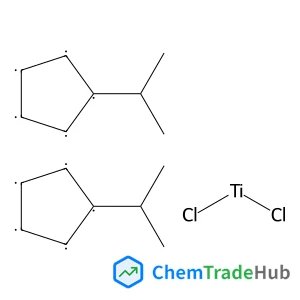
BIS(I-PROPYLCYCLOPENTADIENYL)TITANIUM DICHLORIDE
CAS Number:
12130-65-3
Molecular Formula:
C16H22Cl2Ti
Recommended Suppliers




Disclaimer
This page provides academic journal information for reference and research purposes only. We are not affiliated with any journal publishers and do not handle publication submissions. For publication-related inquiries, please contact the respective journal publishers directly.
If you notice any inaccuracies in the information displayed, please contact us at support@chemtradehub.com. We will promptly review and address your concerns.