


Three-dimensional N-doped carbon electrodes activate peroxymonosulfate for tetracycline degradation
Literature Information
Publication Date
2023-11-22
DOI
10.1039/D3NJ04311H
Impact Factor
3.591
Authors
View Original
Abstract
Transition metal-based materials have been widely used as catalysts in both electrochemical oxidation (E) and peroxomonosulfate (PMS) processes to degrade pollutants in water. However, agglomeration of catalyst particles and leaching of metal ions hinder their practical application in pollutant decomposition. In this study, a novel N-doped carbon material (CPANI/CF) was prepared as a three-dimensional electrode by using low-cost synthesised polyaniline-loaded carbon felt as a precursor to improve the electrochemical oxidation capability and capacity to activate PMS in the electrochemical oxidation process. The constructed three-dimensional electrocatalytic system (E–PMS–CPANI/CF) achieved 90.59% TC degradation within 40 min, and the system still removed more than 80% of TC after repeating the experiment for five cycles. We investigated how different experimental conditions (such as the carbonation temperature of CPANI/CF electrode, voltage, PMS dosage and initial pH) affect the degradation of TC. Through quenching experiments, chemical probe experiments and electron spin resonance (ESR) analyses, we discovered that the 3D electrocatalytic system produced single-linear oxygen (1O2), hydroxyl radical (˙OH) and sulphate radical (SO4˙−), which could effectively degrade the pollutants. The results of this study provide a useful strategy for efficient and cost-effective wastewater treatment.
Recommended Journals

Journal of the Indian Institute of Science

Electroanalysis

Bioorganic & Medicinal Chemistry

NDT & E International

Topics in Catalysis

Journal of Asian Natural Products Research

Acta Metallurgica Sinica-English Letters

Bioorganic & Medicinal Chemistry Letters

Herald of the Russian Academy of Sciences

Polycyclic Aromatic Compounds
Related Literature
Correction: Is there an intramolecular hydrogen bond in 2-halophenols? A theoretical and spectroscopic investigation
Michael H. Abraham, Raymond J. Abraham, Abil E. Aliev, Claudio F. Tormena
2015-09-17
Correction
DOI: 10.1039/C5CP90167G
Preparation of a silver nanoparticle-based dual-functional sensor using a complexation–reduction method
Shao-Jung Wu, Wen-Qi Zhong, Cheng-Yu Huang
2015-01-20
Paper
DOI: 10.1039/C4CP05012F
Molecular dynamics simulations and NMR spectroscopy studies of trehalose–lipid bilayer systems
Jon Kapla, Olof Engström, Baltzar Stevensson, Jakob Wohlert, Göran Widmalm, Arnold Maliniak
2015-07-22
Paper
DOI: 10.1039/C5CP02472B
Composition-dependent band gaps and indirect–direct band gap transitions of group-IV semiconductor alloys
Zhen Zhu, Jiamin Xiao, Haibin Sun, Yue Hu, Ronggen Cao, Yin Wang, Li Zhao, Jun Zhuang
2015-07-15
Paper
DOI: 10.1039/C5CP02558C
Different behaviour of molecules in dark SERS state on colloidal Ag nanoparticles estimated by truncated power law analysis of blinking SERS
Daichi Araki, Tamitake Itoh, Yukihiro Ozaki
2014-12-16
Paper
DOI: 10.1039/C4CP05070C
Improved Raman and photoluminescence sensitivity achieved using bifunctional Ag@SiO2 nanocubes
Nguyen Minh Kha, Ching-Hsiang Chen, Wei-Nien Su, John Rick
2015-01-13
Paper
DOI: 10.1039/C4CP05217J
Spectroscopic evidence of 3-hydroxyflavone sorption within MFI type zeolites: ESIPT and metal complexation
A. Moissette, M. Hureau, A. Le Person, J. P. Cornard, I. De Waele, I. Batonneau-Gener
2015-09-10
Paper
DOI: 10.1039/C5CP04147C
Diverse mixtures of 2,4-dihydroxy tautomers and O4 protonated conformers of uridine and 2′-deoxyuridine coexist in the gas phase
R. R. Wu, Bo Yang, C. E. Frieler, G. Berden, M. T. Rodgers
2015-07-21
Paper
DOI: 10.1039/C5CP02227D
Exploring the charged nature of supramolecular micelles based on p-sulfonatocalix[6]arene and dodecyltrimethylammonium bromide
Nuno Basílio, Daniel Alfonso Spudeit, Juliana Bastos, Leandro Scorsin, Haidi D. Fiedler, Faruk Nome, Luis García-Río
2015-09-09
Paper
DOI: 10.1039/C5CP03718B
A facile one-pot synthesis of blue and red luminescent thiol stabilized gold nanoclusters: a thorough optical and microscopy study
Nabin Kumar Pal, Carola Kryschi
2015-07-08
Paper
DOI: 10.1039/C5CP01773D
You might also like
Compound Q&A
Is 6-(3-Fluorophenyl)picolinic acid (CAS: 887982-40-3) safe?
6-(3-Fluorophenyl)picolinic acid is generally considered safe for laboratory use...
887982-40-36-(3-Fluorophenyl)pi...
Compound Q&A
What industries use (3R)-3-Pyrrolidinol (CAS: 2799-21-5)?
(3R)-3-Pyrrolidinol is used in the pharmaceutical industry as a precursor for dr...
2799-21-5(3R)-3-Pyrrolidinol
Compound Q&A
What precautions should be taken when handling (4R,5R)-4,5-Diethoxycarbonyl-2,2-dimethyldioxolane (CAS: 59779-75-8)?
When handling (4R,5R)-4,5-Diethoxycarbonyl-2,2-dimethyldioxolane (CAS: 59779-75-...
59779-75-8(4R,5R)-4,5-Diethoxy...
Compound Q&A
How is 1-(6-Chloroimidazo[1,2-b]pyridazin-3-yl)ethanone (CAS: 90734-71-7) typically synthesized?
1-(6-Chloroimidazo[1,2-b]pyridazin-3-yl)ethanone is often synthesized via a mult...
90734-71-71-(6-Chloroimidazo[1...
Compound Q&A
What is the market or research trend for N-Ethyl-3,4-dimethylbenzylamine (CAS: 39180-83-1)?
The market for N-Ethyl-3,4-dimethylbenzylamine (CAS: 39180-83-1) remains steady,...
39180-83-1N-Ethyl-3,4-dimethyl...
Compound Q&A
What is Tert-butyl 3-(pyrrolidin-1-yl)azetidine-1-carboxylate (CAS: 1019008-21-9)?
Tert-butyl 3-(pyrrolidin-1-yl)azetidine-1-carboxylate is a chemical compound wit...
1019008-21-9Tert-butyl 3-(pyrrol...
Compound Q&A
What regulatory guidelines apply to 1-Bromo-3-chloro-2,4-dimethoxybenzene (CAS: 1228956-93-1)?
1-Bromo-3-chloro-2,4-dimethoxybenzene (CAS: 1228956-93-1) falls under the classi...
1228956-93-11-Bromo-3-chloro-2,4...
Compound Q&A
Is 8-Bromo-2-methyl-3,4-dihydroisoquinolin-1(2H)-one (CAS: 1368622-07-4) safe?
The safety of 8-Bromo-2-methyl-3,4-dihydroisoquinolin-1(2H)-one (CAS: 1368622-07...
1368622-07-48-Bromo-2-methyl-3,4...
Compound Q&A
Is Benzyl [(3S)-2,6-dioxo-3-piperidinyl]carbamate (CAS: 22785-43-9) safe?
Benzyl [(3S)-2,6-dioxo-3-piperidinyl]carbamate is generally safe when handled wi...
22785-43-9Benzyl [(3S)-2,6-dio...
Compound Q&A
How should 1-{[4-(4,4,5,5-Tetramethyl-1,3,2-dioxaborolan-2-yl)phenyl]sulfonyl}pyrrolidine (CAS: 928657-21-0) be stored?
1-{[4-(4,4,5,5-Tetramethyl-1,3,2-dioxaborolan-2-yl)phenyl]sulfonyl}pyrrolidine s...
928657-21-01-{[4-(4,4,5,5-Tetra...
Source Journal
New Journal of Chemistry

CiteScore:
5.3
Self-citation Rate:
3.7%
Articles per Year:
2153
NJC (New Journal of Chemistry) is a broad-based primary journal encompassing all branches of chemistry and its sub-disciplines. It contains full research articles, communications, perspectives and focus articles. This well-established journal, owned by the Centre National de la Recherche Scientifique (CNRS) of France, has been co-published with the Royal Society of Chemistry since January 1998. NJC is the forum for the publication of high-quality, original and significant work that opens new directions in chemistry or other scientific disciplines. In addition to having a significant chemical component, work published in NJC must demonstrate that it will have an impact on areas of research other than that of the reported work.
Recommended Compounds
![3-[(3R,4R)-3-[(6-aminopyrimidin-4-yl)-methyl-amino]-4-methyl-1-piperidyl]-3-oxo-propanenitrile structure](https://static.chemtradehub.com/structs/164/1640971-60-3-83a4.webp "3-[(3R,4R)-3-[(6-aminopyrimidin-4-yl)-methyl-amino]-4-methyl-1-piperidyl]-3-oxo-propanenitrile structure")
3-[(3R,4R)-3-[(6-aminopyrimidin-4-yl)-methyl-amino]-4-methyl-1-piperidyl]-3-oxo-propanenitrile
CAS Number:
1640971-60-3
Molecular Formula:
C14H20N6O
![trans-2-{[(Tert-butoxy)carbonyl]amino}cyclobutane-1-carboxylic acid structure](https://static.chemtradehub.com/structs/951/951173-25-4-27cd.webp "trans-2-{[(Tert-butoxy)carbonyl]amino}cyclobutane-1-carboxylic acid structure")
trans-2-{[(Tert-butoxy)carbonyl]amino}cyclobutane-1-carboxylic acid
CAS Number:
951173-25-4
Molecular Formula:
C10H17NO4
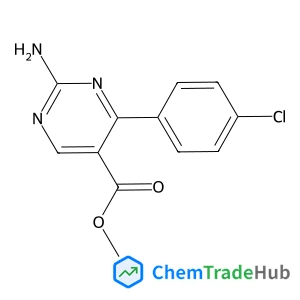
Methyl 2-amino-4-(4-chlorophenyl)-5-pyrimidinecarboxylate
CAS Number:
1133115-56-6
Molecular Formula:
C12H10ClN3O2
Recommended Suppliers




Disclaimer
This page provides academic journal information for reference and research purposes only. We are not affiliated with any journal publishers and do not handle publication submissions. For publication-related inquiries, please contact the respective journal publishers directly.
If you notice any inaccuracies in the information displayed, please contact us at support@chemtradehub.com. We will promptly review and address your concerns.