













Methyl 2-amino-4-(4-chlorophenyl)-5-pyrimidinecarboxylate
CAS Number:
1133115-56-6
Molecular Formula:
C12H10ClN3O2
Zheng Li, Jia Wan, Wanbo Zhu, Yingjie Wang, Yuan Chen, Baoliang Lu, Junchen Zhu, Chen Zhu, Xianzuo Zhang
This paper investigates physically crosslinked organo-hydrogels for total hip replacement surgery. Current materials in artificial joints have limitations in mechanical performance and biocompatibility. To overcome these issues, a new approach based on hydrogen bonds between polyvinyl alcohol, poly(2-hydroxyethyl methacrylate), and glycerin is proposed to develop bioactive organo-hydrogels with improved mechanical properties and biocompatibility. This study analyzes local pathological characteristics, systemic toxicity, and mechanical properties of the gels. The results show that the gels possess excellent biocompatibility and mechanical strength, suggesting their potential as an alternative material for total hip replacement surgery. These findings contribute to improving patient outcomes in joint replacement procedures.
Long Cheng, Qing-Bo Yan
DOI: 10.1039/C7CP03667A
Wei Pan, Hao Wen, Dehai Liang
DOI: 10.1039/C7CP04066K
Charusheela Ramanan, Marco Ferretti, Henny van Roon, Vladimir I. Novoderezhkin, Rienk van Grondelle
DOI: 10.1039/C7CP03038J
Xiaoxiao Zhang, Qing Xue
DOI: 10.1039/C7CP04092J
Katrin Peckelsen, Jonathan Martens, Lisa Czympiel, Giel Berden, Dirk Gründemann, Anthony J. H. M. Meijer, Mathias Schäfer
DOI: 10.1039/C7CP03843G
Debdutta Chakraborty, Ranjita Das, Pratim Kumar Chattaraj
DOI: 10.1039/C7CP02433A
P. S. Miedema, R. Mitzner, S. Ganschow, M. Beye
DOI: 10.1039/C7CP03026F
Jiying Liang, Xue Yu, Tiangang Yang, Menglu Li, Li Shen, Yue Jin, Hongyun Liu
DOI: 10.1039/C7CP04030J
6-(3-Fluorophenyl)picolinic acid is generally considered safe for laboratory use...
(3R)-3-Pyrrolidinol is used in the pharmaceutical industry as a precursor for dr...
When handling (4R,5R)-4,5-Diethoxycarbonyl-2,2-dimethyldioxolane (CAS: 59779-75-...
1-(6-Chloroimidazo[1,2-b]pyridazin-3-yl)ethanone is often synthesized via a mult...
The market for N-Ethyl-3,4-dimethylbenzylamine (CAS: 39180-83-1) remains steady,...
Tert-butyl 3-(pyrrolidin-1-yl)azetidine-1-carboxylate is a chemical compound wit...
1-Bromo-3-chloro-2,4-dimethoxybenzene (CAS: 1228956-93-1) falls under the classi...
The safety of 8-Bromo-2-methyl-3,4-dihydroisoquinolin-1(2H)-one (CAS: 1368622-07...
Benzyl [(3S)-2,6-dioxo-3-piperidinyl]carbamate is generally safe when handled wi...
1-{[4-(4,4,5,5-Tetramethyl-1,3,2-dioxaborolan-2-yl)phenyl]sulfonyl}pyrrolidine s...
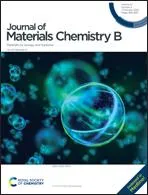
Journal of Materials Chemistry A, B & C cover high quality studies across all fields of materials chemistry. The journals focus on those theoretical or experimental studies that report new understanding, applications, properties and synthesis of materials. The journals have a strong history of publishing quality reports of interest to interdisciplinary communities and providing an efficient and rigorous service through peer review and publication. The journals are led by an international team of Editors-in-Chief and Associate Editors who are all active researchers in their fields. Journal of Materials Chemistry A, B & C are separated by the intended application of the material studied. Broadly, applications in energy and sustainability are of interest to Journal of Materials Chemistry A, applications in biology and medicine are of interest to Journal of Materials Chemistry B, and applications in optical, magnetic and electronic devices are of interest to Journal of Materials Chemistry C. More than one Journal of Materials Chemistry journal may be suitable for certain fields and researchers are encouraged to submit their paper to the journal that they feel best fits for their particular article. Example topic areas within the scope of Journal of Materials Chemistry B are listed below. This list is neither exhaustive nor exclusive. Antifouling coatings Biocompatible materials Bioelectronics Bioimaging Biomimetics Biomineralisation Bionics Biosensors Diagnostics Drug delivery Gene delivery Immunobiology Nanomedicine Regenerative medicine & Tissue engineering Scaffolds Soft robotics Stem cells Therapeutic devices image block All articles published in Journal of Materials Chemistry B from 2019 onwards will be indexed in MEDLINE®. Articles that primarily focus on providing insight into the underlying science and performance of biomaterials within a biological environment are more suited to our companion journal, Biomaterials Science.
![(1R,6R)-6-({[(2-Methyl-2-propanyl)oxy]carbonyl}amino)-3-cyclohexene-1-carboxylic acid structure](https://static.chemtradehub.com/structs/865/865689-24-3-5fef.webp "(1R,6R)-6-({[(2-Methyl-2-propanyl)oxy]carbonyl}amino)-3-cyclohexene-1-carboxylic acid structure")
![3-[(3R,4R)-3-[(6-aminopyrimidin-4-yl)-methyl-amino]-4-methyl-1-piperidyl]-3-oxo-propanenitrile structure](https://static.chemtradehub.com/structs/164/1640971-60-3-83a4.webp "3-[(3R,4R)-3-[(6-aminopyrimidin-4-yl)-methyl-amino]-4-methyl-1-piperidyl]-3-oxo-propanenitrile structure")




