


Interactions of ionic liquids and surfaces of graphene related nanoparticles under high pressures
Literature Information
Publication Date
2017-04-12
DOI
10.1039/C7CP00978J
Impact Factor
3.676
Authors
Hai-Chou Chang, Ding-Tsai Hsu
View Original
Abstract
High-pressure infrared spectroscopy was used to study the interactions between 1-methyl-3-propylimidazolium iodide [MPIM]I and graphene-based nanoparticles. The results obtained at ambient pressure indicate the imidazolium ring of the cation to be a more favorable moiety for adsorption than alkyl C–H groups at ambient pressure. Upon increasing the pressure, the dominant C2–H band of pure [MPIM]I yields a significant red frequency shift. As the mixtures, i.e., graphene oxide (GO)/[MPIM]I, reduced graphene oxide (RGO)/[MPIM]I, and graphene (G)/[MPIM]I, were compressed, mild shifts in the C2–H absorption frequency were observed. The absence of drastic red-shifts suggests that the local C2–H structures may be perturbed by the addition of GO, RGO, and G under high pressures. When pure [MPIM]I was compressed from ambient to 0.4 GPa, the alkyl C–H band at ca. 2964 cm−1 was blue-shifted to 2984 cm−1. This discontinuous jump occurring around 0.4 GPa becomes less obvious for the mixtures GO/[MPIM]I, RGO/[MPIM]I, and G/[MPIM]I. The results of this study suggest that the addition of GO, RGO, and G can disturb the local structures of alkyl C–H under high pressures, demonstrating that high pressures may have the potential to tune the strength of ionic liquid–surface interactions and the performance of energy storage devices (e.g. supercapacitors).
Recommended Journals

Electroanalysis

Bioorganic & Medicinal Chemistry Letters

Colloid Journal

Chinese Journal of Chemistry

Critical Reviews in Solid State and Materials Sciences

Polycyclic Aromatic Compounds

Topics in Catalysis

Journal of Asian Natural Products Research

Acta Metallurgica Sinica-English Letters

Bioorganic & Medicinal Chemistry
Related Literature
High strength, self-healing sensitive ionogel sensor based on MXene/ionic liquid synergistic conductive network for human-motion detection
Xiao Wen, Zhipeng Deng, Hui Wang, Jianyang Shi, Shuang Wang, Haibo Wang, Yueming Song, Zongliang Du, Jinghong Qiu, Xu Cheng
2023-10-12
Paper
DOI: 10.1039/D3TB01570J
Spherical porous iron–nitrogen–carbon nanozymes derived from a tannin coordination framework for the preparation of l-DOPA by emulating tyrosine hydroxylase
Chan Chen, Haisheng Ren, Weikang Tang, Mengqi Han, Qinfei Chen, Hong Zhou, Jiadong Chen, Yuyue Gao, Wenbin Liu
2023-11-02
Paper
DOI: 10.1039/D3TB01082A
Nitrogen-doped carbon quantum dots for fluorescence sensing, anti-counterfeiting and logic gate operations
Li Xu, Yi Qian, Lei Bao, Wei Wang, Nengmei Deng, Li Zhang, Guanglin Wang, Xucheng Fu, Wei Fu
2023-11-21
Paper
DOI: 10.1039/D3NJ04521H
Synthesis of a water-based TEOS–PDMS sol–gel coating for hydrophobic cotton and polyester fabrics
Nurul Hidayah Abu Bakar, Wan Norfazilah Wan Ismail, Hartina Mohd Yusop, Noreen Farzuhana Mohd Zulkifli
2023-12-15
Paper
DOI: 10.1039/D3NJ03206J
A dual organelle-targeting photosensitizer based on curcumin for enhanced photodynamic therapy
Wenjun Zhang, Chun-Sing Lee
2023-10-26
Paper
DOI: 10.1039/D3TB01648J
Three-dimensional N-doped carbon electrodes activate peroxymonosulfate for tetracycline degradation
2023-11-22
Paper
DOI: 10.1039/D3NJ04311H
Optimal synthesis conditions for NBF-modified 8,13-dihydroberberine derivatives
A. D. Zagrebaev, V. V. Butova, A. A. Guda, S. V. Chapek, O. N. Burov, S. V. Kurbatov, E. Yu. Vinyukova, M. E. Neganova, Yu. R. Aleksandrova, N. S. Nikolaeva, O. P. Demidov, A. V. Soldatov
2023-12-05
Paper
DOI: 10.1039/D3NJ04562E
You might also like
Compound Q&A
Is 6-(3-Fluorophenyl)picolinic acid (CAS: 887982-40-3) safe?
6-(3-Fluorophenyl)picolinic acid is generally considered safe for laboratory use...
887982-40-36-(3-Fluorophenyl)pi...
Compound Q&A
What industries use (3R)-3-Pyrrolidinol (CAS: 2799-21-5)?
(3R)-3-Pyrrolidinol is used in the pharmaceutical industry as a precursor for dr...
2799-21-5(3R)-3-Pyrrolidinol
Compound Q&A
What precautions should be taken when handling (4R,5R)-4,5-Diethoxycarbonyl-2,2-dimethyldioxolane (CAS: 59779-75-8)?
When handling (4R,5R)-4,5-Diethoxycarbonyl-2,2-dimethyldioxolane (CAS: 59779-75-...
59779-75-8(4R,5R)-4,5-Diethoxy...
Compound Q&A
How is 1-(6-Chloroimidazo[1,2-b]pyridazin-3-yl)ethanone (CAS: 90734-71-7) typically synthesized?
1-(6-Chloroimidazo[1,2-b]pyridazin-3-yl)ethanone is often synthesized via a mult...
90734-71-71-(6-Chloroimidazo[1...
Compound Q&A
What is the market or research trend for N-Ethyl-3,4-dimethylbenzylamine (CAS: 39180-83-1)?
The market for N-Ethyl-3,4-dimethylbenzylamine (CAS: 39180-83-1) remains steady,...
39180-83-1N-Ethyl-3,4-dimethyl...
Compound Q&A
What is Tert-butyl 3-(pyrrolidin-1-yl)azetidine-1-carboxylate (CAS: 1019008-21-9)?
Tert-butyl 3-(pyrrolidin-1-yl)azetidine-1-carboxylate is a chemical compound wit...
1019008-21-9Tert-butyl 3-(pyrrol...
Compound Q&A
What regulatory guidelines apply to 1-Bromo-3-chloro-2,4-dimethoxybenzene (CAS: 1228956-93-1)?
1-Bromo-3-chloro-2,4-dimethoxybenzene (CAS: 1228956-93-1) falls under the classi...
1228956-93-11-Bromo-3-chloro-2,4...
Compound Q&A
Is 8-Bromo-2-methyl-3,4-dihydroisoquinolin-1(2H)-one (CAS: 1368622-07-4) safe?
The safety of 8-Bromo-2-methyl-3,4-dihydroisoquinolin-1(2H)-one (CAS: 1368622-07...
1368622-07-48-Bromo-2-methyl-3,4...
Compound Q&A
Is Benzyl [(3S)-2,6-dioxo-3-piperidinyl]carbamate (CAS: 22785-43-9) safe?
Benzyl [(3S)-2,6-dioxo-3-piperidinyl]carbamate is generally safe when handled wi...
22785-43-9Benzyl [(3S)-2,6-dio...
Compound Q&A
How should 1-{[4-(4,4,5,5-Tetramethyl-1,3,2-dioxaborolan-2-yl)phenyl]sulfonyl}pyrrolidine (CAS: 928657-21-0) be stored?
1-{[4-(4,4,5,5-Tetramethyl-1,3,2-dioxaborolan-2-yl)phenyl]sulfonyl}pyrrolidine s...
928657-21-01-{[4-(4,4,5,5-Tetra...
Source Journal
Physical Chemistry Chemical Physics

CiteScore:
5.5
Self-citation Rate:
10.3%
Articles per Year:
3036
Physical Chemistry Chemical Physics (PCCP) is an international journal co-owned by 19 physical chemistry and physics societies from around the world. This journal publishes original, cutting-edge research in physical chemistry, chemical physics and biophysical chemistry. To be suitable for publication in PCCP, articles must include significant innovation and/or insight into physical chemistry; this is the most important criterion that reviewers and Editors will judge against when evaluating submissions. The journal has a broad scope and welcomes contributions spanning experiment, theory, computation and data science. Topical coverage includes spectroscopy, dynamics, kinetics, statistical mechanics, thermodynamics, electrochemistry, catalysis, surface science, quantum mechanics, quantum computing and machine learning. Interdisciplinary research areas such as polymers and soft matter, materials, nanoscience, energy, surfaces/interfaces, and biophysical chemistry are welcomed if they demonstrate significant innovation and/or insight into physical chemistry. Joined experimental/theoretical studies are particularly appreciated when complementary and based on up-to-date approaches.
Recommended Compounds
![(3R,4aR,7aS,9aR,10S,11R,13aR,13bS,15aS,15bR)-3,11-Dihydroxy-10-(hydroxymethyl)-4,4,7a,10,13a,15b-hexamethyl-1,2,3,4,4a,7,7a,8,9,9a,10,11,12,13,13a,13b,14,15,15a,15b-icosahydro-5H-naphtho[2',1':4,5]cyc
lohepta[1,2-a]naphthalen-5-one structure](https://static.chemtradehub.com/structs/538/53800-21-8-9f18.webp "(3R,4aR,7aS,9aR,10S,11R,13aR,13bS,15aS,15bR)-3,11-Dihydroxy-10-(hydroxymethyl)-4,4,7a,10,13a,15b-hexamethyl-1,2,3,4,4a,7,7a,8,9,9a,10,11,12,13,13a,13b,14,15,15a,15b-icosahydro-5H-naphtho[2',1':4,5]cyc
lohepta[1,2-a]naphthalen-5-one structure")
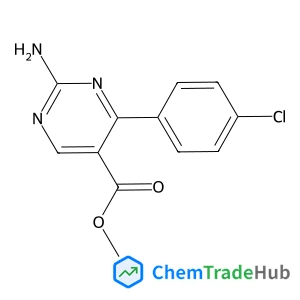
Methyl 2-amino-4-(4-chlorophenyl)-5-pyrimidinecarboxylate
CAS Number:
1133115-56-6
Molecular Formula:
C12H10ClN3O2
Recommended Suppliers




Disclaimer
This page provides academic journal information for reference and research purposes only. We are not affiliated with any journal publishers and do not handle publication submissions. For publication-related inquiries, please contact the respective journal publishers directly.
If you notice any inaccuracies in the information displayed, please contact us at support@chemtradehub.com. We will promptly review and address your concerns.