












Optimal synthesis conditions for NBF-modified 8,13-dihydroberberine derivatives
Literature Information
Publication Date
2023-12-05
DOI
10.1039/D3NJ04562E
Impact Factor
3.591
Authors
A. D. Zagrebaev, V. V. Butova, A. A. Guda, S. V. Chapek, O. N. Burov, S. V. Kurbatov, E. Yu. Vinyukova, M. E. Neganova, Yu. R. Aleksandrova, N. S. Nikolaeva, O. P. Demidov, A. V. Soldatov
View Original
Abstract
Berberine is a natural alkaloid with a broad spectrum of biological activity. Derivatives of berberine with reduced structural stability are particularly promising for pharmacological applications. However, synthesizing disubstituted berberines poses a challenging task. The order and rate of reagent addition, mixing rate and trace amounts of acids in the atmosphere affect the purity and degradation. In this study, we developed a flow synthesis of 8,13-disubstituted berberines, which are particularly difficult to obtain in the batch. The reaction was performed in a 3D printed microfluidic chip, incorporating modules for rapid reagent mixing, optical diagnostics and a delay line to regulate the overall reaction time. The microfluidic flow system allowed us to synthesize hybrid berberine derivatives with an NBF fragment at the C-13 position, resulting in up to a 30% increase in product yields compared to classical batch synthesis. These substances exhibited high antioxidant activity without toxic effects on cell cultures, thus being potential candidates for novel pharmacological agents. The microfluidic approach, coupled with UV-Vis diagnostics, is a promising tool for optimizing and screening synthesis conditions of alkaloid derivatives that are challenging to obtain using conventional methods.
Related Literature
Coherent and incoherent phonon transport in a graphene and nitrogenated holey graphene superlattice
Xinyu Wang, Man Wang, Yang Hong, Zongrong Wang, Jingchao Zhang
2017-08-14
Paper
DOI: 10.1039/C7CP04219A
New insights into water photooxidation on reductively pretreated hematite photoanodes
Dejan Cibrev, Massimo Tallarida, Chittaranjan Das, Teresa Lana-Villarreal, Dieter Schmeisser, Roberto Gómez
2017-07-31
Paper
DOI: 10.1039/C7CP03958A
The opening/closure of the P-loop and hinge of BCR-ABL1 decodes the low/high bioactivities of dasatinib and axitinib
Jianyi Wang, Qing Chen, Cheng Zhong
2017-08-07
Paper
DOI: 10.1039/C7CP03443A
Importance of non-intrinsic platinum dissolution in Pt/C composite fuel cell catalysts
Nejc Hodnik, Francisco Ruiz-Zepeda, Martin Šala, Vid Simon Šelih, Tim Patrick Fellinger
2017-07-19
Paper
DOI: 10.1039/C7CP03192K
Long-range Li ion diffusion in NASICON-type Li1.5Al0.5Ge1.5(PO4)3 (LAGP) studied by 7Li pulsed-gradient spin-echo NMR
Kikuko Hayamizu
2017-08-14
Paper
DOI: 10.1039/C7CP03647G
Geobacter sulfurreducens pili support ohmic electronic conduction in aqueous solution
Nicole L. Ing, Tyler D. Nusca
2017-07-31
Paper
DOI: 10.1039/C7CP03651E
Role of intrinsic hydrogen bonds in the assembly of perylene imide derivatives in solution and at the liquid–solid interface
Zongxia Guo, Kun Wang, Ping Yu, Shengyue Zhang, Kai Sun, Zhibo Li
2017-08-01
Paper
DOI: 10.1039/C7CP04928E
A structural signature of the breakdown of the Stokes–Einstein relation in metallic liquids
Shi-Dong Feng, Jun-Wei Qiao, Wei-Min Wang, Jing-Yu Qin
2017-07-27
Paper
DOI: 10.1039/C7CP03475J
The role of van der Waals and exchange interactions in high-pressure solid hydrogen
Graeme J. Ackland
2017-08-02
Paper
DOI: 10.1039/C7CP03729E
Calix[n]arene-based polyradicals: enhancing ferromagnetism by avoiding edge effects
Ibério de P. R. Moreira, Francesc Illas
2017-08-11
Paper
DOI: 10.1039/C7CP04145D
You might also like
Compound Q&A
Is 6-(3-Fluorophenyl)picolinic acid (CAS: 887982-40-3) safe?
6-(3-Fluorophenyl)picolinic acid is generally considered safe for laboratory use...
887982-40-36-(3-Fluorophenyl)pi...
Compound Q&A
What industries use (3R)-3-Pyrrolidinol (CAS: 2799-21-5)?
(3R)-3-Pyrrolidinol is used in the pharmaceutical industry as a precursor for dr...
2799-21-5(3R)-3-Pyrrolidinol
Compound Q&A
What precautions should be taken when handling (4R,5R)-4,5-Diethoxycarbonyl-2,2-dimethyldioxolane (CAS: 59779-75-8)?
When handling (4R,5R)-4,5-Diethoxycarbonyl-2,2-dimethyldioxolane (CAS: 59779-75-...
59779-75-8(4R,5R)-4,5-Diethoxy...
Compound Q&A
How is 1-(6-Chloroimidazo[1,2-b]pyridazin-3-yl)ethanone (CAS: 90734-71-7) typically synthesized?
1-(6-Chloroimidazo[1,2-b]pyridazin-3-yl)ethanone is often synthesized via a mult...
90734-71-71-(6-Chloroimidazo[1...
Compound Q&A
What is the market or research trend for N-Ethyl-3,4-dimethylbenzylamine (CAS: 39180-83-1)?
The market for N-Ethyl-3,4-dimethylbenzylamine (CAS: 39180-83-1) remains steady,...
39180-83-1N-Ethyl-3,4-dimethyl...
Compound Q&A
What is Tert-butyl 3-(pyrrolidin-1-yl)azetidine-1-carboxylate (CAS: 1019008-21-9)?
Tert-butyl 3-(pyrrolidin-1-yl)azetidine-1-carboxylate is a chemical compound wit...
1019008-21-9Tert-butyl 3-(pyrrol...
Compound Q&A
What regulatory guidelines apply to 1-Bromo-3-chloro-2,4-dimethoxybenzene (CAS: 1228956-93-1)?
1-Bromo-3-chloro-2,4-dimethoxybenzene (CAS: 1228956-93-1) falls under the classi...
1228956-93-11-Bromo-3-chloro-2,4...
Compound Q&A
Is 8-Bromo-2-methyl-3,4-dihydroisoquinolin-1(2H)-one (CAS: 1368622-07-4) safe?
The safety of 8-Bromo-2-methyl-3,4-dihydroisoquinolin-1(2H)-one (CAS: 1368622-07...
1368622-07-48-Bromo-2-methyl-3,4...
Compound Q&A
Is Benzyl [(3S)-2,6-dioxo-3-piperidinyl]carbamate (CAS: 22785-43-9) safe?
Benzyl [(3S)-2,6-dioxo-3-piperidinyl]carbamate is generally safe when handled wi...
22785-43-9Benzyl [(3S)-2,6-dio...
Compound Q&A
How should 1-{[4-(4,4,5,5-Tetramethyl-1,3,2-dioxaborolan-2-yl)phenyl]sulfonyl}pyrrolidine (CAS: 928657-21-0) be stored?
1-{[4-(4,4,5,5-Tetramethyl-1,3,2-dioxaborolan-2-yl)phenyl]sulfonyl}pyrrolidine s...
928657-21-01-{[4-(4,4,5,5-Tetra...
Source Journal
New Journal of Chemistry

CiteScore:
5.3
Self-citation Rate:
3.7%
Articles per Year:
2153
NJC (New Journal of Chemistry) is a broad-based primary journal encompassing all branches of chemistry and its sub-disciplines. It contains full research articles, communications, perspectives and focus articles. This well-established journal, owned by the Centre National de la Recherche Scientifique (CNRS) of France, has been co-published with the Royal Society of Chemistry since January 1998. NJC is the forum for the publication of high-quality, original and significant work that opens new directions in chemistry or other scientific disciplines. In addition to having a significant chemical component, work published in NJC must demonstrate that it will have an impact on areas of research other than that of the reported work.
Recommended Compounds

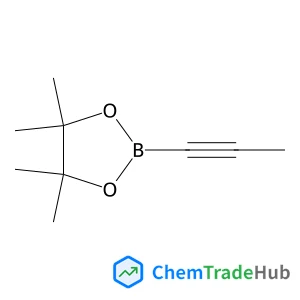
4,4,5,5-Tetramethyl-2-(1-propyn-1-YL)-1,3,2-dioxaborolane
CAS Number:
347389-75-7
Molecular Formula:
C9H15BO2
Recommended Suppliers





Disclaimer
This page provides academic journal information for reference and research purposes only. We are not affiliated with any journal publishers and do not handle publication submissions. For publication-related inquiries, please contact the respective journal publishers directly.
If you notice any inaccuracies in the information displayed, please contact us at support@chemtradehub.com. We will promptly review and address your concerns.