












A dual organelle-targeting photosensitizer based on curcumin for enhanced photodynamic therapy
Literature Information
Publication Date
2023-10-26
DOI
10.1039/D3TB01648J
Impact Factor
6.331
Authors
Wenjun Zhang, Chun-Sing Lee
View Original
Abstract
The efficiency of photodynamic therapy (PDT) is related to the subcellular localization of photosensitizers (PSs) because organelles are associated with many fundamental life-sustaining activities. In this work, we synthesized a PS (CN) based on curcumin (CUR) and obtained enhanced PDT efficiency by simultaneously targeting lipid droplets (LDs) and the endoplasmic reticulum (ER). Compared with CUR, CN with a D–π–A–π–D structure possessed stronger intramolecular charge transfer features, resulting in longer absorption and emission wavelengths. In cell imaging experiments of CN using a confocal laser scanning microscope, a bright green emission in LDs and a weak orange emission in the ER were simultaneously observed due to its sensitivity to polarity. Surprisingly, CN with low singlet oxygen yields (0.13) exhibited an excellent photodynamic effect. Further experimental results showed that the phototoxicity of CN resulted in apoptosis by destroying the ER and ferroptosis by oxidizing polyunsaturated fatty acids (PUFAs) in LDs. This work paves the way for developing more effective photosensitizers with superior dual-targeting specificity.
Related Literature
Tuning the gap of lead-based halide perovskites by introducing superalkali species at the cationic sites of ABX3-type structure
C. Paduani, Andrew M. Rappe
2017-07-19
Paper
DOI: 10.1039/C7CP02091K
Efficient 3He/4He separation in a nanoporous graphenylene membrane
Yuanyuan Qu, Mingwen Zhao
2017-07-18
Paper
DOI: 10.1039/C7CP03422A
Nonlinear behavior and fluctuation-induced dynamics in the photosensitive Belousov–Zhabotinsky reaction
Ioannis G. Kevrekidis
2017-08-04
Paper
DOI: 10.1039/C7CP03260A
Anionic fructose-related conformational and positional isomers assigned through PES experiments and DFT calculations
Zhen Zeng, Elliot R. Bernstein
2017-08-08
Paper
DOI: 10.1039/C7CP03492J
Redox titration of gold and platinum surface oxides at porous microelectrodes
Mareike Haensch, Luis Balboa, Alexander Dyck, Gunther Wittstock
2017-08-09
Paper
DOI: 10.1039/C7CP04589A
Photoinduced dynamics of the hole-transport material H101 in organic solvents and on mesoporous Al2O3 and TiO2 thin films
Johannes R. Klein, Mirko Scholz, Kawon Oum, Thomas Lenzer
2017-08-07
Paper
DOI: 10.1039/C7CP01718A
Metal-doped ceria nanoparticles: stability and redox processes
Alberto Figueroba, Albert Bruix, Gábor Kovács
2017-07-25
Paper
DOI: 10.1039/C7CP02820B
A soluble star-shaped silsesquioxane-cored polymer—towards novel stabilization of pH-dependent high internal phase emulsions
Jun Peng, Kai Xu, Mingcai Chen
2017-08-09
Paper
DOI: 10.1039/C7CP03325G
Differentiating between long and short range disorder in infra-red spectra: on the meaning of “crystallinity” in silica
Luca Nodari, Ivana Angelini, Tiziana Boffa Ballaran
2017-07-19
Paper
DOI: 10.1039/C7CP03446F
Importance of non-intrinsic platinum dissolution in Pt/C composite fuel cell catalysts
Nejc Hodnik, Francisco Ruiz-Zepeda, Martin Šala, Vid Simon Šelih, Tim Patrick Fellinger
2017-07-19
Paper
DOI: 10.1039/C7CP03192K
You might also like
Compound Q&A
Is 6-(3-Fluorophenyl)picolinic acid (CAS: 887982-40-3) safe?
6-(3-Fluorophenyl)picolinic acid is generally considered safe for laboratory use...
887982-40-36-(3-Fluorophenyl)pi...
Compound Q&A
What industries use (3R)-3-Pyrrolidinol (CAS: 2799-21-5)?
(3R)-3-Pyrrolidinol is used in the pharmaceutical industry as a precursor for dr...
2799-21-5(3R)-3-Pyrrolidinol
Compound Q&A
What precautions should be taken when handling (4R,5R)-4,5-Diethoxycarbonyl-2,2-dimethyldioxolane (CAS: 59779-75-8)?
When handling (4R,5R)-4,5-Diethoxycarbonyl-2,2-dimethyldioxolane (CAS: 59779-75-...
59779-75-8(4R,5R)-4,5-Diethoxy...
Compound Q&A
How is 1-(6-Chloroimidazo[1,2-b]pyridazin-3-yl)ethanone (CAS: 90734-71-7) typically synthesized?
1-(6-Chloroimidazo[1,2-b]pyridazin-3-yl)ethanone is often synthesized via a mult...
90734-71-71-(6-Chloroimidazo[1...
Compound Q&A
What is the market or research trend for N-Ethyl-3,4-dimethylbenzylamine (CAS: 39180-83-1)?
The market for N-Ethyl-3,4-dimethylbenzylamine (CAS: 39180-83-1) remains steady,...
39180-83-1N-Ethyl-3,4-dimethyl...
Compound Q&A
What is Tert-butyl 3-(pyrrolidin-1-yl)azetidine-1-carboxylate (CAS: 1019008-21-9)?
Tert-butyl 3-(pyrrolidin-1-yl)azetidine-1-carboxylate is a chemical compound wit...
1019008-21-9Tert-butyl 3-(pyrrol...
Compound Q&A
What regulatory guidelines apply to 1-Bromo-3-chloro-2,4-dimethoxybenzene (CAS: 1228956-93-1)?
1-Bromo-3-chloro-2,4-dimethoxybenzene (CAS: 1228956-93-1) falls under the classi...
1228956-93-11-Bromo-3-chloro-2,4...
Compound Q&A
Is 8-Bromo-2-methyl-3,4-dihydroisoquinolin-1(2H)-one (CAS: 1368622-07-4) safe?
The safety of 8-Bromo-2-methyl-3,4-dihydroisoquinolin-1(2H)-one (CAS: 1368622-07...
1368622-07-48-Bromo-2-methyl-3,4...
Compound Q&A
Is Benzyl [(3S)-2,6-dioxo-3-piperidinyl]carbamate (CAS: 22785-43-9) safe?
Benzyl [(3S)-2,6-dioxo-3-piperidinyl]carbamate is generally safe when handled wi...
22785-43-9Benzyl [(3S)-2,6-dio...
Compound Q&A
How should 1-{[4-(4,4,5,5-Tetramethyl-1,3,2-dioxaborolan-2-yl)phenyl]sulfonyl}pyrrolidine (CAS: 928657-21-0) be stored?
1-{[4-(4,4,5,5-Tetramethyl-1,3,2-dioxaborolan-2-yl)phenyl]sulfonyl}pyrrolidine s...
928657-21-01-{[4-(4,4,5,5-Tetra...
Source Journal
Journal of Materials Chemistry B

CiteScore:
12
Self-citation Rate:
4.9%
Articles per Year:
831
Journal of Materials Chemistry A, B & C cover high quality studies across all fields of materials chemistry. The journals focus on those theoretical or experimental studies that report new understanding, applications, properties and synthesis of materials. The journals have a strong history of publishing quality reports of interest to interdisciplinary communities and providing an efficient and rigorous service through peer review and publication. The journals are led by an international team of Editors-in-Chief and Associate Editors who are all active researchers in their fields. Journal of Materials Chemistry A, B & C are separated by the intended application of the material studied. Broadly, applications in energy and sustainability are of interest to Journal of Materials Chemistry A, applications in biology and medicine are of interest to Journal of Materials Chemistry B, and applications in optical, magnetic and electronic devices are of interest to Journal of Materials Chemistry C. More than one Journal of Materials Chemistry journal may be suitable for certain fields and researchers are encouraged to submit their paper to the journal that they feel best fits for their particular article. Example topic areas within the scope of Journal of Materials Chemistry B are listed below. This list is neither exhaustive nor exclusive. Antifouling coatings Biocompatible materials Bioelectronics Bioimaging Biomimetics Biomineralisation Bionics Biosensors Diagnostics Drug delivery Gene delivery Immunobiology Nanomedicine Regenerative medicine & Tissue engineering Scaffolds Soft robotics Stem cells Therapeutic devices image block All articles published in Journal of Materials Chemistry B from 2019 onwards will be indexed in MEDLINE®. Articles that primarily focus on providing insight into the underlying science and performance of biomaterials within a biological environment are more suited to our companion journal, Biomaterials Science.
Recommended Compounds
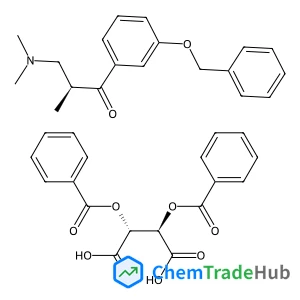
(S)-1-(3-(Benzyloxy)phenyl)-3-(dimethylamino)-2-methylpropan-1-one (2r,3r)-2,3-bis(benzoyloxy)succinate
CAS Number:
1004315-81-4
Molecular Formula:
C37H37NO10
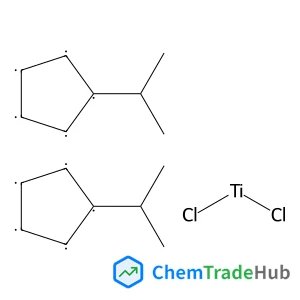
BIS(I-PROPYLCYCLOPENTADIENYL)TITANIUM DICHLORIDE
CAS Number:
12130-65-3
Molecular Formula:
C16H22Cl2Ti
Recommended Suppliers






Disclaimer
This page provides academic journal information for reference and research purposes only. We are not affiliated with any journal publishers and do not handle publication submissions. For publication-related inquiries, please contact the respective journal publishers directly.
If you notice any inaccuracies in the information displayed, please contact us at support@chemtradehub.com. We will promptly review and address your concerns.