


High strength, self-healing sensitive ionogel sensor based on MXene/ionic liquid synergistic conductive network for human-motion detection
Literature Information
Publication Date
2023-10-12
DOI
10.1039/D3TB01570J
Impact Factor
6.331
Authors
Xiao Wen, Zhipeng Deng, Hui Wang, Jianyang Shi, Shuang Wang, Haibo Wang, Yueming Song, Zongliang Du, Jinghong Qiu, Xu Cheng
View Original
Abstract
Ionogels with both high strength and high conductivity for wearable strain and pressure dual-mode sensors are needed for human motion and health monitoring. Here, multiple hydrogen bonds are introduced through imidazolidinyl urea (IU) as a chain extender to provide high mechanical and self-healing properties for the water–borne polyurethane (WPU). The MXene/ionic liquids synergistic conductive network provides excellent conductivity and also reduces the relative content of ionic liquids to maintain the mechanical properties of the ionogels. The mechanical strength of this ionogel reached 1.81–2.24 MPa and elongation at break reached 570–624%. It also has excellent conductivity (22.7–37.5 mS m−1), gauge factor (GF) (as a strain sensor, GF = 1.8), sensitivity (S) (as a press sensor, S1 = 29.8 kPa−1, S2 = 1.3 kPa−1), and fast response time (as a strain sensor = 185 ms; as a press sensor = 204 ms). The ionogel also exhibits rapid photothermal self-healing capabilities due to the inherent photothermal behavior of MXene. It can maintain good elasticity and conductivity at low temperatures. In addition, this ionogel is able to stretch for 1200 cycles without significant change in the relative change of resistance. The ionogel can be assembled as a strain sensor for monitoring human motion and as a pressure sensor array for obtaining pressure magnitude and position information.
Recommended Journals

Organic Preparations and Procedures International

European Journal of Wood and Wood Products

Russian Chemical Reviews

Journal of Medicinal Chemistry

Kinetics and Catalysis

Nature

Journal of Physics and Chemistry of Solids

Science Progress

Proceedings of the National Academy of Sciences of the United States of America

Journal of Organometallic Chemistry
Related Literature
Diastereoselective bicyclization of enynols via gold catalysis
Chiara Cecchini, Gianpiero Cera, Matteo Lanzi, Luciano Marchiò, Max Malacria, Giovanni Maestri
2019-09-06
Research Article
DOI: 10.1039/C9QO00963A
Synthesis of silacyclopent-2-en-4-ols via intramolecular [2 + 2] photocycloaddition of benzoyl(allyl)silanes
Arto Valkonen, Carlos A. M. Afonso, Nuno R. Candeias
2019-10-12
Research Article
DOI: 10.1039/C9QO01028A
Synthesis of photolabile protecting group (PPG) protected uronic acid building blocks: applications in carbohydrate synthesis with the assistance of a continuous flow photoreactor
Varsha Tiwari, Adesh Kumar Singh, Priyanka Chaudhary, Peter H. Seeberger, Jeyakumar Kandasamy
2019-10-14
Research Article
DOI: 10.1039/C9QO01010F
Expanstines A–D: four unusual isoprenoid epoxycyclohexenones generated by Penicillium expansum YJ-15 fermentation and photopromotion
Jia-Peng Wang, Yan Shu, Shi-Xi Liu, Jun-Tao Hu, Cheng-Tong Sun, Hao Zhou, Dong Gan, Xue-Yun Cai, Wei Pu, Le Cai, Zhong-Tao Ding
2019-10-12
Research Article
DOI: 10.1039/C9QO01076A
Core-modified 48π and 42π decaphyrins: syntheses, properties and structures
Arindam Ghosh, Syamasrit Dash, A. Srinivasan, C. H. Suresh, S. Peruncheralathan, Tavarekere K. Chandrashekar
2019-09-30
Research Article
DOI: 10.1039/C9QO01162E
A controlled blue-shift in meso-nitrogen aryl fused DIPY and BODIPY skeletons
Marco Farinone, Joanna Cybińska, Miłosz Pawlicki
2019-04-25
Research Article
DOI: 10.1039/C9QO00294D
Guest-length driven high fidelity self-sorting in supramolecular capsule formation of calix[5]arenes in water
Ilenia Pisagatti, Lucia Barbera, Giuseppe Gattuso, Melchiorre F. Parisi, Silvano Geremia, Neal Hickey, Anna Notti
2019-10-14
Research Article
DOI: 10.1039/C9QO01188A
Transition metal-free aerobic oxidative cleavage of the C–N bonds of α-amino esters
Shenpeng Tan, Feng Li, Soojun Park, Sanghee Kim
2019-10-12
Research Article
DOI: 10.1039/C9QO01033E
You might also like
Compound Q&A
Is 6-(3-Fluorophenyl)picolinic acid (CAS: 887982-40-3) safe?
6-(3-Fluorophenyl)picolinic acid is generally considered safe for laboratory use...
887982-40-36-(3-Fluorophenyl)pi...
Compound Q&A
What industries use (3R)-3-Pyrrolidinol (CAS: 2799-21-5)?
(3R)-3-Pyrrolidinol is used in the pharmaceutical industry as a precursor for dr...
2799-21-5(3R)-3-Pyrrolidinol
Compound Q&A
What precautions should be taken when handling (4R,5R)-4,5-Diethoxycarbonyl-2,2-dimethyldioxolane (CAS: 59779-75-8)?
When handling (4R,5R)-4,5-Diethoxycarbonyl-2,2-dimethyldioxolane (CAS: 59779-75-...
59779-75-8(4R,5R)-4,5-Diethoxy...
Compound Q&A
How is 1-(6-Chloroimidazo[1,2-b]pyridazin-3-yl)ethanone (CAS: 90734-71-7) typically synthesized?
1-(6-Chloroimidazo[1,2-b]pyridazin-3-yl)ethanone is often synthesized via a mult...
90734-71-71-(6-Chloroimidazo[1...
Compound Q&A
What is the market or research trend for N-Ethyl-3,4-dimethylbenzylamine (CAS: 39180-83-1)?
The market for N-Ethyl-3,4-dimethylbenzylamine (CAS: 39180-83-1) remains steady,...
39180-83-1N-Ethyl-3,4-dimethyl...
Compound Q&A
What is Tert-butyl 3-(pyrrolidin-1-yl)azetidine-1-carboxylate (CAS: 1019008-21-9)?
Tert-butyl 3-(pyrrolidin-1-yl)azetidine-1-carboxylate is a chemical compound wit...
1019008-21-9Tert-butyl 3-(pyrrol...
Compound Q&A
What regulatory guidelines apply to 1-Bromo-3-chloro-2,4-dimethoxybenzene (CAS: 1228956-93-1)?
1-Bromo-3-chloro-2,4-dimethoxybenzene (CAS: 1228956-93-1) falls under the classi...
1228956-93-11-Bromo-3-chloro-2,4...
Compound Q&A
Is 8-Bromo-2-methyl-3,4-dihydroisoquinolin-1(2H)-one (CAS: 1368622-07-4) safe?
The safety of 8-Bromo-2-methyl-3,4-dihydroisoquinolin-1(2H)-one (CAS: 1368622-07...
1368622-07-48-Bromo-2-methyl-3,4...
Compound Q&A
Is Benzyl [(3S)-2,6-dioxo-3-piperidinyl]carbamate (CAS: 22785-43-9) safe?
Benzyl [(3S)-2,6-dioxo-3-piperidinyl]carbamate is generally safe when handled wi...
22785-43-9Benzyl [(3S)-2,6-dio...
Compound Q&A
How should 1-{[4-(4,4,5,5-Tetramethyl-1,3,2-dioxaborolan-2-yl)phenyl]sulfonyl}pyrrolidine (CAS: 928657-21-0) be stored?
1-{[4-(4,4,5,5-Tetramethyl-1,3,2-dioxaborolan-2-yl)phenyl]sulfonyl}pyrrolidine s...
928657-21-01-{[4-(4,4,5,5-Tetra...
Source Journal
Journal of Materials Chemistry B
CiteScore:
12
Self-citation Rate:
4.9%
Articles per Year:
831
Journal of Materials Chemistry A, B & C cover high quality studies across all fields of materials chemistry. The journals focus on those theoretical or experimental studies that report new understanding, applications, properties and synthesis of materials. The journals have a strong history of publishing quality reports of interest to interdisciplinary communities and providing an efficient and rigorous service through peer review and publication. The journals are led by an international team of Editors-in-Chief and Associate Editors who are all active researchers in their fields. Journal of Materials Chemistry A, B & C are separated by the intended application of the material studied. Broadly, applications in energy and sustainability are of interest to Journal of Materials Chemistry A, applications in biology and medicine are of interest to Journal of Materials Chemistry B, and applications in optical, magnetic and electronic devices are of interest to Journal of Materials Chemistry C. More than one Journal of Materials Chemistry journal may be suitable for certain fields and researchers are encouraged to submit their paper to the journal that they feel best fits for their particular article. Example topic areas within the scope of Journal of Materials Chemistry B are listed below. This list is neither exhaustive nor exclusive. Antifouling coatings Biocompatible materials Bioelectronics Bioimaging Biomimetics Biomineralisation Bionics Biosensors Diagnostics Drug delivery Gene delivery Immunobiology Nanomedicine Regenerative medicine & Tissue engineering Scaffolds Soft robotics Stem cells Therapeutic devices image block All articles published in Journal of Materials Chemistry B from 2019 onwards will be indexed in MEDLINE®. Articles that primarily focus on providing insight into the underlying science and performance of biomaterials within a biological environment are more suited to our companion journal, Biomaterials Science.
Recommended Compounds
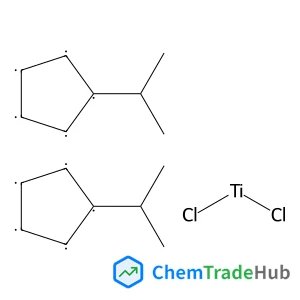
BIS(I-PROPYLCYCLOPENTADIENYL)TITANIUM DICHLORIDE
CAS Number:
12130-65-3
Molecular Formula:
C16H22Cl2Ti
Recommended Suppliers




Disclaimer
This page provides academic journal information for reference and research purposes only. We are not affiliated with any journal publishers and do not handle publication submissions. For publication-related inquiries, please contact the respective journal publishers directly.
If you notice any inaccuracies in the information displayed, please contact us at support@chemtradehub.com. We will promptly review and address your concerns.