![[1-(5-Methyl-2-pyridinyl)-1H-pyrazol-4-yl]methanol structure](https://static.chemtradehub.com/structs/143/1439822-99-7-6cc9.webp "[1-(5-Methyl-2-pyridinyl)-1H-pyrazol-4-yl]methanol structure")
[1-(5-Methyl-2-pyridinyl)-1H-pyrazol-4-yl]methanol
CAS Number:
1439822-99-7
Molecular Formula:
C10H11N3O
P. B. Armentrout, Richard M Cox
The potential energy surface (PES) for the oxidation of samarium cations by carbon dioxide is explored both experimentally and theoretically. Using guided ion beam tandem mass spectrometry, several reactions are examined as a function of kinetic energy. These include the title reaction as well as its reverse along with the collision-induced dissociation of Sm+(CO2) and OSm+(CO) with Xe. Analysis of the kinetic energy dependent cross sections yields barriers for the forward and reverse oxidation reaction of 1.77 ± 0.11 and 2.04 ± 0.13 eV, respectively, and Sm+–OCO and OSm+–CO bond dissociation energies (BDEs) of 0.42 ± 0.03 and 0.97 ± 0.07 eV, respectively. BDEs for Sm+(CO2)x for x = 2 and 3 are also determined as 0.40 ± 0.13 and 0.48 ± 0.12 eV, respectively. The PESs for the title reaction along the sextet and octet spin surfaces are also examined theoretically at the MP2 and CCSD(T) levels using both effective core potential and all-electron basis sets. Reasonable agreement between theory and experiment is obtained for the experimentally characterized intermediates, although all-electron basis sets and spin–orbit effects are needed for quantitative agreement. The observed barrier for oxidation is shown to likely correspond to the energy of the crossing between surfaces corresponding to the ground state electronic configuration of Sm+ (8F,4f66s1) and an excited surface having two electrons in the valence space (excluding 4f), which are needed to form the strong SmO+ bond.
J. C. Pérez-Flores, C. Baehtz, M. Hoelzel, A. Kuhn, F. García-Alvarado
DOI: 10.1039/C2CP23741E
Jong-Sook Lee, Jaekook Kim, Xiao-Ling Xiao
DOI: 10.1039/C2CP23363K
Fan Jiang, Wei Han
DOI: 10.1039/C2CP43633G
Andrew S. Powell, Zlatka Stoeva, James S. Lord, Ronald I. Smith, Duncan H. Gregory, Jeremy J. Titman
DOI: 10.1039/C2CP43318D
DOI: 10.1039/C2CP23268E
Asis K. Jana, Jaya C. Jose, Neelanjana Sengupta
DOI: 10.1039/C2CP42933K
Vaida Arcisauskaite, Stefan Knecht, Stephan P. A. Sauer, Lars Hemmingsen
DOI: 10.1039/C2CP23080A
Veronique Trappe
DOI: 10.1039/C2CP22558A
DOI: 10.1039/C2CP42994B
2-Methylbenzene-1,4-diamine dihydrochloride (CAS: 615-45-2) should be stored in ...
(1S,4S)-2,5-Diazabicyclo[2.2.1]heptane dihydrobromide is generally considered sa...
(6-Chloropyridazin-3-YL)methanamine finds applications in the pharmaceutical ind...
2-Fluoro-3-methylphenol is primarily used in the synthesis of pharmaceuticals, p...
When handling 3-Methoxy-4-nitrobenzonitrile, it is important to wear appropriate...
When handling 1,3-Oxazolo[4,5-b]pyridine-2(3H)-thione (CAS: 211949-57-4), it is ...
4-Ethynylbenzamide (CAS: 90347-86-7) falls under various regulatory guidelines i...
3-(2-Ethylphenyl)-2-thioxo-4-imidazolidinone is primarily used as an intermediat...
(2-Fluoro-6-methoxyphenyl)acetic acid, also known as 4-fluoro-3-methoxybenzoic a...
Market trends for 2-[4-(Hydroxymethyl)phenoxy]ethanol (CAS: 102196-18-9) indicat...

Physical Chemistry Chemical Physics (PCCP) is an international journal co-owned by 19 physical chemistry and physics societies from around the world. This journal publishes original, cutting-edge research in physical chemistry, chemical physics and biophysical chemistry. To be suitable for publication in PCCP, articles must include significant innovation and/or insight into physical chemistry; this is the most important criterion that reviewers and Editors will judge against when evaluating submissions. The journal has a broad scope and welcomes contributions spanning experiment, theory, computation and data science. Topical coverage includes spectroscopy, dynamics, kinetics, statistical mechanics, thermodynamics, electrochemistry, catalysis, surface science, quantum mechanics, quantum computing and machine learning. Interdisciplinary research areas such as polymers and soft matter, materials, nanoscience, energy, surfaces/interfaces, and biophysical chemistry are welcomed if they demonstrate significant innovation and/or insight into physical chemistry. Joined experimental/theoretical studies are particularly appreciated when complementary and based on up-to-date approaches.
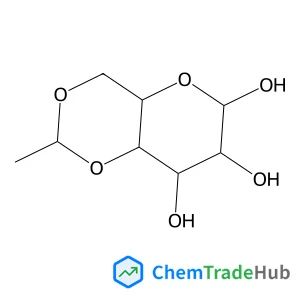
![(3R,4aR,7aS,9aR,10S,11R,13aR,13bS,15aS,15bR)-3,11-Dihydroxy-10-(hydroxymethyl)-4,4,7a,10,13a,15b-hexamethyl-1,2,3,4,4a,7,7a,8,9,9a,10,11,12,13,13a,13b,14,15,15a,15b-icosahydro-5H-naphtho[2',1':4,5]cyc
lohepta[1,2-a]naphthalen-5-one structure](https://static.chemtradehub.com/structs/538/53800-21-8-9f18.webp "(3R,4aR,7aS,9aR,10S,11R,13aR,13bS,15aS,15bR)-3,11-Dihydroxy-10-(hydroxymethyl)-4,4,7a,10,13a,15b-hexamethyl-1,2,3,4,4a,7,7a,8,9,9a,10,11,12,13,13a,13b,14,15,15a,15b-icosahydro-5H-naphtho[2',1':4,5]cyc
lohepta[1,2-a]naphthalen-5-one structure")