


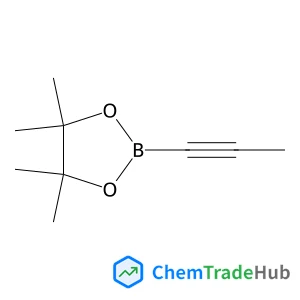
4,4,5,5-Tetramethyl-2-(1-propyn-1-YL)-1,3,2-dioxaborolane
CAS Number:
347389-75-7
Molecular Formula:
C9H15BO2
Fan Jiang, Wei Han
The local conformational (ϕ, ψ, χ) preferences of amino acid residues remain an active research area, which are important for the development of protein force fields. In this perspective article, we first summarize spectroscopic studies of alanine-based short peptides in aqueous solution. While most studies indicate a preference for the PII conformation in the unfolded state over α and β conformations, significant variations are also observed. A statistical analysis from various coil libraries of high-resolution protein structures is then summarized, which gives a more coherent view of the local conformational features. The ϕ, ψ, χ distributions of the 20 amino acids have been obtained from a protein coil library, considering both backbone and side-chain conformational preferences. The intrinsic side-chain χ1 rotamer preference and χ1-dependent Ramachandran plot can be generally understood by combining the interaction of the side-chain Cγ/Oγ atom with two neighboring backbone peptide groups. Current all-atom force fields such as AMBER ff99sb-ILDN, ff03 and OPLS-AA/L do not reproduce these distributions well. A method has been developed by combining the ϕ, ψ plot of alanine with the influence of side-chain χ1 rotamers to derive the local conformational features of various amino acids. It has been further applied to improve the OPLS-AA force field. The modified force field (OPLS-AA/C) reproduces experimental 3J coupling constants for various short peptides quite well. It also better reproduces the temperature-dependence of the helix–coil transition for alanine-based peptides. The new force field can fold a series of peptides and proteins with various secondary structures to their experimental structures. MD simulations of several globular proteins using the improved force field give significantly less deviation (RMSD) to experimental structures. The results indicate that the local conformational features from coil libraries are valuable for the development of balanced protein force fields.

Journal of Chemical Sciences

Acta Metallurgica Sinica-English Letters

Chinese Journal of Chemistry

Topics in Catalysis

Bioorganic & Medicinal Chemistry Letters

Polycyclic Aromatic Compounds

Critical Reviews in Solid State and Materials Sciences

Biocatalysis and Biotransformation

Colloid Journal

Journal of the Indian Institute of Science
Qiang Wang, Zhen Pei, Zhipeng He, Wei Guo, Lingna Han
DOI: 10.1039/D3TB01731A
Carla Gomes, Mariana Costa, Susana M. M. Lopes, Bernardo Albuquerque Nogueira, José A. Paixão, Teresa M. V. D. Pinho e Melo, Luísa M. D. R. S. Martins, Marta Pineiro
DOI: 10.1039/D3NJ05017C
Qi Chen, Xiang Ke, Yusong Cai, Hao Wang, Zhiyun Dong, Xinlong Li, Jinlin Li, Xinyuan Xu, Jun Luo
DOI: 10.1039/D3TB02186F
Peng Tang, Liang Wang, Wanyi Xie, Xiaohan Chen, Yunjiao Wang, Ting Weng, Rong Tian, Shuo Zhou, Zuobin Wang
DOI: 10.1039/D3TB01875J
Faqi Yu, Ruiyang Fan, Yansheng Zhao, Yijun Chen, Xiuqi Kong
DOI: 10.1039/D3TB02232C
Honglian Wu, Tianci Wang, Yuting Wang, Sixi Liu, Feiqiu Wen, Gerile Oudeng, Mo Yang
DOI: 10.1039/D3TB01553J
Md Mohiuddin Soliman, Mohammad Tariqul Islam, Muhammad E. H. Chowdhury, Farayi Musharavati, Touhidul Alam, Norbahiah Misran, Sakib Mahmud, Amith Khandakar
DOI: 10.1039/D3TB01469J
Kaisei Wakishima, Tomohiro Higashi, Kenji Yoshino
DOI: 10.1039/D3NJ04878K
Showket Ahmad Bhat, Mohd Ikram
DOI: 10.1039/D3NJ05096C
Bing Hu, Juan-Juan Li, Yan-Bin Ren, Tian-Xing Zhang, Li-Bin Chen, Xiao-Liu Li, Ke-Rang Wang
DOI: 10.1039/D3TB02432F
6-(3-Fluorophenyl)picolinic acid is generally considered safe for laboratory use...
(3R)-3-Pyrrolidinol is used in the pharmaceutical industry as a precursor for dr...
When handling (4R,5R)-4,5-Diethoxycarbonyl-2,2-dimethyldioxolane (CAS: 59779-75-...
1-(6-Chloroimidazo[1,2-b]pyridazin-3-yl)ethanone is often synthesized via a mult...
The market for N-Ethyl-3,4-dimethylbenzylamine (CAS: 39180-83-1) remains steady,...
Tert-butyl 3-(pyrrolidin-1-yl)azetidine-1-carboxylate is a chemical compound wit...
1-Bromo-3-chloro-2,4-dimethoxybenzene (CAS: 1228956-93-1) falls under the classi...
The safety of 8-Bromo-2-methyl-3,4-dihydroisoquinolin-1(2H)-one (CAS: 1368622-07...
Benzyl [(3S)-2,6-dioxo-3-piperidinyl]carbamate is generally safe when handled wi...
1-{[4-(4,4,5,5-Tetramethyl-1,3,2-dioxaborolan-2-yl)phenyl]sulfonyl}pyrrolidine s...

Physical Chemistry Chemical Physics (PCCP) is an international journal co-owned by 19 physical chemistry and physics societies from around the world. This journal publishes original, cutting-edge research in physical chemistry, chemical physics and biophysical chemistry. To be suitable for publication in PCCP, articles must include significant innovation and/or insight into physical chemistry; this is the most important criterion that reviewers and Editors will judge against when evaluating submissions. The journal has a broad scope and welcomes contributions spanning experiment, theory, computation and data science. Topical coverage includes spectroscopy, dynamics, kinetics, statistical mechanics, thermodynamics, electrochemistry, catalysis, surface science, quantum mechanics, quantum computing and machine learning. Interdisciplinary research areas such as polymers and soft matter, materials, nanoscience, energy, surfaces/interfaces, and biophysical chemistry are welcomed if they demonstrate significant innovation and/or insight into physical chemistry. Joined experimental/theoretical studies are particularly appreciated when complementary and based on up-to-date approaches.

![1H-Imidazo[4,5-c]pyridine-7-carboxylic acid structure](https://static.chemtradehub.com/structs/123/1234616-39-7-1344.webp "1H-Imidazo[4,5-c]pyridine-7-carboxylic acid structure")
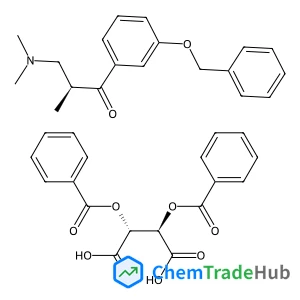
![trans-2-{[(Tert-butoxy)carbonyl]amino}cyclobutane-1-carboxylic acid structure](https://static.chemtradehub.com/structs/951/951173-25-4-27cd.webp "trans-2-{[(Tert-butoxy)carbonyl]amino}cyclobutane-1-carboxylic acid structure")



