












Fully relativistic coupled cluster and DFT study of electric field gradients at Hg in 199Hg compounds
Literature Information
Publication Date
2012-01-19
DOI
10.1039/C2CP23080A
Impact Factor
3.676
Authors
Vaida Arcisauskaite, Stefan Knecht, Stephan P. A. Sauer, Lars Hemmingsen
View Original
Abstract
We investigate the magnitude and interplay of relativistic and electron correlation effects on the electric field gradient (EFG) at the position of Hg in linear and bent HgL2 (L = CH3, Cl, Br, I) and trigonal planar [HgCl3]− compounds using four-component relativistic Dirac–Coulomb (DC) and non-relativistic (NR) calculations at the Hartree–Fock (HF), DFT, MP2 and coupled cluster (CC) levels. The relativistic and electron correlation contributions to EFG have opposite signs and are not additive, demonstrating the importance of taking into account relativistic and electron correlation contributions on an equal footing. DC-MP2 overestimates the electron correlation correction by 0.48–0.56 a.u. for Hg-halides and by 0.8 a.u. for Hg(CH3)2, respectively, while DC-CCSD underestimates the correlation correction by 0.57–0.66 a.u. compared to the reference DC-CCSD-T data. EFGs obtained at the DC-DFT level vary considerably with the functional; DC-CAMB3LYP and DC-BH&H reproduce DC-CCSD-T results within 0.08–0.24 a.u. (1%–3%) for Hg(CH3)2 and Hg-halides, respectively. An updated value of the nuclear quadrupole moment of the I = 5/2 excited state of 199Hg, Q(199Hg) = 0.675(12) b is derived from the literature. This value compares well with that derived from our calculated EFG at the DC-CCSD-T level and the experimental data for Hg(CH3)2; Q(199Hg) = 0.650 b.
Related Literature
Diglycolamic acid for the mutual separation of lanthanides and actinides from dilute nitric acid solution: solvent extraction, dynamic light scattering, and spectroscopic investigations
Jammu Ravi, N. R. Jawahar
2023-11-22
Paper
DOI: 10.1039/D3NJ02840B
Simple devising of N-doped carbon dots (N-CDs) as a low-cost probe for selective environmental toxin detection and security applications
Kumaresan Annamalai, Arun Annamalai, Ramya Ravichandran, Anandhavalli Jeevarathinam, Padmanaban Annamalai, Hector Valdes, Sundaravadivel Elumalai
2023-11-17
Paper
DOI: 10.1039/D3NJ04571D
An aptamer-assisted nanopore strategy with a salt gradient for direct protein sensing
Peng Tang, Liang Wang, Wanyi Xie, Xiaohan Chen, Yunjiao Wang, Ting Weng, Rong Tian, Shuo Zhou, Zuobin Wang
2023-11-01
Paper
DOI: 10.1039/D3TB01875J
Injectable organo-hydrogels influenced by click chemistry as a paramount stratagem in the conveyor belt of pharmaceutical revolution
Misba Majood, Radhika Chaurasia, Rupesh, Akanksha Singh, Tapan Dey, Omnarayan Agrawal, Yogesh Kumar Verma, Monalisa Mukherjee
2023-10-09
Perspective
DOI: 10.1039/D3TB01674A
Synthesis of functionalized disiloxanes with nonconventional fluorescence via oxa-Michael addition reaction
Rui Wang, Shengyu Feng, Gang Yi, Dengxu Wang
2023-11-23
Paper
DOI: 10.1039/D3NJ04004F
Aza-BODIPY with two efficacious fragments for NIR light-driven photothermal therapy by triggering cancer cell apoptosis
Chunyu Shao, Xiuyan Gong, Dongxiang Zhang, Xin-Dong Jiang, Jianjun Du, Guiling Wang
2023-10-23
Paper
DOI: 10.1039/D3TB02132G
The construction of hierarchical assemblies with in situ generation of chemotherapy drugs to enhance the efficacy of chemodynamic therapy for multi-modal anti-tumor treatments
Wei-Nan Zhao, Hongjuan Li, Shiguo Sun, Yongqian Xu
2023-10-25
Paper
DOI: 10.1039/D3TB01564E
Smart stimuli-responsive polysaccharide nanohydrogels for drug delivery: a review
Ahmed Fatimi, Rajender S. Varma, Mohammed Berrada
2023-11-01
Review Article
DOI: 10.1039/D3TB01712E
Design, synthesis, and antiviral activities of myricetin derivatives containing pyridazinone
Li Xing, Youshan An, Yishan Qin, Hui Xin, Tianyu Deng, Kaini Meng, Da Liu, Wei Xue
2023-12-01
Paper
DOI: 10.1039/D3NJ04902G
You might also like
Compound Q&A
Is 6-(3-Fluorophenyl)picolinic acid (CAS: 887982-40-3) safe?
6-(3-Fluorophenyl)picolinic acid is generally considered safe for laboratory use...
887982-40-36-(3-Fluorophenyl)pi...
Compound Q&A
What industries use (3R)-3-Pyrrolidinol (CAS: 2799-21-5)?
(3R)-3-Pyrrolidinol is used in the pharmaceutical industry as a precursor for dr...
2799-21-5(3R)-3-Pyrrolidinol
Compound Q&A
What precautions should be taken when handling (4R,5R)-4,5-Diethoxycarbonyl-2,2-dimethyldioxolane (CAS: 59779-75-8)?
When handling (4R,5R)-4,5-Diethoxycarbonyl-2,2-dimethyldioxolane (CAS: 59779-75-...
59779-75-8(4R,5R)-4,5-Diethoxy...
Compound Q&A
How is 1-(6-Chloroimidazo[1,2-b]pyridazin-3-yl)ethanone (CAS: 90734-71-7) typically synthesized?
1-(6-Chloroimidazo[1,2-b]pyridazin-3-yl)ethanone is often synthesized via a mult...
90734-71-71-(6-Chloroimidazo[1...
Compound Q&A
What is the market or research trend for N-Ethyl-3,4-dimethylbenzylamine (CAS: 39180-83-1)?
The market for N-Ethyl-3,4-dimethylbenzylamine (CAS: 39180-83-1) remains steady,...
39180-83-1N-Ethyl-3,4-dimethyl...
Compound Q&A
What is Tert-butyl 3-(pyrrolidin-1-yl)azetidine-1-carboxylate (CAS: 1019008-21-9)?
Tert-butyl 3-(pyrrolidin-1-yl)azetidine-1-carboxylate is a chemical compound wit...
1019008-21-9Tert-butyl 3-(pyrrol...
Compound Q&A
What regulatory guidelines apply to 1-Bromo-3-chloro-2,4-dimethoxybenzene (CAS: 1228956-93-1)?
1-Bromo-3-chloro-2,4-dimethoxybenzene (CAS: 1228956-93-1) falls under the classi...
1228956-93-11-Bromo-3-chloro-2,4...
Compound Q&A
Is 8-Bromo-2-methyl-3,4-dihydroisoquinolin-1(2H)-one (CAS: 1368622-07-4) safe?
The safety of 8-Bromo-2-methyl-3,4-dihydroisoquinolin-1(2H)-one (CAS: 1368622-07...
1368622-07-48-Bromo-2-methyl-3,4...
Compound Q&A
Is Benzyl [(3S)-2,6-dioxo-3-piperidinyl]carbamate (CAS: 22785-43-9) safe?
Benzyl [(3S)-2,6-dioxo-3-piperidinyl]carbamate is generally safe when handled wi...
22785-43-9Benzyl [(3S)-2,6-dio...
Compound Q&A
How should 1-{[4-(4,4,5,5-Tetramethyl-1,3,2-dioxaborolan-2-yl)phenyl]sulfonyl}pyrrolidine (CAS: 928657-21-0) be stored?
1-{[4-(4,4,5,5-Tetramethyl-1,3,2-dioxaborolan-2-yl)phenyl]sulfonyl}pyrrolidine s...
928657-21-01-{[4-(4,4,5,5-Tetra...
Source Journal
Physical Chemistry Chemical Physics

CiteScore:
5.5
Self-citation Rate:
10.3%
Articles per Year:
3036
Physical Chemistry Chemical Physics (PCCP) is an international journal co-owned by 19 physical chemistry and physics societies from around the world. This journal publishes original, cutting-edge research in physical chemistry, chemical physics and biophysical chemistry. To be suitable for publication in PCCP, articles must include significant innovation and/or insight into physical chemistry; this is the most important criterion that reviewers and Editors will judge against when evaluating submissions. The journal has a broad scope and welcomes contributions spanning experiment, theory, computation and data science. Topical coverage includes spectroscopy, dynamics, kinetics, statistical mechanics, thermodynamics, electrochemistry, catalysis, surface science, quantum mechanics, quantum computing and machine learning. Interdisciplinary research areas such as polymers and soft matter, materials, nanoscience, energy, surfaces/interfaces, and biophysical chemistry are welcomed if they demonstrate significant innovation and/or insight into physical chemistry. Joined experimental/theoretical studies are particularly appreciated when complementary and based on up-to-date approaches.
Recommended Compounds
![[1-(5-Methyl-2-pyridinyl)-1H-pyrazol-4-yl]methanol structure](https://static.chemtradehub.com/structs/143/1439822-99-7-6cc9.webp "[1-(5-Methyl-2-pyridinyl)-1H-pyrazol-4-yl]methanol structure")
[1-(5-Methyl-2-pyridinyl)-1H-pyrazol-4-yl]methanol
CAS Number:
1439822-99-7
Molecular Formula:
C10H11N3O
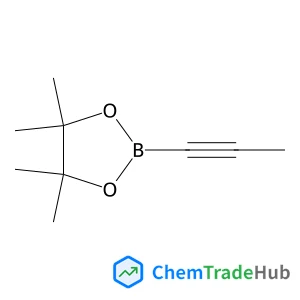
4,4,5,5-Tetramethyl-2-(1-propyn-1-YL)-1,3,2-dioxaborolane
CAS Number:
347389-75-7
Molecular Formula:
C9H15BO2
Recommended Suppliers






Disclaimer
This page provides academic journal information for reference and research purposes only. We are not affiliated with any journal publishers and do not handle publication submissions. For publication-related inquiries, please contact the respective journal publishers directly.
If you notice any inaccuracies in the information displayed, please contact us at support@chemtradehub.com. We will promptly review and address your concerns.