












Generic pathways to stability in concentrated protein mixtures
Literature Information
Publication Date
2012-01-19
DOI
10.1039/C2CP22558A
Impact Factor
3.676
Authors
Veronique Trappe
View Original
Abstract
We present a series of experimental results that disclose the crucial role of ionic strength and partial volume fractions in the control of the phase behaviour of binary protein mixtures. Our findings can be understood as that the ionic strength determines the relative contribution of the entropy of the protein counter-ions to the overall thermodynamics of the system. Associative phase separation and crystallization observed at, respectively, low and high ionic strength are suppressed at intermediate salt concentrations, where the entropy gain upon releasing the counter-ions from the double layer of the proteins is negligible and the entropy loss upon confining the counter-ions within the protein crystal phase significant. Moreover, we find that the partial volume fraction of the protein prone to crystallize determines the crystallization boundary and that the presence of other proteins strongly delays crystallization, leading to temporarily stable mixtures. These findings suggest that stability in more complex protein mixtures, such as the cytosol, relates to the ionic strength and protein composition rather than to protein specific properties.
Recommended Journals
Related Literature
π-Extended indoloquinoxaline functionalized triarylamines with ethynyl and tetracyanobutadiene bridges for p-channel and ambipolar OFETs
Panneerselvam Devibala, Balu Balambiga, Predhanekar M. Imran, Samuthira Nagarajan
2023-11-21
Paper
DOI: 10.1039/D3NJ03993E
Enhanced visible-light photocatalysis in three-dimensional rose-like ZnO with oxygen vacancies and Ag nanoparticles
Shuoyu Chen, Tengfei Bi, Zhenxi Du, Shenghao Luo, Yuechun Fu, Huan He, Xiaoming Shen
2023-12-05
Paper
DOI: 10.1039/D3NJ04722A
CdS QDs decorated on 3D flower-like Sn3O4: a hierarchical photocatalyst with boosted charge separation for hydrogen production
Pengfei Tan, Lu Yang, Hele Liu, Binhua Zhou, Jun Pan
2023-11-20
Paper
DOI: 10.1039/D3NJ03611A
Flexible electrochemical sensor for highly sensitive and selective non-enzymatic detection of creatinine via electrodeposited copper over polymelamine formaldehyde
Daisy Mehta, Alankar Kafle, Tharamani C. Nagaiah
2023-10-11
Paper
DOI: 10.1039/D3TB01528A
Eco-friendly, in-water, and catalyst-free assembly of acylethenylpyrroloimidazoindoles from 3H-indoles and acylpyrrolylacetylenes
Ludmila A. Oparina, Kseniya V. Belyaeva, Nikita A. Kolyvanov, Igor A. Ushakov, Denis N. Tomilin, Lyubov N. Sobenina, Anton V. Kuzmin, Boris A. Trofimov
2023-11-17
Paper
DOI: 10.1039/D3NJ05049A
A metastable small organic molecule for secure memory devices
Hong-Liang Wang, Yu-Ting Du, Xiao-Juan Zhang, Hai-Xian Ren, Lu Qin, Xiao-Bo Luo, Pei-Yang Gu, Lingyun Xu, Shi-Yuan Zhou
2023-11-09
Paper
DOI: 10.1039/D3NJ04177H
Micelle assisted synthesis of bismuth oxide nanoparticles for improved chemocatalytic degradation of toxic Congo red into non-toxic products
Aleena Pious, Shreya Muthukumar, Dharshini Karnan Singaravelu, Periyappan Nantheeswaran, Mariappan Mariappan, Arvind Sivasubramanian, Fuad Ameen, Anbazhagan Veerappan
2023-11-17
Paper
DOI: 10.1039/D3NJ04494G
Guanidinium iodide salts as single component catalysts for CO2 to epoxide fixation
René S. Rojas, Fernando Carrillo-Hermosilla, Javier Martínez, Antonio Antiñolo, Oleksandra S. Trofymchuk, Fabiane M. Nachtigall, Leonardo S. Santos, Constantin G. Daniliuc
2023-11-17
Paper
DOI: 10.1039/D3NJ03959E
Novel anti-VEGFR2 antibody-conjugated nanobubbles for targeted ultrasound molecular imaging in a rabbit VX2 hepatic tumor model
Houqiang Yu, Shuanghua Zheng, Cai Wang, Jun Xing, Ling Li
2023-10-03
Paper
DOI: 10.1039/D3TB01718D
You might also like
Compound Q&A
Is 6-(3-Fluorophenyl)picolinic acid (CAS: 887982-40-3) safe?
6-(3-Fluorophenyl)picolinic acid is generally considered safe for laboratory use...
887982-40-36-(3-Fluorophenyl)pi...
Compound Q&A
What industries use (3R)-3-Pyrrolidinol (CAS: 2799-21-5)?
(3R)-3-Pyrrolidinol is used in the pharmaceutical industry as a precursor for dr...
2799-21-5(3R)-3-Pyrrolidinol
Compound Q&A
What precautions should be taken when handling (4R,5R)-4,5-Diethoxycarbonyl-2,2-dimethyldioxolane (CAS: 59779-75-8)?
When handling (4R,5R)-4,5-Diethoxycarbonyl-2,2-dimethyldioxolane (CAS: 59779-75-...
59779-75-8(4R,5R)-4,5-Diethoxy...
Compound Q&A
How is 1-(6-Chloroimidazo[1,2-b]pyridazin-3-yl)ethanone (CAS: 90734-71-7) typically synthesized?
1-(6-Chloroimidazo[1,2-b]pyridazin-3-yl)ethanone is often synthesized via a mult...
90734-71-71-(6-Chloroimidazo[1...
Compound Q&A
What is the market or research trend for N-Ethyl-3,4-dimethylbenzylamine (CAS: 39180-83-1)?
The market for N-Ethyl-3,4-dimethylbenzylamine (CAS: 39180-83-1) remains steady,...
39180-83-1N-Ethyl-3,4-dimethyl...
Compound Q&A
What is Tert-butyl 3-(pyrrolidin-1-yl)azetidine-1-carboxylate (CAS: 1019008-21-9)?
Tert-butyl 3-(pyrrolidin-1-yl)azetidine-1-carboxylate is a chemical compound wit...
1019008-21-9Tert-butyl 3-(pyrrol...
Compound Q&A
What regulatory guidelines apply to 1-Bromo-3-chloro-2,4-dimethoxybenzene (CAS: 1228956-93-1)?
1-Bromo-3-chloro-2,4-dimethoxybenzene (CAS: 1228956-93-1) falls under the classi...
1228956-93-11-Bromo-3-chloro-2,4...
Compound Q&A
Is 8-Bromo-2-methyl-3,4-dihydroisoquinolin-1(2H)-one (CAS: 1368622-07-4) safe?
The safety of 8-Bromo-2-methyl-3,4-dihydroisoquinolin-1(2H)-one (CAS: 1368622-07...
1368622-07-48-Bromo-2-methyl-3,4...
Compound Q&A
Is Benzyl [(3S)-2,6-dioxo-3-piperidinyl]carbamate (CAS: 22785-43-9) safe?
Benzyl [(3S)-2,6-dioxo-3-piperidinyl]carbamate is generally safe when handled wi...
22785-43-9Benzyl [(3S)-2,6-dio...
Compound Q&A
How should 1-{[4-(4,4,5,5-Tetramethyl-1,3,2-dioxaborolan-2-yl)phenyl]sulfonyl}pyrrolidine (CAS: 928657-21-0) be stored?
1-{[4-(4,4,5,5-Tetramethyl-1,3,2-dioxaborolan-2-yl)phenyl]sulfonyl}pyrrolidine s...
928657-21-01-{[4-(4,4,5,5-Tetra...
Source Journal
Physical Chemistry Chemical Physics

CiteScore:
5.5
Self-citation Rate:
10.3%
Articles per Year:
3036
Physical Chemistry Chemical Physics (PCCP) is an international journal co-owned by 19 physical chemistry and physics societies from around the world. This journal publishes original, cutting-edge research in physical chemistry, chemical physics and biophysical chemistry. To be suitable for publication in PCCP, articles must include significant innovation and/or insight into physical chemistry; this is the most important criterion that reviewers and Editors will judge against when evaluating submissions. The journal has a broad scope and welcomes contributions spanning experiment, theory, computation and data science. Topical coverage includes spectroscopy, dynamics, kinetics, statistical mechanics, thermodynamics, electrochemistry, catalysis, surface science, quantum mechanics, quantum computing and machine learning. Interdisciplinary research areas such as polymers and soft matter, materials, nanoscience, energy, surfaces/interfaces, and biophysical chemistry are welcomed if they demonstrate significant innovation and/or insight into physical chemistry. Joined experimental/theoretical studies are particularly appreciated when complementary and based on up-to-date approaches.
Recommended Compounds
![1H-Imidazo[4,5-c]pyridine-7-carboxylic acid structure](https://static.chemtradehub.com/structs/123/1234616-39-7-1344.webp "1H-Imidazo[4,5-c]pyridine-7-carboxylic acid structure")
![[1-(5-Methyl-2-pyridinyl)-1H-pyrazol-4-yl]methanol structure](https://static.chemtradehub.com/structs/143/1439822-99-7-6cc9.webp "[1-(5-Methyl-2-pyridinyl)-1H-pyrazol-4-yl]methanol structure")
[1-(5-Methyl-2-pyridinyl)-1H-pyrazol-4-yl]methanol
CAS Number:
1439822-99-7
Molecular Formula:
C10H11N3O
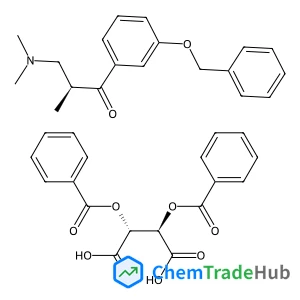
(S)-1-(3-(Benzyloxy)phenyl)-3-(dimethylamino)-2-methylpropan-1-one (2r,3r)-2,3-bis(benzoyloxy)succinate
CAS Number:
1004315-81-4
Molecular Formula:
C37H37NO10
Recommended Suppliers





Disclaimer
This page provides academic journal information for reference and research purposes only. We are not affiliated with any journal publishers and do not handle publication submissions. For publication-related inquiries, please contact the respective journal publishers directly.
If you notice any inaccuracies in the information displayed, please contact us at support@chemtradehub.com. We will promptly review and address your concerns.