


Dissociative electron attachment to Pt(PF3)4—a precursor for Focused Electron Beam Induced Processing (FEBIP)
Literature Information
Publication Date
2011-12-09
DOI
10.1039/C2CP23268E
Impact Factor
3.676
Authors
View Original
Abstract
Experimental absolute cross sections for dissociative electron attachment (DEA) to Pt(PF3)4 are presented. Fragment anions resulting from the loss of one, two, three and four PF3 ligands as well as the Pt(PF3)F− and the F− ions were observed. The parent anion Pt(PF3)−4 is too short-lived to be detected. The dominant process is loss of one ligand, with a very large cross section of 20 000 pm2; the other processes are about 200× weaker, with cross sections around 100 pm2, the naked Pt− anion is formed with a cross section of only 1.8 pm2. The resonances responsible for the DEA bands were assigned based on comparison with electron energy-loss spectra and spectra of vibrational excitation by electron impact. Bands around 0.5 eV and 2 eV were assigned to shape resonances with single occupation of virtual orbitals. A DEA band at 5.9 eV was assigned to a core-excited resonance corresponding to an electron very weakly bound to the lowest excited state. An F− band at 12.1 eV is assigned to a core excited resonance with a vacancy in an orbital corresponding to the 2nd ionization energy of the PF3 ligand. Implications of these findings for FEBIP are discussed.
Recommended Journals

Herald of the Russian Academy of Sciences

Bioorganic & Medicinal Chemistry Letters

NDT & E International

Critical Reviews in Solid State and Materials Sciences

Cellulose

Bioorganic & Medicinal Chemistry

Main Group Chemistry

Chinese Journal of Chemistry

Journal of Asian Natural Products Research

Biocatalysis and Biotransformation
Related Literature
Role of defects and exposed graphene in carbon nanomaterial-based electrocatalysts
Charles C. Chusuei, Ram Chandra Nepal
2023-12-04
Paper
DOI: 10.1039/D3NJ04054B
A mechanistic study on coupling of CO2 and epoxide mediated by guanidine/TBAI catalysts
Yihua Fu, Yan Zhang, Changwei Hu, Zhishan Su
2023-12-01
Paper
DOI: 10.1039/D3NJ04395A
Injectable organo-hydrogels influenced by click chemistry as a paramount stratagem in the conveyor belt of pharmaceutical revolution
Misba Majood, Radhika Chaurasia, Rupesh, Akanksha Singh, Tapan Dey, Omnarayan Agrawal, Yogesh Kumar Verma, Monalisa Mukherjee
2023-10-09
Perspective
DOI: 10.1039/D3TB01674A
Metal–organic gels: recent advances in their classification, characterization, and application in the pharmaceutical field
Wei Cao, Zezhi Lin, Daoyi Zheng, Jianjun Zhang, Weili Heng, Yuanfeng Wei, Yuan Gao, Shuai Qian
2023-10-20
Review Article
DOI: 10.1039/D3TB01612A
Three-dimensional N-doped carbon electrodes activate peroxymonosulfate for tetracycline degradation
2023-11-22
Paper
DOI: 10.1039/D3NJ04311H
Pt nanoparticles on (Ni0.5Co0.5)2P/S-doped carbon nanofibers as electrocatalysts for an efficient hydrogen evolution reaction
Anqi Ju, Shuxian Zhang, Dong Li, Kunming Li, Xuepeng Ni, Yi Li, Yang Jiang
2023-12-04
Paper
DOI: 10.1039/D3NJ04456D
Flexible electrochemical sensor for highly sensitive and selective non-enzymatic detection of creatinine via electrodeposited copper over polymelamine formaldehyde
Daisy Mehta, Alankar Kafle, Tharamani C. Nagaiah
2023-10-11
Paper
DOI: 10.1039/D3TB01528A
Correction: Distortion-controlled 1,2-dicarbene reactivity of 3-triflyloxybenzynes: a theoretical approach
Fatemeh Pirouzi, Hossein Eshghi, Hossein Sabet-Sarvestani
2023-12-12
Correction
DOI: 10.1039/D3NJ90185H
Regulation of the innate immune system by fragmented heparin-conjugated lipids on lipid bilayered membranes in vitro
Anna Adler, Marlene Fritsch, Karin Fromell, Bo Nilsson
2023-10-31
Paper
DOI: 10.1039/D3TB01721D
Novel anti-VEGFR2 antibody-conjugated nanobubbles for targeted ultrasound molecular imaging in a rabbit VX2 hepatic tumor model
Houqiang Yu, Shuanghua Zheng, Cai Wang, Jun Xing, Ling Li
2023-10-03
Paper
DOI: 10.1039/D3TB01718D
You might also like
Compound Q&A
Is 6-(3-Fluorophenyl)picolinic acid (CAS: 887982-40-3) safe?
6-(3-Fluorophenyl)picolinic acid is generally considered safe for laboratory use...
887982-40-36-(3-Fluorophenyl)pi...
Compound Q&A
What industries use (3R)-3-Pyrrolidinol (CAS: 2799-21-5)?
(3R)-3-Pyrrolidinol is used in the pharmaceutical industry as a precursor for dr...
2799-21-5(3R)-3-Pyrrolidinol
Compound Q&A
What precautions should be taken when handling (4R,5R)-4,5-Diethoxycarbonyl-2,2-dimethyldioxolane (CAS: 59779-75-8)?
When handling (4R,5R)-4,5-Diethoxycarbonyl-2,2-dimethyldioxolane (CAS: 59779-75-...
59779-75-8(4R,5R)-4,5-Diethoxy...
Compound Q&A
How is 1-(6-Chloroimidazo[1,2-b]pyridazin-3-yl)ethanone (CAS: 90734-71-7) typically synthesized?
1-(6-Chloroimidazo[1,2-b]pyridazin-3-yl)ethanone is often synthesized via a mult...
90734-71-71-(6-Chloroimidazo[1...
Compound Q&A
What is the market or research trend for N-Ethyl-3,4-dimethylbenzylamine (CAS: 39180-83-1)?
The market for N-Ethyl-3,4-dimethylbenzylamine (CAS: 39180-83-1) remains steady,...
39180-83-1N-Ethyl-3,4-dimethyl...
Compound Q&A
What is Tert-butyl 3-(pyrrolidin-1-yl)azetidine-1-carboxylate (CAS: 1019008-21-9)?
Tert-butyl 3-(pyrrolidin-1-yl)azetidine-1-carboxylate is a chemical compound wit...
1019008-21-9Tert-butyl 3-(pyrrol...
Compound Q&A
What regulatory guidelines apply to 1-Bromo-3-chloro-2,4-dimethoxybenzene (CAS: 1228956-93-1)?
1-Bromo-3-chloro-2,4-dimethoxybenzene (CAS: 1228956-93-1) falls under the classi...
1228956-93-11-Bromo-3-chloro-2,4...
Compound Q&A
Is 8-Bromo-2-methyl-3,4-dihydroisoquinolin-1(2H)-one (CAS: 1368622-07-4) safe?
The safety of 8-Bromo-2-methyl-3,4-dihydroisoquinolin-1(2H)-one (CAS: 1368622-07...
1368622-07-48-Bromo-2-methyl-3,4...
Compound Q&A
Is Benzyl [(3S)-2,6-dioxo-3-piperidinyl]carbamate (CAS: 22785-43-9) safe?
Benzyl [(3S)-2,6-dioxo-3-piperidinyl]carbamate is generally safe when handled wi...
22785-43-9Benzyl [(3S)-2,6-dio...
Compound Q&A
How should 1-{[4-(4,4,5,5-Tetramethyl-1,3,2-dioxaborolan-2-yl)phenyl]sulfonyl}pyrrolidine (CAS: 928657-21-0) be stored?
1-{[4-(4,4,5,5-Tetramethyl-1,3,2-dioxaborolan-2-yl)phenyl]sulfonyl}pyrrolidine s...
928657-21-01-{[4-(4,4,5,5-Tetra...
Source Journal
Physical Chemistry Chemical Physics

CiteScore:
5.5
Self-citation Rate:
10.3%
Articles per Year:
3036
Physical Chemistry Chemical Physics (PCCP) is an international journal co-owned by 19 physical chemistry and physics societies from around the world. This journal publishes original, cutting-edge research in physical chemistry, chemical physics and biophysical chemistry. To be suitable for publication in PCCP, articles must include significant innovation and/or insight into physical chemistry; this is the most important criterion that reviewers and Editors will judge against when evaluating submissions. The journal has a broad scope and welcomes contributions spanning experiment, theory, computation and data science. Topical coverage includes spectroscopy, dynamics, kinetics, statistical mechanics, thermodynamics, electrochemistry, catalysis, surface science, quantum mechanics, quantum computing and machine learning. Interdisciplinary research areas such as polymers and soft matter, materials, nanoscience, energy, surfaces/interfaces, and biophysical chemistry are welcomed if they demonstrate significant innovation and/or insight into physical chemistry. Joined experimental/theoretical studies are particularly appreciated when complementary and based on up-to-date approaches.
Recommended Compounds
![1H-Imidazo[4,5-c]pyridine-7-carboxylic acid structure](https://static.chemtradehub.com/structs/123/1234616-39-7-1344.webp "1H-Imidazo[4,5-c]pyridine-7-carboxylic acid structure")
![5-Bromo-3-isopropyl-1H-pyrrolo[2,3-b]pyridine structure](https://static.chemtradehub.com/structs/125/1256819-54-1-8620.webp "5-Bromo-3-isopropyl-1H-pyrrolo[2,3-b]pyridine structure")
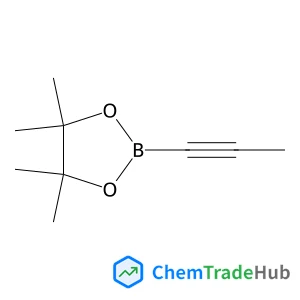
4,4,5,5-Tetramethyl-2-(1-propyn-1-YL)-1,3,2-dioxaborolane
CAS Number:
347389-75-7
Molecular Formula:
C9H15BO2
Recommended Suppliers




Disclaimer
This page provides academic journal information for reference and research purposes only. We are not affiliated with any journal publishers and do not handle publication submissions. For publication-related inquiries, please contact the respective journal publishers directly.
If you notice any inaccuracies in the information displayed, please contact us at support@chemtradehub.com. We will promptly review and address your concerns.